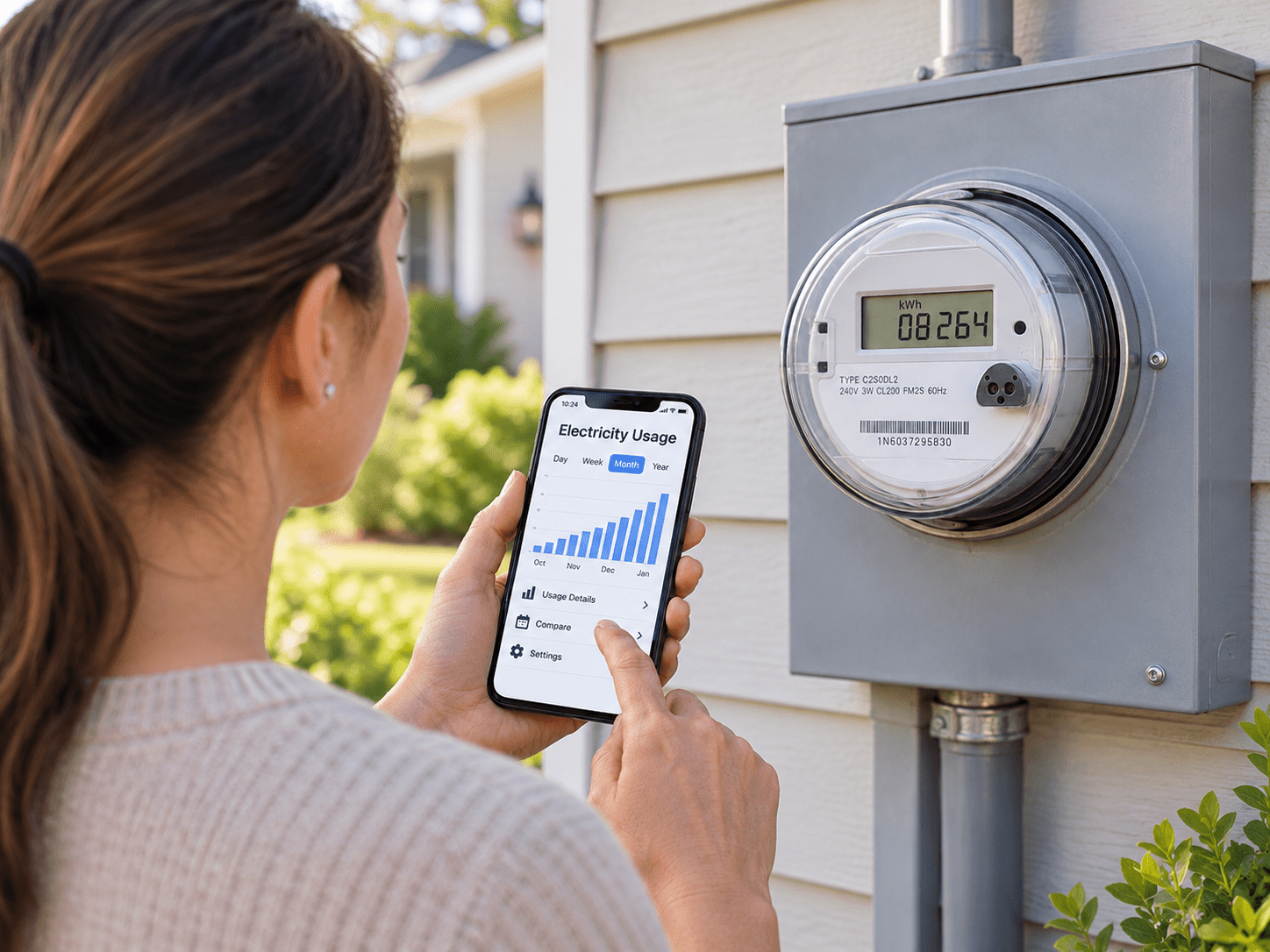
A home can use more electricity than expected even when your daily routine feels exactly the same.
Sometimes the reason is easy to see, such as running air conditioning during hot weather. Other times, electricity use is affected by small things that are easy to overlook: a thermostat schedule, an aging refrigerator, electronics left in standby mode, or a dryer cycle that runs longer than necessary.
This guide covers 11 common places to check around a typical U.S. home.
You do not need special equipment for most of these checks. The goal is simply to understand how different appliances, settings and household habits can affect electricity use.
1. A Dirty HVAC Filter
Heating and cooling systems depend on steady airflow.
As an HVAC filter collects dust, pet hair and other particles, airflow through the system can become restricted. A heavily loaded filter may affect how the system operates and how long it needs to run.
The first step is simple: locate the filter and inspect it.
If it appears heavily covered with dust, check the replacement or cleaning instructions for your particular HVAC system and filter type.
Different filters have different service intervals, so it is better to follow the manufacturer’s recommendations than rely on a universal schedule.
In homes with pets or heavy HVAC use, filters may need attention more frequently.
2. Your Thermostat Schedule May Not Match Your Routine
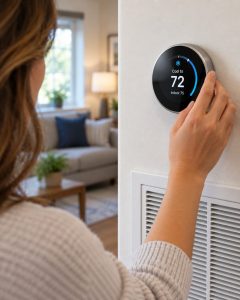
Thermostat settings determine when your heating or cooling system operates.
In many homes, the thermostat schedule was programmed once and then forgotten.
That can mean the system continues maintaining the same indoor temperature even when nobody is home.
Take a moment to check the morning, daytime, evening and overnight schedule.
If you use a programmable or smart thermostat, make sure those settings still match your household’s actual routine.
The U.S. Department of Energy recommends adjusting thermostat settings during periods when occupants are away or sleeping when appropriate for the heating and cooling system.
The important point is not to choose one universal temperature.
It is to make sure the thermostat is not operating according to an outdated schedule.
3. Electronics Can Still Use Electricity in Standby Mode
A device can appear to be off while some of its functions remain active.
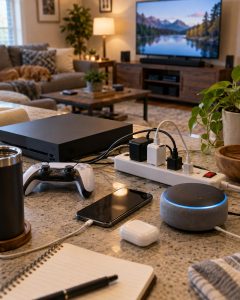
Televisions, game consoles, streaming devices, printers, speakers and smart-home equipment may remain connected to power so they can respond to remote controls, maintain network connections or perform background functions.
One device may use relatively little electricity in standby.
But a modern home can contain many connected devices.
Instead of unplugging everything, look for equipment that is rarely used but remains connected all day.
A switchable power strip can be useful for groups of compatible electronics.
For a more accurate picture, a plug-in electricity meter can show how an individual device behaves when operating and when idle.
4. An Older Second Refrigerator May Run Continuously
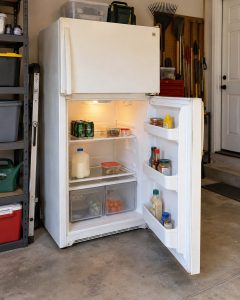
A second refrigerator in a garage or utility area is common in many U.S. homes.
Sometimes it is used frequently.
Sometimes it holds only a few drinks or occasional food items but remains powered throughout the year.
Refrigerators cycle automatically throughout the day to maintain their internal temperature, so an older second unit is worth including in a home energy check.
ENERGY STAR specifically recommends evaluating older second refrigerators and notes that older models can use more energy than current efficient models.
If you have one, simply ask whether it needs to remain operating all year or only during certain periods.
5. A Refrigerator Door Seal Can Affect Operation
The refrigerator door gasket helps keep cold air inside.
Over time, the gasket can become dirty, damaged or loose.
When the seal is not working properly, the refrigerator may have more difficulty maintaining its selected temperature.
Inspect the rubber seal around the entire door.
Look for cracks, gaps or sections that do not make proper contact.
ENERGY STAR recommends keeping refrigerator door seals airtight and replacing them if they no longer seal correctly. It also recommends a refrigerator temperature of approximately 35°F to 38°F for typical use.
Also make sure the refrigerator has appropriate ventilation around it according to the manufacturer’s instructions.
6. Your Dryer Cycle May Be Longer Than Necessary
Dryers combine airflow, drum movement and heat.
That makes the selected cycle and drying time important.
Some people use the same timed cycle for every load, even though different fabrics dry at different rates.
If your dryer has an automatic or moisture-sensing setting, check the manual to see how it is designed to work.
Also inspect the lint filter regularly and clean it according to the manufacturer’s instructions.
Restricted airflow can affect dryer operation and is also an important maintenance and safety issue.
It can also help to avoid combining very heavy items, such as thick towels, with large amounts of lightweight clothing when practical.
The lighter items may dry well before the heavier ones do.

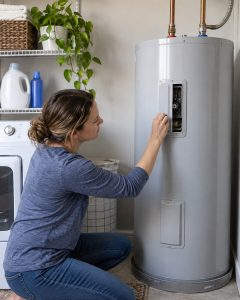
7. Check the Setting on an Electric Tank Water Heater
A traditional electric tank water heater maintains a quantity of hot water so it is ready when needed.
That means its temperature setting affects how the unit operates throughout the day.
For most residential applications, the U.S. Department of Energy recommends a setting of about 120°F, while noting that individual household circumstances may require a different setting.
Before changing anything, consult the manufacturer’s instructions for your exact model.
Water temperature is also a safety issue, so settings should not be changed casually.
If you are not comfortable inspecting the unit, use a qualified professional.
8. Older Light Bulbs Use Different Technology
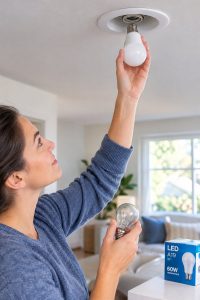
Traditional incandescent bulbs create light by heating a filament.
LED bulbs produce light using a different technology and require substantially less electrical power for a similar level of illumination.
The U.S. Department of Energy identifies LED lighting as a more energy-efficient alternative to traditional incandescent lighting.
There is no need to replace every bulb at once.
A practical place to start is simply identifying the lights that operate for the longest periods each day.
Kitchen fixtures, living-room lamps, hallways and exterior lights are common examples.
When choosing replacement bulbs, compare brightness in lumens rather than assuming that wattage represents brightness.
9. Air Leaks Can Affect Heating and Cooling
Heating and cooling equipment does not operate in isolation.
Windows, doors, walls and other parts of the building envelope influence how easily a home maintains its indoor temperature.
Small gaps around windows, exterior doors or other openings can allow outdoor air to enter and conditioned indoor air to escape.
That can affect how often the HVAC system operates.
The Department of Energy recommends appropriate air sealing and weatherstripping around common leakage points such as windows and doors.
On a hot, cold or windy day, check for obvious drafts around closed windows and exterior doors.
Minor weatherstripping problems can sometimes be easy to identify.
More extensive insulation or building-envelope issues may require professional evaluation.
10. Portable Electric Heaters Can Use Significant Power
Portable space heaters are compact, but they are designed to produce a noticeable amount of heat.
That means operating time matters.
A heater running briefly in one room is a different situation from several heaters operating for many hours throughout the house.
If your home uses portable heaters, check where they are operating and how long they typically remain on.
Common locations include bedrooms, home offices, basements and workshops.
Follow the heater manufacturer’s instructions carefully.
Portable heaters should have appropriate clearance from nearby objects and should be connected only in the manner specified by the manufacturer.
Electrical safety is more important than reducing energy use.
11. Small Appliance Loads Can Mean More Operating Cycles
Washing machines and dishwashers repeat several steps each time they run.
Running many very small loads can therefore result in more total appliance cycles than using appropriately sized loads.
That does not mean overloading the machine.
Instead, use the appliance within the capacity and loading guidelines provided by the manufacturer.
For laundry, also consider whether the selected water temperature is necessary for the fabrics and cleaning task.
For dishwashers, review the available cycle and drying options rather than automatically selecting the same settings every time.
Modern appliances often offer several operating modes for different types of loads.
Where Should You Start?
There is no single answer that applies to every household.
A home in Arizona during summer operates very differently from a home in Minnesota during winter.
Home size, climate, insulation, appliance age, occupancy and daily routines can all affect electricity use.
A practical first step is simply to look for equipment that falls into one of three categories:
Something that operates for many hours.
Something that produces heating or cooling.
Something that continues operating when nobody is actively using it.
Those are useful places to investigate first.
A Simple Home Electricity Check
You can perform a basic walkthrough without changing any equipment.
Look at the condition of the HVAC filter.
Review the thermostat schedule.
Notice which electronics remain connected all day.
Check whether a second refrigerator is operating.
Inspect refrigerator door seals.
Review dryer settings and the lint filter.
Check the documentation for your electric water heater.
Identify frequently used lighting.
Notice drafts around windows and exterior doors.
Look at how portable heaters are being used.
And review the settings on the washing machine and dishwasher.
The purpose of the walkthrough is not to assume something is wrong.
It is simply to understand where electricity is being used and which equipment operates most often.
Safety Note
This article is for general educational purposes. Electrical systems, heating equipment, water heaters and appliances can present safety risks. Follow manufacturer instructions and applicable safety guidance, and use a qualified professional when inspection, maintenance or repair requires electrical or mechanical work.