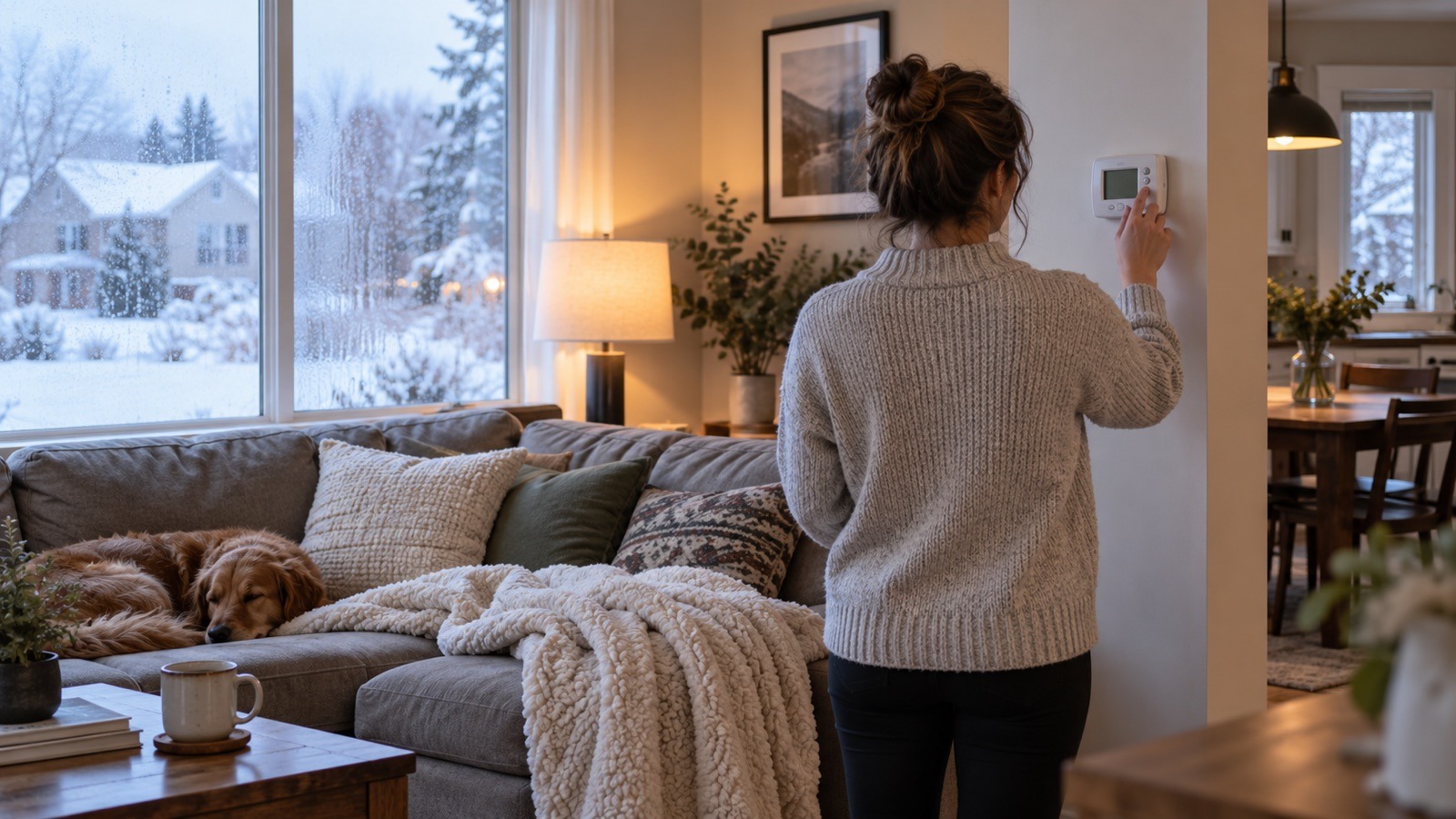
Your heating system may be working perfectly — and your home can still feel cold.
That is because warmth does not disappear in only one dramatic place.
It slips through a loose door seal. It stalls behind a sofa. It gets lost in an unheated attic. It struggles through a dirty filter or a closed vent.
Turn up the thermostat, and the furnace or heat pump simply has to work longer against the same problem.
Before assuming you need a new heating system, try this quick check.
Start Here: A 60-Second Heat Check
Walk through your home while the heat is running.
Do not focus only on the number on the thermostat.
Instead, notice what the room is telling you:
- Can you feel moving cold air around windows, exterior doors, outlets, or the attic hatch?
- Are supply vents covered by furniture, rugs, curtains, or closed louvers?
- Does the heating system seem to run for a long time without warming the farthest rooms?
- Are upstairs rooms much warmer than downstairs rooms — or the reverse?
- Does the air filter look gray, dusty, or overdue for replacement?
- Do you close several interior doors for most of the day?
- Are the attic, basement rim joists, or accessible ducts noticeably colder than the rooms beside them?
What did you notice?
Cold air seems to move around a window or door?
One room stays cold while the rest of the house feels comfortable?
Pay special attention to #3, #4, and #5.
The whole home heats slowly, and the equipment seems to run constantly?
Check #6 and #7 before jumping straight to replacement.
You may not need to make the entire house warmer.
You may need to stop making heat fight its way into — and around — the rooms you already use.
Looking for a Specific Problem?
- You feel a draft near windows or exterior doors? Start with #1.
- Your windows feel cold even without an obvious draft? Check #2.
- The room is warm near the vent but cold across the room? Go to #3.
- Bedrooms change temperature when the doors are shut? Read #4.
- A room at the end of the duct run never catches up? Look at #5.
- Airflow feels weak throughout the home? Check #6.
- The ceiling or floor feels unusually cold? Pay attention to #7.
1. Small Air Leaks Are Creating Constant Drafts
A narrow gap may not look important.
But heating comfort is not only about air temperature. Moving air matters, too.
Cold outdoor air entering around a door, window, plumbing opening, outlet, fireplace, or attic hatch can make a nearby chair or floor feel uncomfortable even when the thermostat says the room is warm.
Meanwhile, heated air is finding its own way out.
The U.S. Department of Energy recommends looking beyond the obvious places: air leakage can occur at floors, walls, ceilings, ducts, wiring penetrations, fireplaces, and other joints in the home’s envelope.
What to notice
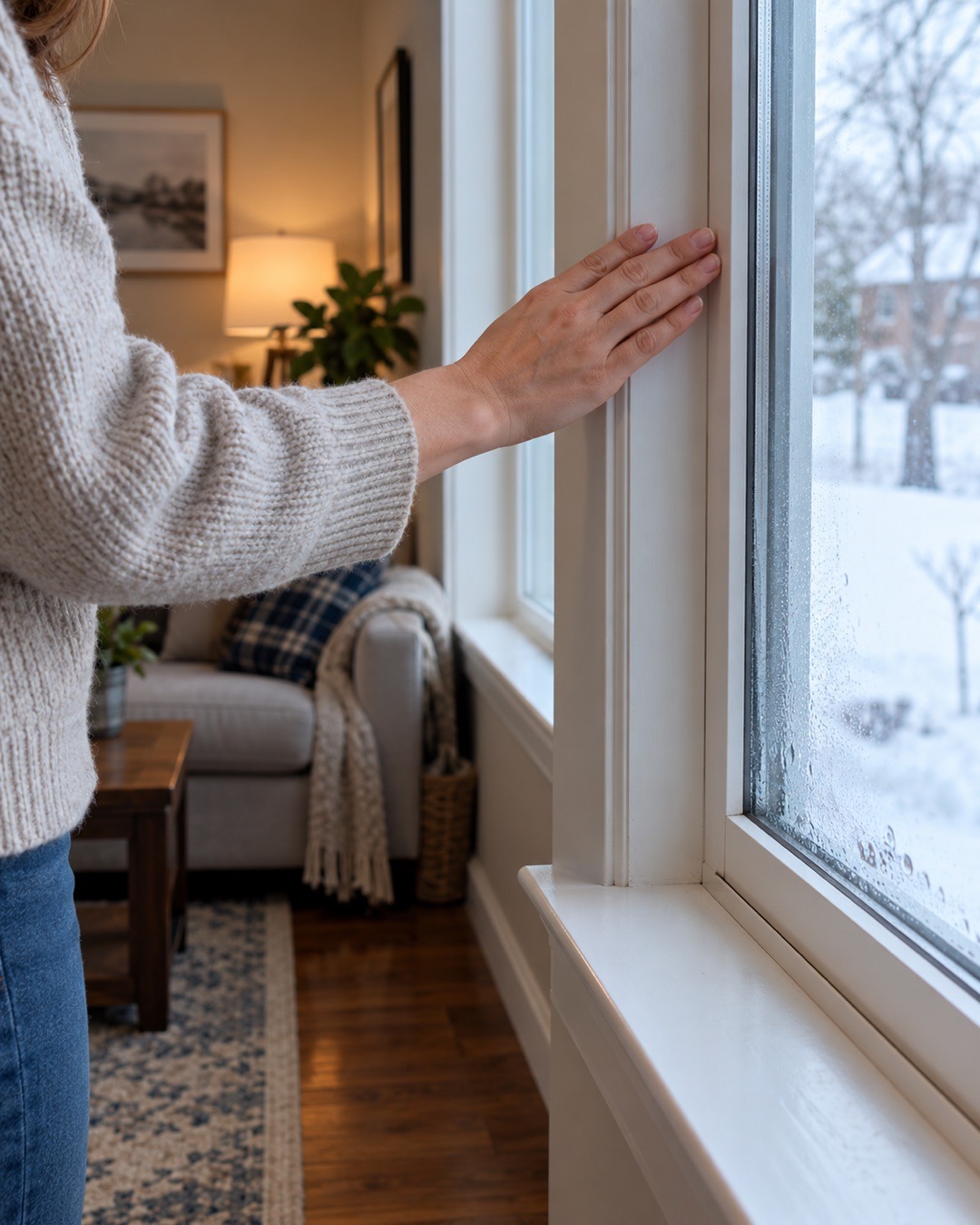
On a cold or windy day, slowly move your hand around:
- window frames
- the bottom and sides of exterior doors
- outlets and switches on exterior walls
- baseboards
- attic hatches
- places where pipes or cables enter a wall
Do not use an open flame to search for drafts.
Look for daylight around a door, curtains that move when the window is closed, worn weatherstripping, or a patch that feels consistently colder than the surrounding surface.
Try this
Start with the leak you can actually identify.
Weatherstripping is generally used around parts that move, such as doors and operable windows. Caulk is commonly used for stationary gaps and cracks.
Follow the product directions and use materials intended for that location. Renters should check with the property owner before making a permanent repair.
If drafts seem widespread, a professional home energy assessment can locate leakage more systematically than guessing room by room.
Why it matters
Insulation slows heat moving through a surface.
Air sealing slows heated air escaping through gaps.
A home often needs both. Adding more heat without addressing uncontrolled airflow can leave the equipment working harder while the occupants still feel a draft.
2. Your Window Coverings Are Working at the Wrong Time
Windows can make a room feel colder even when they are closed.
The glass surface may be colder than the room, and small leaks around the frame can create noticeable discomfort nearby.
Window coverings can help — but only when they match the conditions outside.
Keeping every blind or curtain closed all day may block useful winter sunlight. Leaving them open all night can expose the room to a cold glass surface for hours.
What to notice
Look at the windows on the sunniest side of the home.
Does direct winter sunlight reach the floor or furniture during the day?
Are those same windows left uncovered after sunset?
Do curtains hang directly over a baseboard heater, radiator, or floor register?
Heavy fabric can reduce drafts near a window, but it should not trap heat behind the curtain or touch a heating appliance.
Try this
On sunny winter days, open coverings where the sun can add warmth.
Close them after the sun moves away or at night, especially in rooms with large windows.
Keep fabric safely clear of radiators, baseboard heaters, and vents. Follow the heating equipment manufacturer’s clearance guidance.
If a window is persistently drafty, treat the covering as a comfort measure — not a substitute for repairing the air leak.
Why it matters
The goal is not to keep every window covered.
It is to use free solar warmth when it is available, then add a layer between the room and cold glass when it is not.
That simple timing change can make the space beside a window feel much less demanding to heat.
3. Furniture and Rugs Are Blocking the Heat
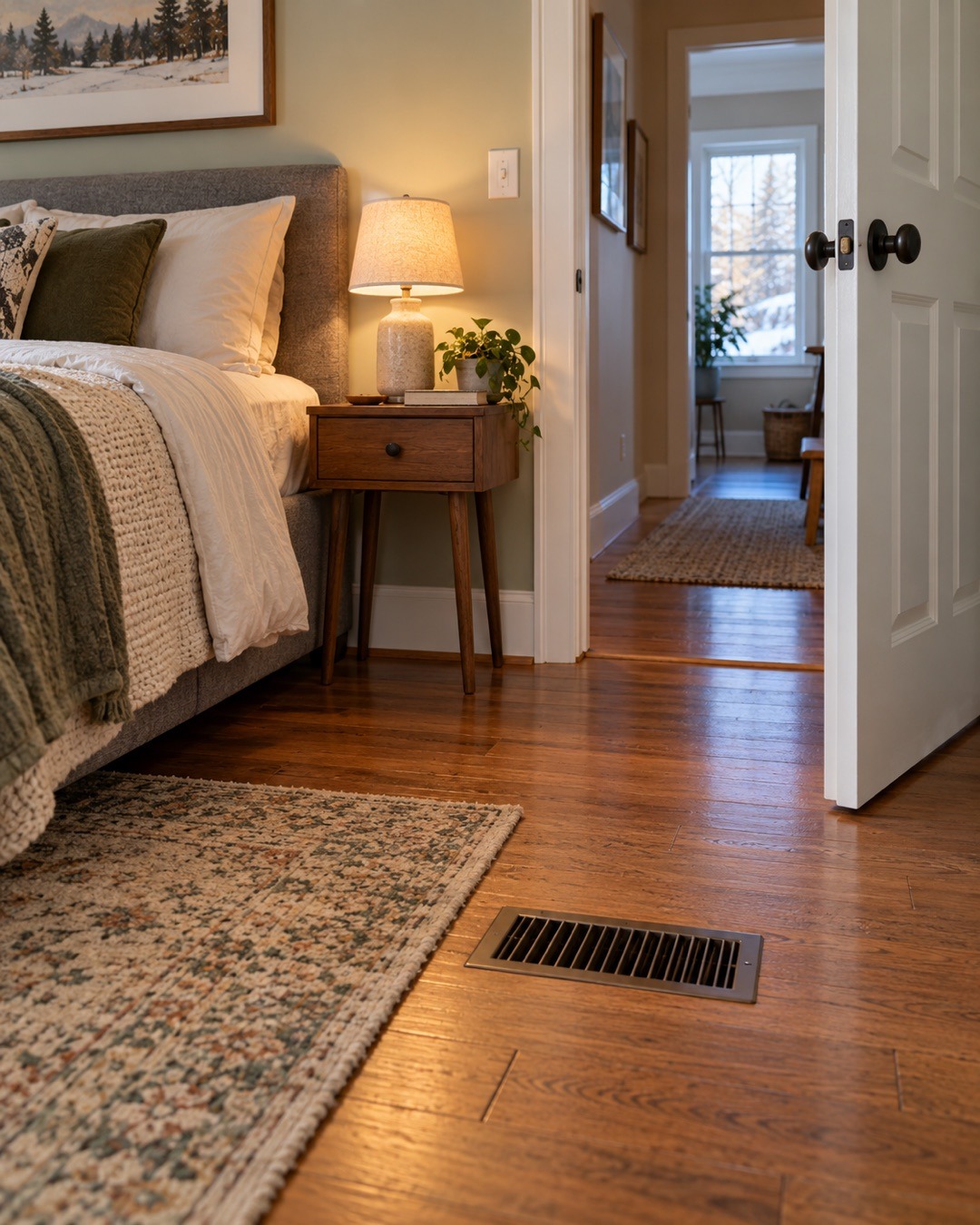
A supply vent can be open and still fail to warm the room.
All it takes is a sofa placed over a floor register, a long curtain hanging in front of a baseboard unit, or a bed pushed against the only vent in a small bedroom.
The heated air arrives.
It just never gets a clear path into the occupied part of the room.
What to notice
Find every supply register, return grille, radiator, and baseboard heater in the room.
Then look at the space immediately around it.
Is a rug covering part of the opening?
Is furniture sitting directly above it?
Is a curtain moving when the system turns on?
Is a large bookcase blocking a return grille that needs to pull room air back toward the system?
Try this
Move movable objects away from registers and returns.
Open supply louvers that were accidentally closed.
Vacuum dust from accessible grilles without pushing debris into the duct. Keep furniture, fabric, toys, and storage safely away from radiators and other hot surfaces.
Then let the system complete a normal heating cycle before judging the difference.
Do not close large numbers of vents in an attempt to force heat elsewhere unless an HVAC professional has confirmed that the system is designed for it.
Why it matters
Forced-air heating depends on circulation.
The system supplies warm air and needs a route for room air to return. When either side is obstructed, comfort can suffer even though the equipment is producing heat.
Sometimes the cold-room problem is not a lack of capacity.
It is a traffic jam.
4. Closed Interior Doors Are Interrupting Airflow
Closing a bedroom door can create privacy.
It can also change how air moves through the heating system.
Many homes have supply vents in bedrooms but rely on a central return grille in a hallway or living area. When the door closes, the warm supply air still needs a way back out of the room.
If that path is too restricted, the room may become pressurized while the hallway is starved for return air.
What to notice
Compare the room with the door open and closed during similar heating cycles.
Does airflow at the supply register seem to change?
Does the door move slightly when the system starts?
Is there a generous gap below the door, a transfer grille, or a dedicated return in the room?
Does the room become noticeably colder or warmer after the door has been shut for an hour?
Try this
For a simple test, leave the door open when privacy is not needed and compare comfort.
Do not cut a door, add a grille, or alter ductwork based on guesswork. If closed-door rooms consistently behave differently, ask an HVAC professional about safe return-air pathways, system balance, and local code requirements.
Why it matters
Heating is a loop, not a one-way delivery.
Air has to reach the room, move through it, and return to the equipment.
A closed door can reveal a circulation problem that was always present but easy to miss.
5. Heat Is Leaking Out of the Ducts Before It Reaches the Room
The furnace or heat pump may be warming the air correctly.
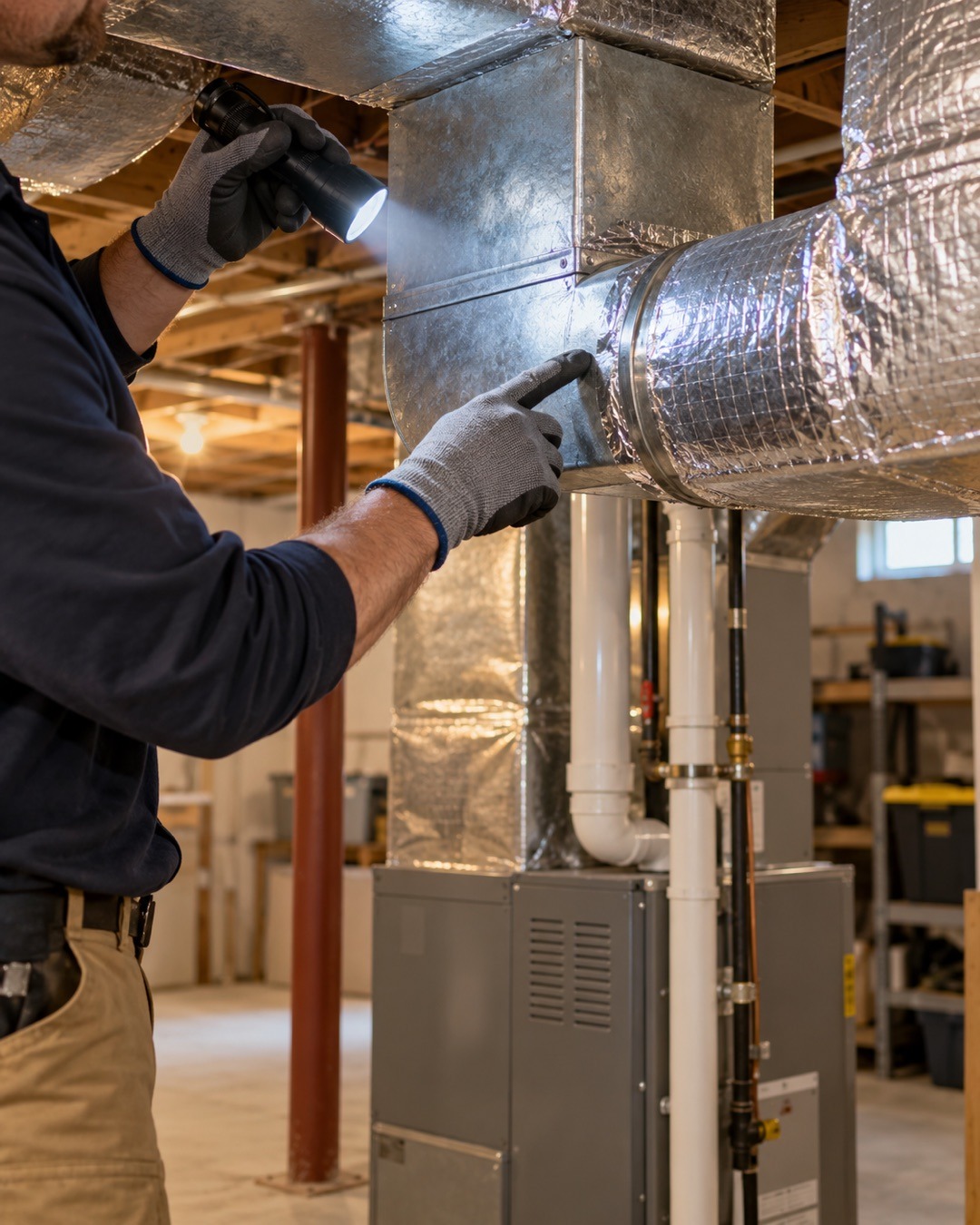
But if the ducts pass through an attic, crawlspace, garage, or unfinished basement, some of that heat can be lost before it reaches the register.
Loose connections, damaged insulation, and gaps at seams can also reduce airflow to the farthest rooms.
The U.S. Department of Energy notes that duct leakage and poor connections are common sources of energy loss, while ENERGY STAR says sealing and insulating ducts can improve heating and cooling efficiency substantially in some homes.
What to notice
Pay attention to patterns rather than one cold afternoon.
Are the rooms nearest the heating equipment comfortable while the farthest rooms lag behind?
Do accessible ducts have separated joints, crushed flexible sections, torn outer jackets, or missing insulation?
Can you hear air rushing in an unfinished space when the system starts?
Are there dark dust marks around duct connections that may suggest air movement?
Try this
Make sure accessible ducts have not been crushed or disconnected by stored items.
Do not use ordinary cloth-backed “duct tape” for a permanent duct repair. ENERGY STAR recommends duct mastic or metal-backed foil tape designed for ductwork.
Because ducts may be difficult to reach — and because some older duct insulation or nearby materials can be hazardous if disturbed — ask a qualified professional to evaluate significant leakage, damage, or insulation problems.
Why it matters
A thermostat measures the temperature in one location.
It does not know that heated air is spilling into a crawlspace or arriving weakly at the last bedroom.
The system may keep running because the house is not receiving the heat where it was intended to go.
6. A Dirty Filter or Neglected System Is Restricting Airflow
Filters are easy to forget because they work out of sight.
As dust builds up, airflow can slow. ENERGY STAR warns that a dirty filter can make heating and cooling equipment work harder to keep a home comfortable.
But the answer is not automatically to buy the thickest or highest-rated filter on the shelf.
A filter has to be compatible with the system.
What to notice
Find the filter and check:
- the installation date, if it is marked
- whether dust visibly covers the media
- whether the filter is bent or poorly fitted
- whether the airflow arrow points in the correct direction
- whether the system manual specifies a particular size or filter range
Also notice unusual noises, frequent cycling, weak airflow, burning smells, or rooms that have recently become harder to heat.
Try this
Inspect the filter regularly and replace or clean it according to the equipment and filter manufacturer’s instructions.
Use the correct dimensions and an appropriate filter rating for the system. If you are unsure, ask the equipment manufacturer or an HVAC professional.
Schedule professional service if the system shows persistent airflow problems, unusual odors or sounds, repeated shutdowns, or signs of combustion trouble.
If a carbon monoxide alarm sounds, leave the home and follow local emergency guidance. Do not troubleshoot a fuel-burning appliance yourself.
Why it matters
The heating equipment cannot distribute warmth efficiently if it cannot move enough air.
Routine maintenance will not fix missing insulation or a leaky house.
But it removes one avoidable obstacle between the system and the rooms it is trying to heat.
7. The Insulation Is Missing Where Heat Escapes Fastest
Warm air rises, which makes the top of the house especially important in winter.
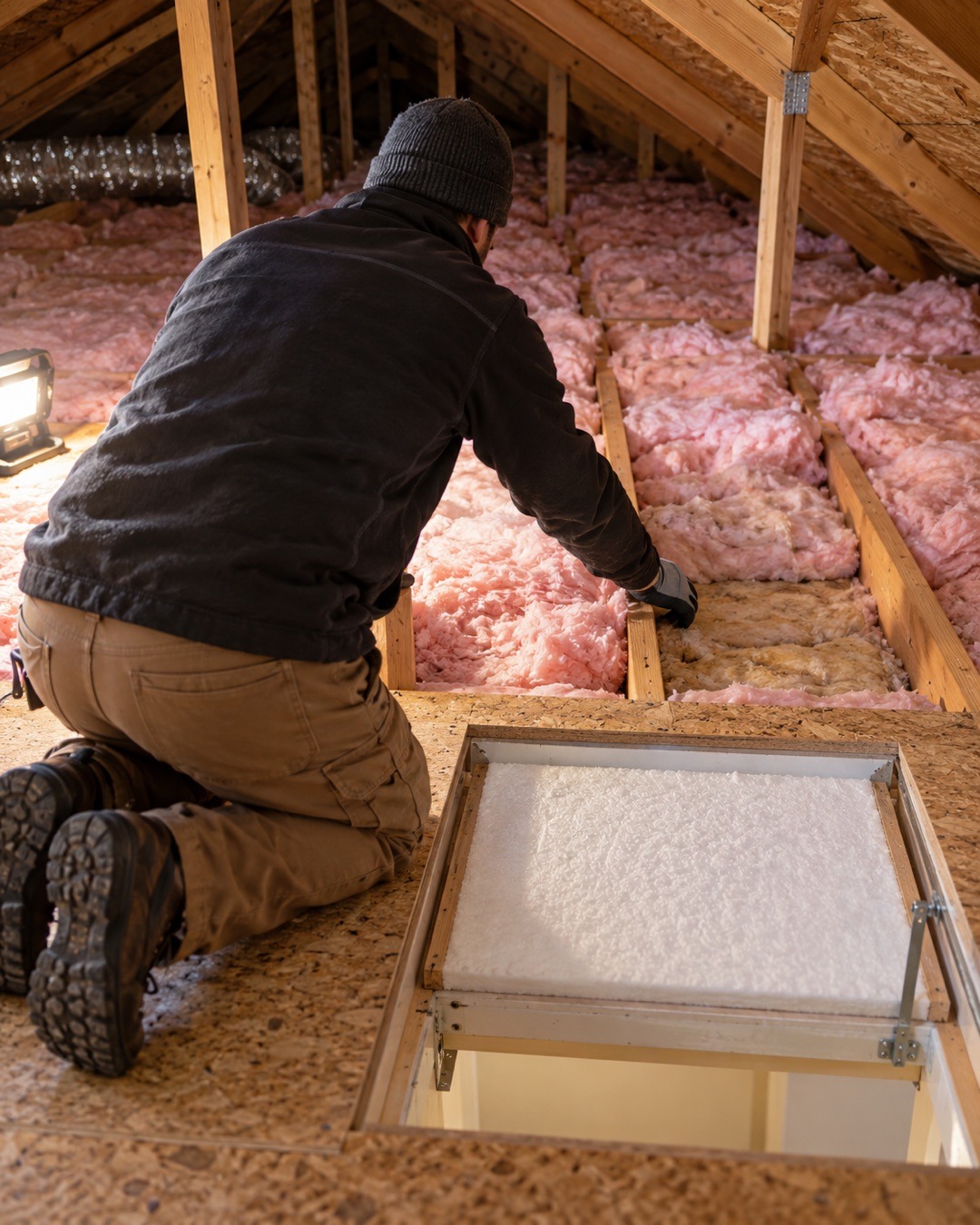
An attic with thin, uneven, compressed, or displaced insulation can allow heat to move upward more easily. Gaps around an attic hatch, recessed lights, wiring, pipes, or wall tops may also let warm air leak into the attic.
The basement and crawlspace matter, too.
Cold floors and chilly edges around the first story can point to problems at rim joists, foundation walls, or the floor above an unconditioned space.
What to notice
From a safe, accessible position, look for:
- attic insulation that sits below the tops of the framing
- bare or noticeably thin patches
- insulation pushed aside around storage or wiring
- an uninsulated attic hatch
- dirty streaks that may indicate air moving through insulation
- cold floors above a garage, crawlspace, or unfinished basement
- recurring ice dams, condensation, or moisture stains
Do not step between attic framing members or disturb suspect insulation, vermiculite, damaged materials, wiring, or mold.
Try this
Begin with an energy assessment instead of buying insulation by appearance alone.
Insulation levels, air sealing, ventilation, moisture control, combustion safety, and climate all affect the correct solution. Natural Resources Canada describes airflow control and insulation as connected parts of how a house manages heat and moisture.
A qualified energy advisor or insulation professional can identify where work is likely to matter and how to do it safely.
Why it matters
The thermostat can replace heat that escapes.
It cannot stop the escape.
Improving the home’s thermal boundary can make temperatures more even and reduce the amount of time the heating system has to run — but only when air, moisture, and ventilation are handled together.
Before You Replace the Heating System
When a home feels cold, the furnace or heat pump gets blamed first.
Sometimes that is correct.
Equipment can be improperly sized, poorly maintained, inefficient, or near the end of its useful life. A professional should investigate persistent comfort problems, repeated failures, unusual smells or sounds, and any combustion-safety concern.
But the heater is only one part of the house.
Before making a major purchase, ask whether the problem changes after you have checked:
- identifiable drafts
- how window coverings are used
- blocked supplies and returns
- closed-door airflow
- accessible duct condition
- the correct filter and maintenance schedule
- attic, basement, and crawlspace insulation
If several rooms behave differently, a whole-home energy assessment or HVAC evaluation can be more useful than replacing parts one at a time.
The Quick Checklist
Walk through the home while the heat is on:
- ✓ Feel around windows and exterior doors for moving cold air
- ✓ Open sunny window coverings during the day and close them after dark
- ✓ Move rugs, furniture, and curtains away from vents and returns
- ✓ Compare bedroom comfort with the door open and closed
- ✓ Look for accessible duct damage or disconnected sections
- ✓ Check the filter against the manufacturer’s instructions
- ✓ Inspect the attic hatch and visible insulation from a safe location
- ✓ Note which rooms heat first and which never seem to catch up
- ✓ Write down unusual sounds, smells, cycling, or airflow changes for a professional
Then make one change at a time.
Let the home go through a normal heating cycle before deciding whether it helped.
A warmer-feeling home is not always created by a higher thermostat setting.
Sometimes it comes from giving heat a clear path, closing the gaps that let it escape, and fixing the part of the house that is making the equipment work harder than it should.