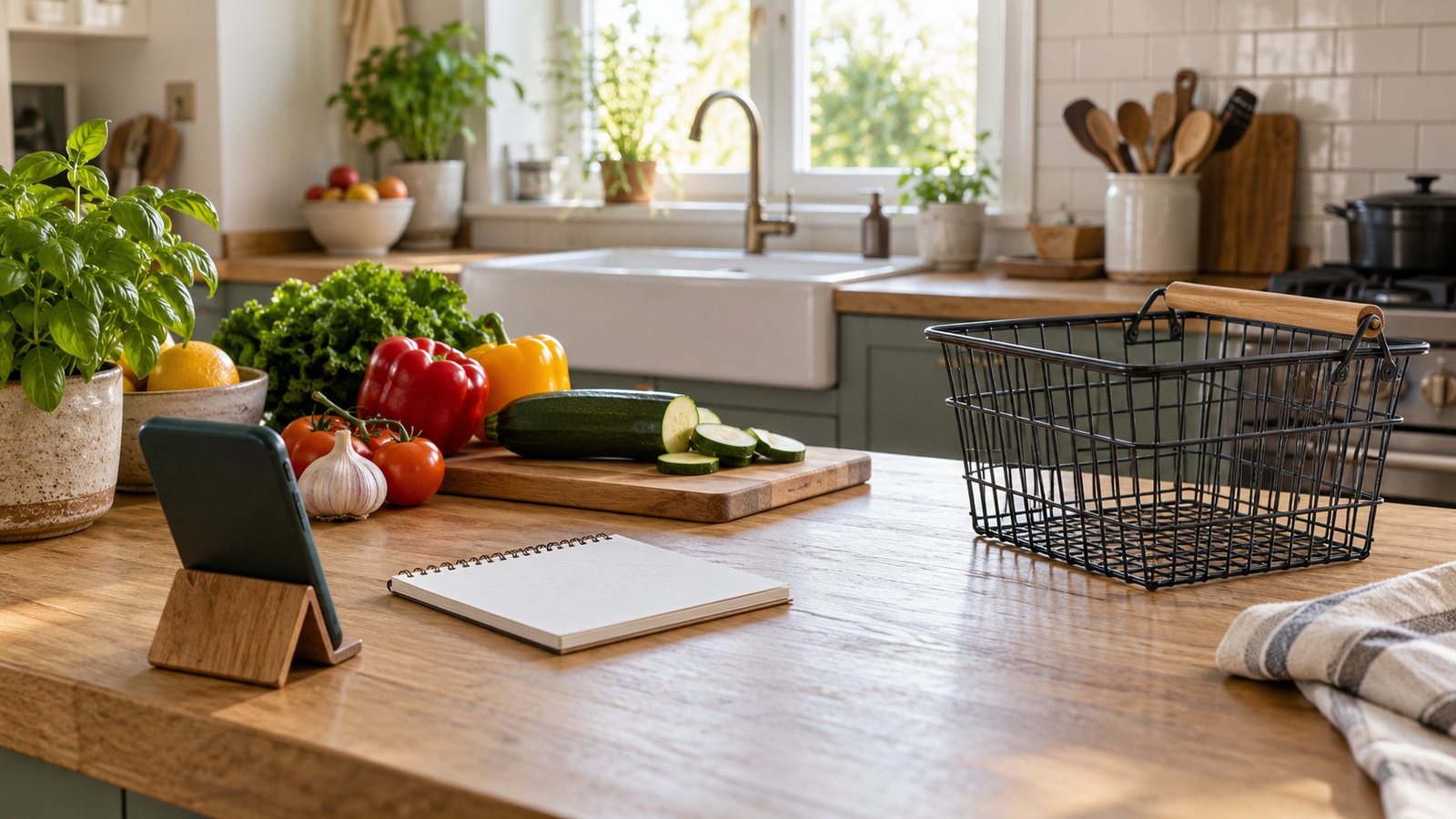
Save the source, record confirmed amounts, and mark anything missing before you make a shopping list. A fast cooking video can skip the ingredient that appears in a caption or leave out a crucial step between cuts.
You do not need a special app. A note with four sections—source, ingredients, shopping list and cooking order—is enough. The goal is a plan you can verify, not an attractive transcription of an incomplete clip.
1. Capture the source and uncertainties
Save the video link, creator’s name and the location of any written recipe. Record the stated servings. Pause to check the spoken instructions, on-screen amounts and description together.
For each ingredient, record the quantity, unit and preparation state: dry or cooked pasta, drained or undrained beans, chopped or whole vegetables. Write “not stated” when the source gives no amount.
If the caption and spoken instructions disagree, do not silently choose one. Check the creator’s linked recipe or clarification. Keep the original link in your note so you can return to the exact instruction.
2. Scale the confirmed quantities
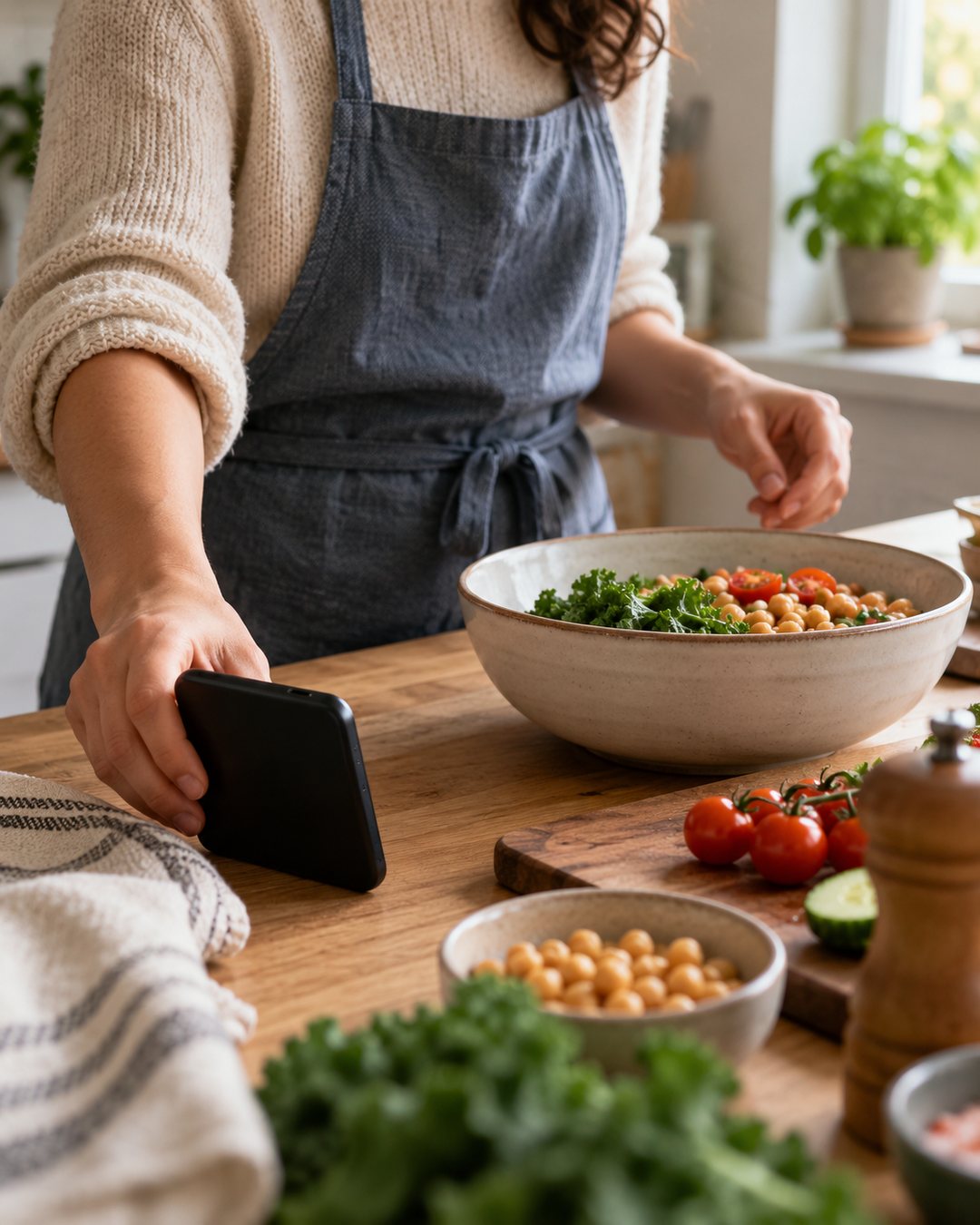
Use desired servings ÷ original servings as your scaling factor. For a four-serving recipe reduced to two, the factor is 2 ÷ 4 = 0.5.
Here is an invented planning example, not a recipe transcribed from a real video or a tested dish. Suppose the confirmed four-serving notes list 320 g dry pasta, 400 g canned tomatoes, 240 g drained canned beans and 100 g spinach.
- Dry pasta: 320 × 0.5 = 160 g (about 5.6 oz).
- Canned tomatoes: 400 × 0.5 = 200 g (about 7.1 oz).
- Drained canned beans: 240 × 0.5 = 120 g (about 4.2 oz).
- Spinach: 100 × 0.5 = 50 g (about 1.8 oz).
Use one measurement system consistently; the ounce values above are rounded. Scaling ingredients does not mean halving the cooking temperature or time. Package instructions, pan size and the food’s condition still matter.
3. Subtract the pantry before buying
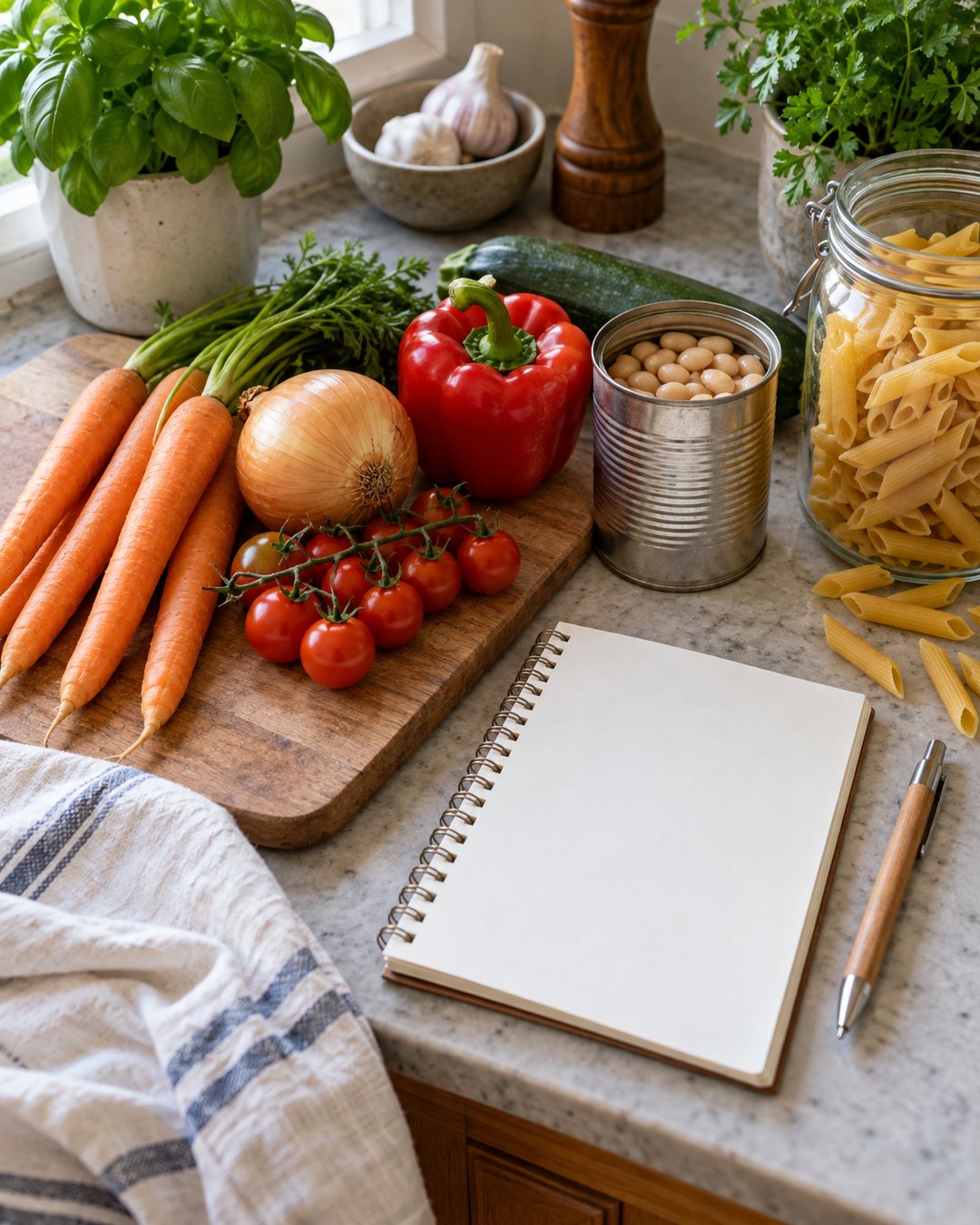
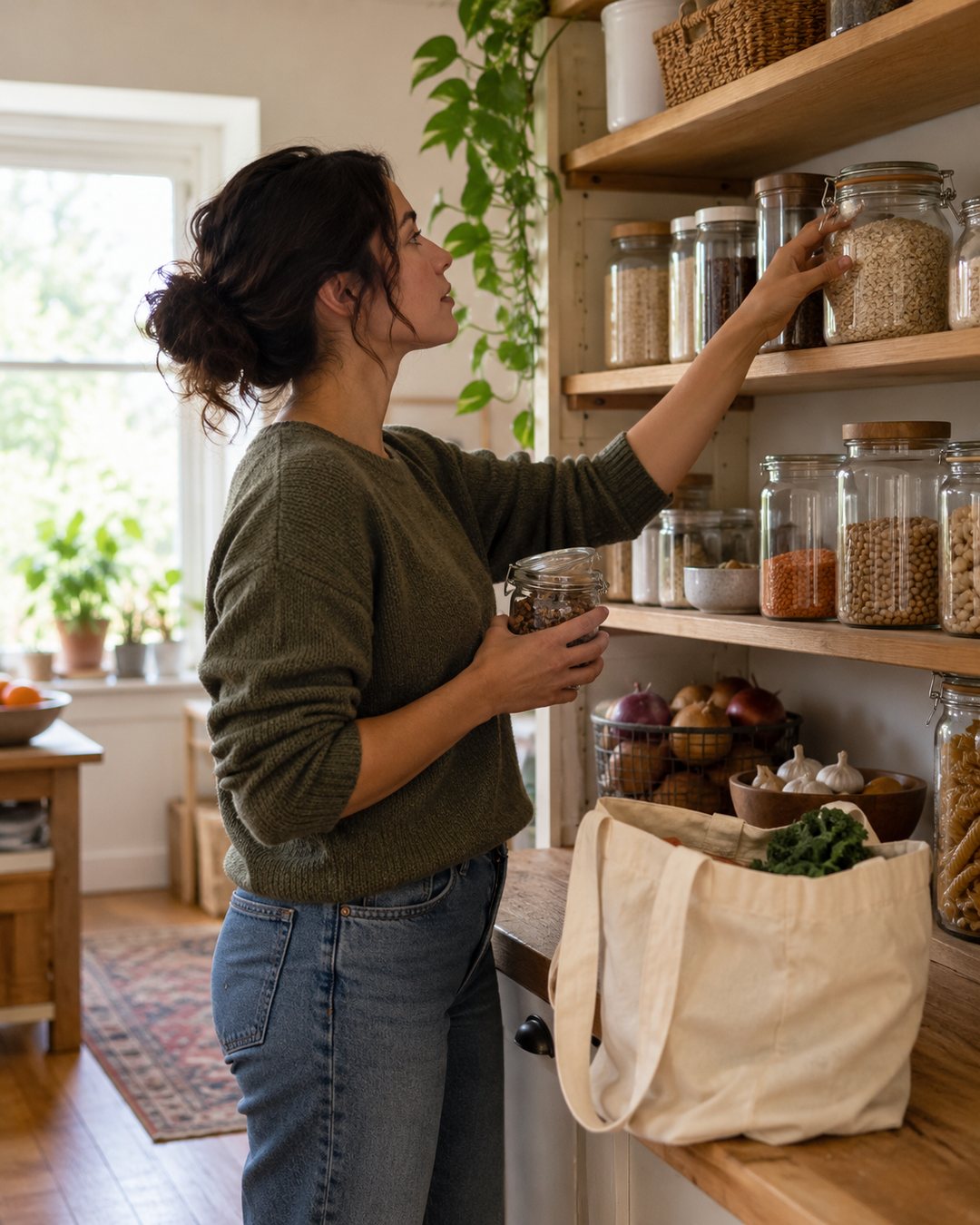
For each item, write needed / usable amount on hand / shortfall / package to buy. Count only ingredients you can actually use, considering condition, storage and dietary needs.
In the example, if you have 100 g of dry pasta and need 160 g, the shortfall is 60 g. You may buy a normal package, but the amount to cook remains 160 g. Do not replace a recipe quantity with the size of the package you purchased.
For beans, compare the required drained quantity with the label’s drained weight where provided, not automatically the total can weight. Note what you will do with the remainder according to its storage instructions.
Group the final list by shopping area: produce, canned goods and dry goods. Keep unresolved ingredients in a separate “check before shopping” section.
4. Build the cooking order from dependencies
Write the tasks in an order that allows you to work calmly: check equipment, wash and prepare produce, start the component that takes longest, prepare the remaining components, then combine and serve as the verified recipe directs.
For the illustrative pasta notes, a planning sequence might say: check the actual recipe; weigh ingredients; prepare produce; cook pasta according to its package; prepare the tomato-and-bean component according to the recipe; combine with spinach as directed. This deliberately leaves cooking details with the verified instructions rather than inventing them.
Do not interpret an edited video’s running time as the dish’s actual cooking time. Check for omitted soaking, preheating, resting or cooling periods.
An optional AI prompt that preserves the gaps
Organize these recipe notes into confirmed ingredients, unresolved details, a shopping list and an ordered task list. Keep all original quantities and units. Do not invent amounts, temperatures, cooking times or substitutions. Show the original amount, scaling factor and new amount for each ingredient. Ask me to resolve missing safety-critical instructions before treating the plan as complete.
Check the resulting numbers yourself. AI may confuse drained weight, serving counts or preparation states even when the prompt asks it not to.
Keep basic food safety in the written plan
Wash hands and preparation surfaces, rinse produce under running water as appropriate, and keep raw animal foods separate from ready-to-eat items. Follow reliable cooking-temperature guidance for ingredients that need it.
FoodSafety.gov advises refrigerating perishable food within two hours, or one hour above 90°F/32°C, using shallow containers for leftovers. A viral clip is not a substitute for safe preparation and storage instructions.
For turning the finished plan into a realistic evening schedule, see our weekly planning example. Official safety reference, checked October 29, 2026: FoodSafety.gov: four steps to food safety.
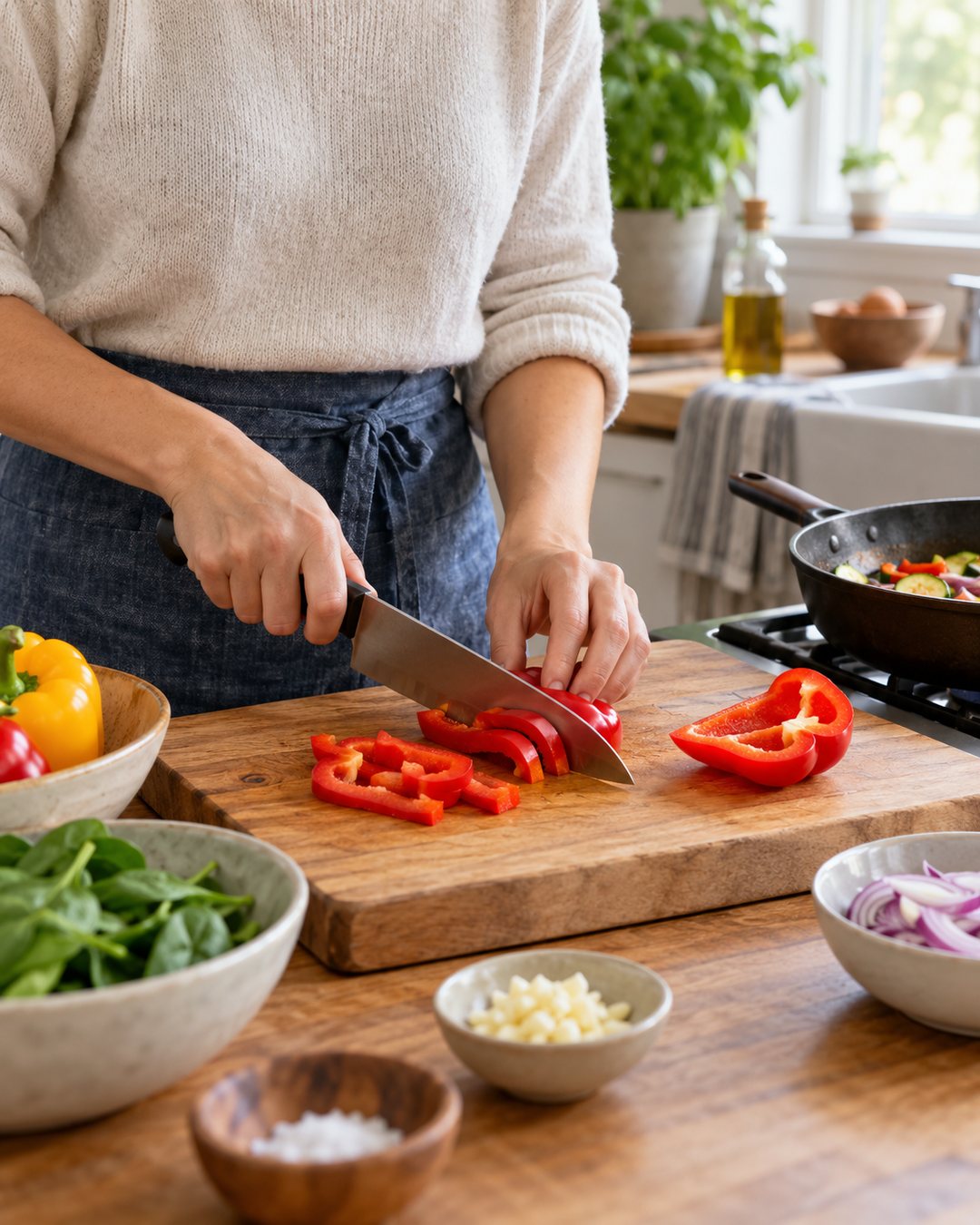
Images are AI-generated illustrations, not screenshots, documented tests or photographs of a tested recipe or home installation.