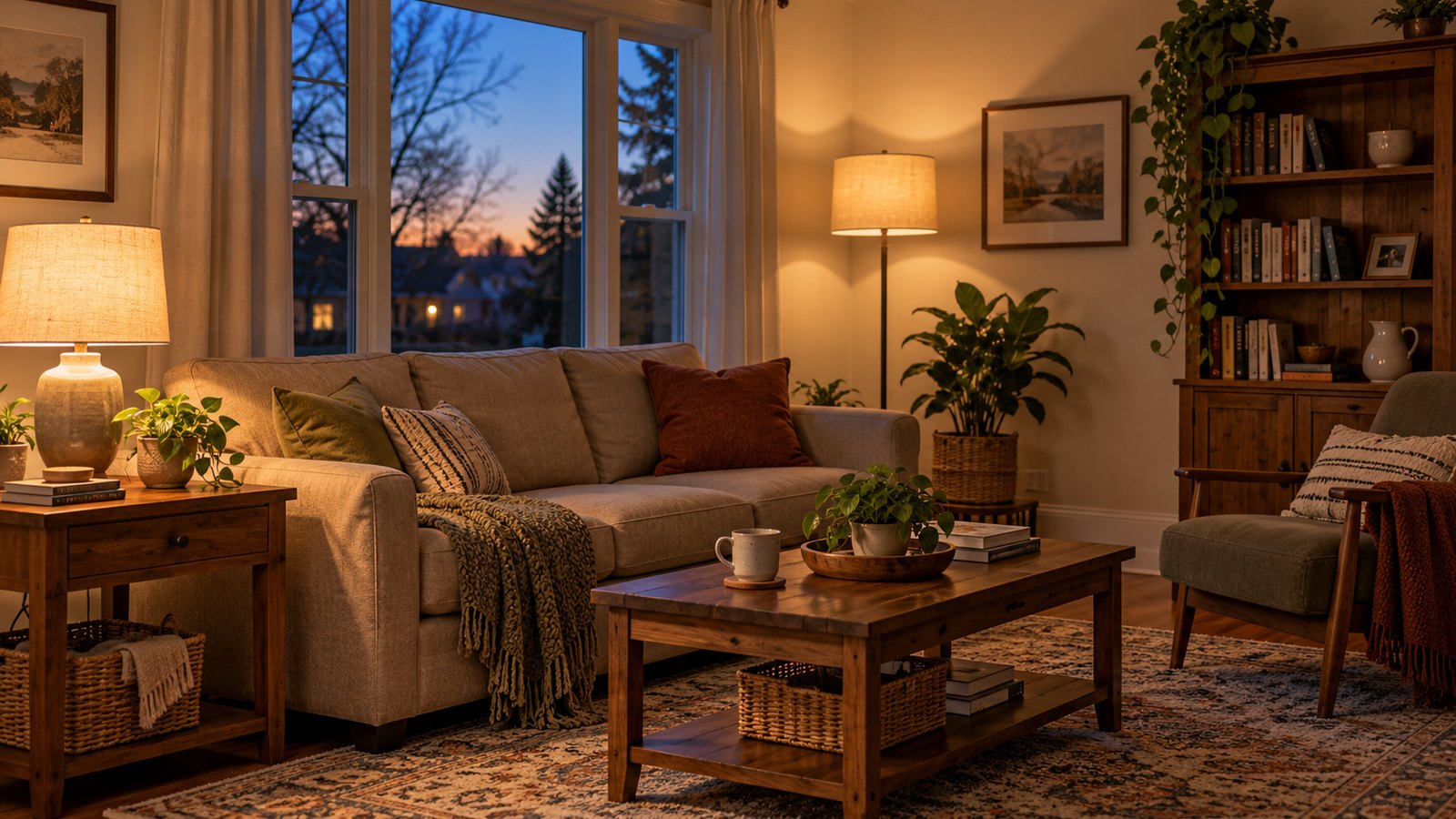
Your living room can have a comfortable sofa, soft blankets, and your favorite colors—and still feel a little chilly after sunset. Sometimes the missing piece is the light around them.
Small lighting changes can make a home look warmer and feel more inviting, without changing its actual temperature. Start with one room and use what you already own before buying anything.
Quick answer: Try a warm-white bulb, move a shaded lamp closer to where you sit, and soften an overly bright ceiling light. Keep enough light for reading, cooking, and moving safely.
1. Try a warmer bulb in the lamp you use most
Turn on your usual evening lamp. Does the light look soft and yellowish, or crisp and blue-white?
For a cozy living room or bedroom, 2700K is a useful starting point. A 3000K bulb can feel a little crisper while still looking warm. These are color-temperature choices, not room-temperature settings. Lower Kelvin numbers describe warmer-looking light; they do not mean the bulb produces more useful heat. ENERGY STAR explains the Kelvin scale here.
Try one bulb before replacing a whole room’s worth. Paint, lampshades, and your own preferences affect how the result looks.
Small change tonight: Swap one cool-looking bulb for a compatible warm-white LED. Turn the lamp off, let the old bulb cool, and follow the fixture’s bulb and wattage limits.
2. Give the ceiling light some help
A single bright overhead fixture can leave the corners dark while making the center of the room feel exposed. Adding light lower in the room can make the space more comfortable to spend time in.
Try a table lamp beside the sofa or a floor lamp near an armchair. Use the ceiling light when you need it, then adjust the combination for the evening.
You do not need a strict formula or a lamp in every corner. Start by lighting the place where you actually sit. Keep walkways clear and route cords away from foot traffic; never hide them beneath rugs.
Look around: Is your favorite seat in a pool of comfortable light, or sitting between a bright ceiling and a dark corner?
3. Hide the bare bulb from your seated view
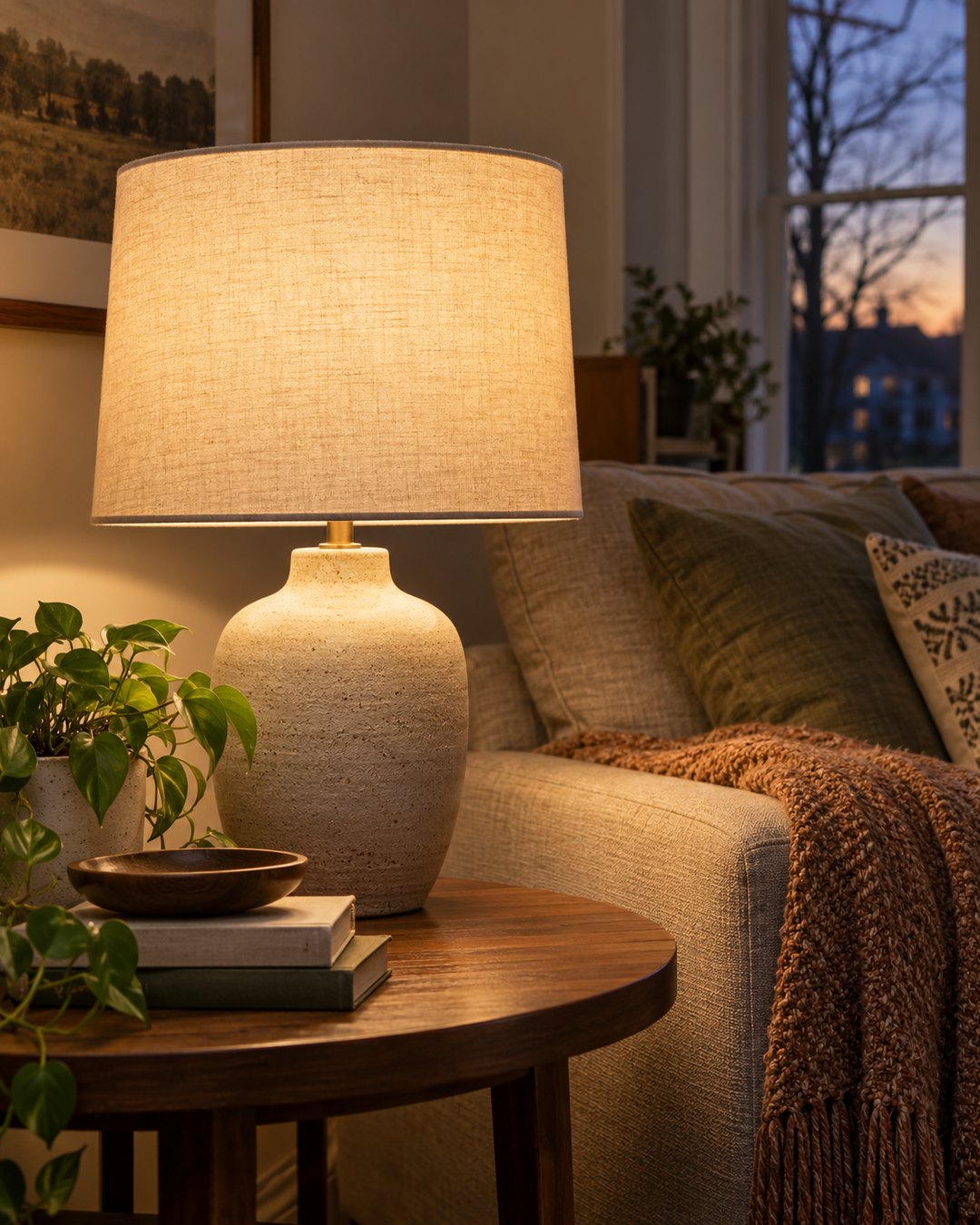
Sometimes a room feels harsh because you can see a bright bulb directly—not because the room needs less light overall.
Sit where you normally relax and look toward each lamp. A properly fitted shade or a small change in lamp position can reduce that direct glare. A light-colored shade may spread light more softly; a dark shade tends to direct more of it above and below.
Choose a shade designed for the lamp and maintain the manufacturer’s clearance around the bulb. Never drape fabric, paper, or a scarf over a lamp to diffuse it.
Try this first: Move the lamp slightly to the side and check it again from the sofa. A tiny position change may be enough.
4. Keep reading light separate from mood lighting
A cozy room should still work for the things you do in it. If you find yourself leaning toward a book or struggling to see a puzzle, dimming everything further is unlikely to help.
Use a reading lamp to put useful light on the page while keeping the surrounding light softer. Adjust its direction so it does not shine into your eyes or reflect off a glossy screen.
When shopping, check lumens for brightness and Kelvin for color appearance. Watts describe power use, so the wattage of an LED is not a direct brightness match for an old incandescent bulb. The Department of Energy’s lighting guide explains these labels.
Small change tonight: Aim your existing reading lamp at your activity before adding another bulb elsewhere.
5. Make neighboring lights feel more consistent
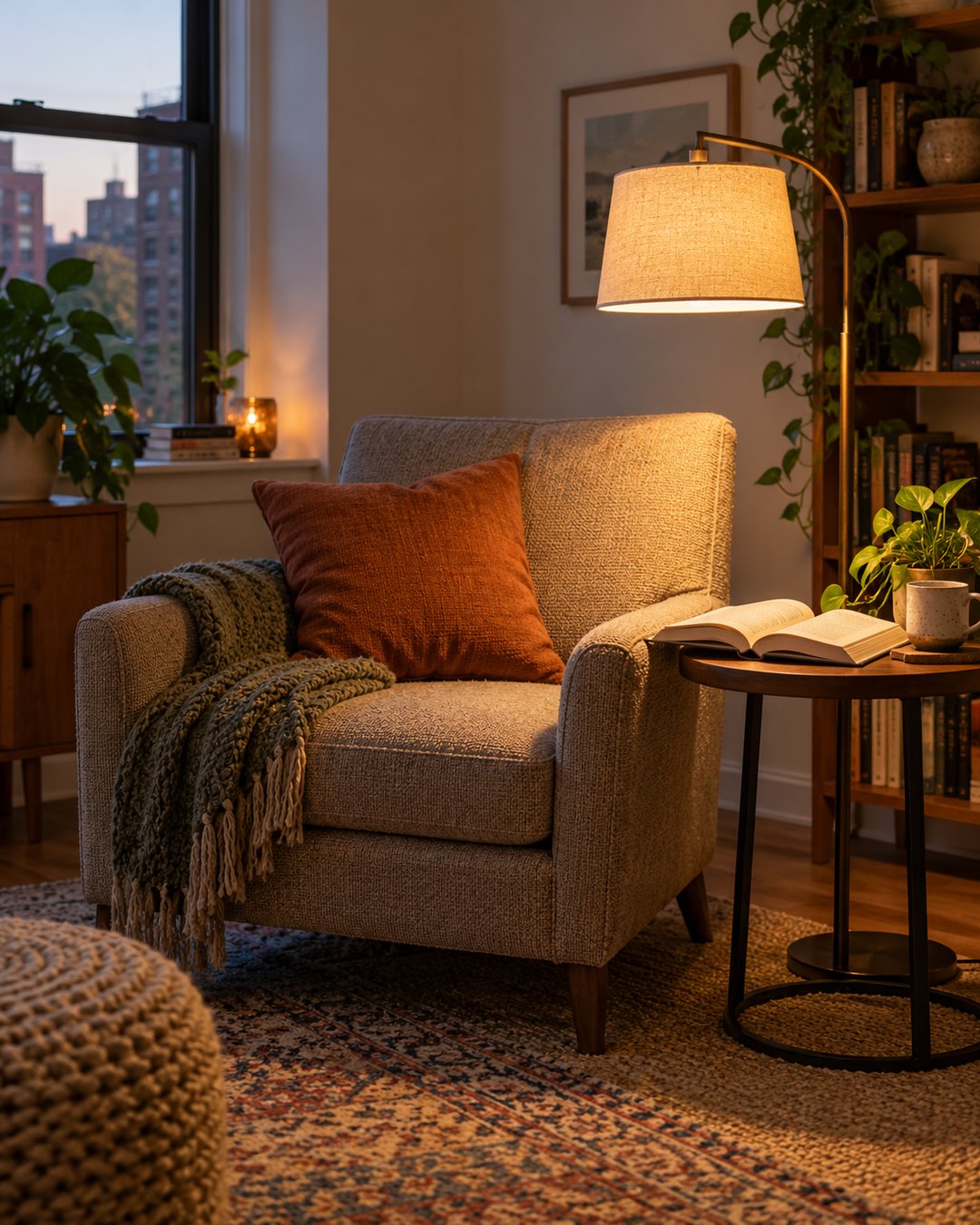
A warm lamp beside a very blue-white lamp can make the room feel visually unsettled. The difference is especially noticeable when both lights illuminate the same wall.
Check the Kelvin ratings of bulbs in the same seating area. Trying similar color temperatures can help the light feel more cohesive. Keep useful task lighting where you need it; every fixture in the house does not have to match.
Two bulbs with the same rating can still look slightly different. Test them together in the actual room, rather than relying entirely on a package photo.
Quick check: Stand in the doorway after sunset. Is one lamp noticeably cooler than all the others? Start there.
6. Add dimming only where the lamp supports it
The brightness you want for cleaning may be too much for watching a movie. A compatible dimmer can let the same light serve both moments.
For LEDs, check that the bulb is labeled dimmable and that the dimmer supports that bulb or fixture. Not every LED and dimmer combination works well together. Manufacturer compatibility lists are a better guide than assuming all dimmable products will match. See ENERGY STAR’s dimmer guidance.
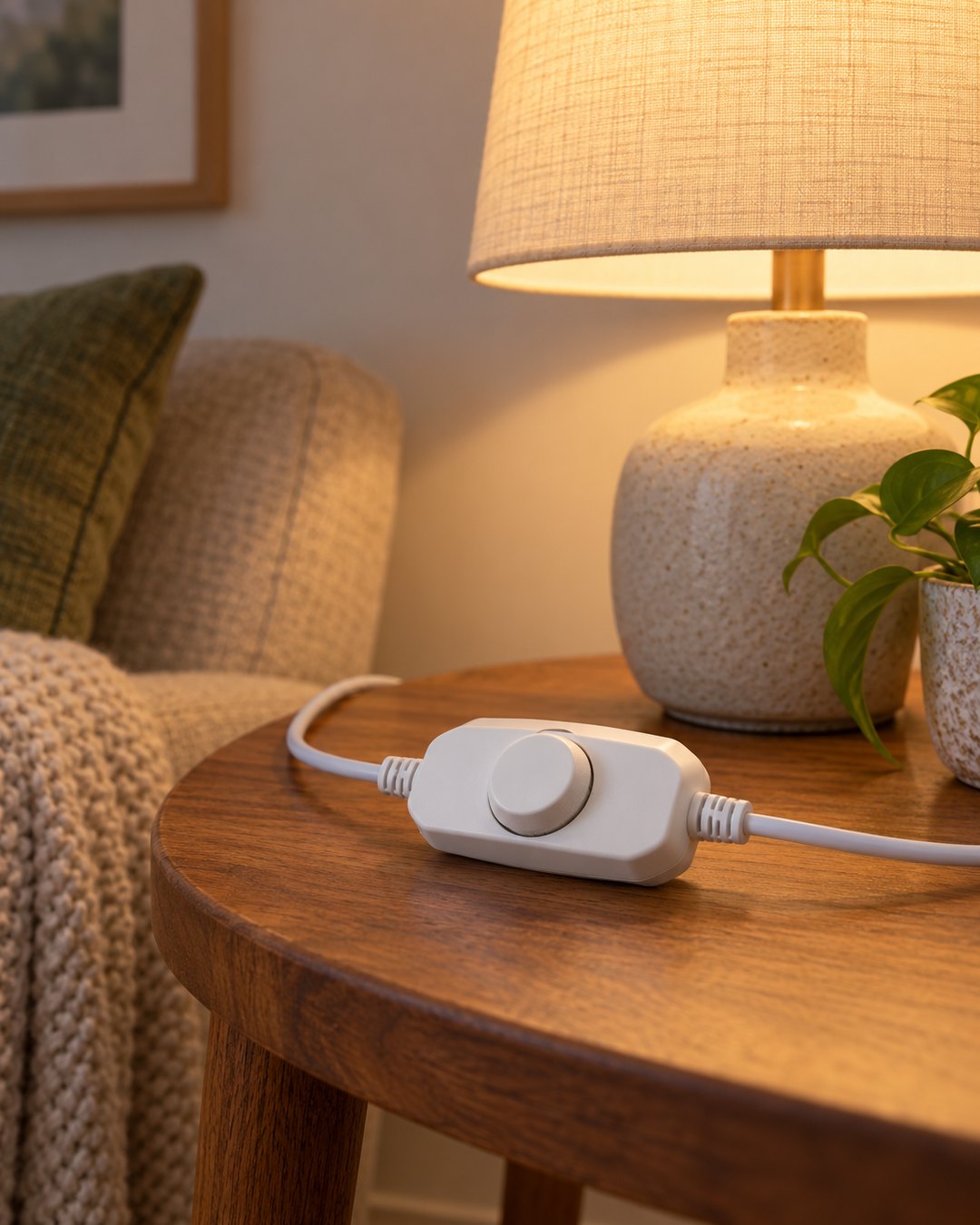
A compatible plug-in dimmer may suit some plug-in lamps. Follow both products’ instructions, and do not use a lamp dimmer with an appliance or an unsupported lamp. Have a qualified electrician handle wall-switch changes when needed.
Keep it practical: If a setup flickers, buzzes, or behaves unexpectedly, stop using that combination and check its compatibility. Do not accept the problem as part of the cozy effect.
7. Light a surface instead of brightening the whole room
If a corner looks flat, try directing an adjustable lamp toward a wall, provided the fixture is designed for that use. Reflected light can create a gentler background than another exposed bulb pointed into the room.
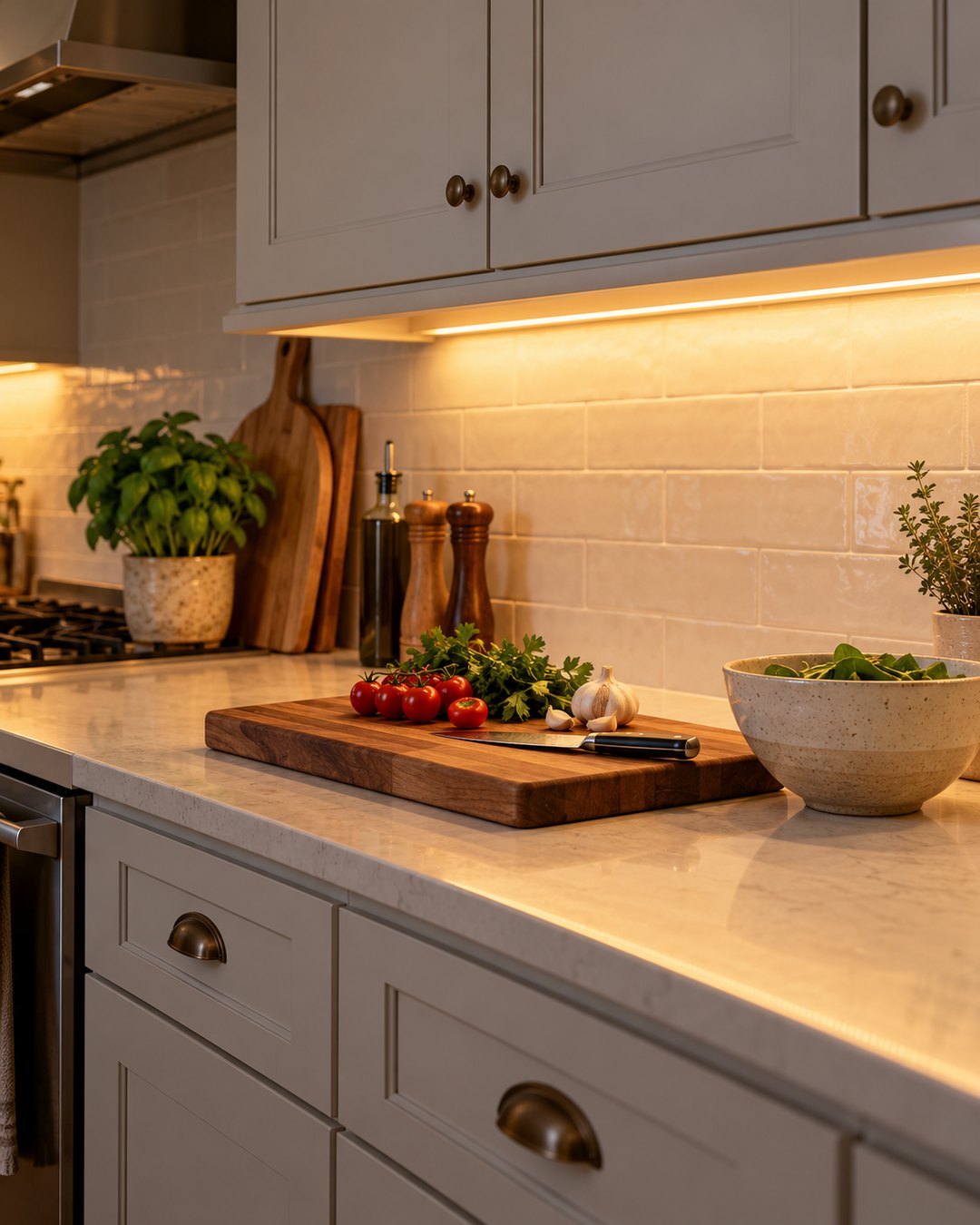
In the kitchen, a suitable under-cabinet light can illuminate the counter while letting you use less overhead light during quieter moments. Keep enough light for knives, hot cookware, and reading labels.
Use fixtures rated for their location, including moisture exposure where relevant. Install and mount them as directed, keep required clearances, and avoid improvised wiring or loose strips near heat and water.
Look around: Is there a dark wall or work surface that would benefit from more targeted light, instead of a brighter ceiling bulb?
8. Create one simple evening setting
The most useful lighting change may be a habit: choose a comfortable combination of lights and make it easy to repeat.
For example, turn on the sofa lamp and reading light after dinner, then lower a compatible ceiling light. Leave halls, stairs, and other routes safely visible. If you use timers or smart bulbs, check that the schedule fits your household rather than turning everything off while someone is still moving around.
Walk through the room once from the doorway and once from your usual seat. Adjust glare, dark patches, and cords before deciding you need another purchase.
Your evening setting should serve you: comfortable enough to relax, bright enough to use the room, and simple enough to switch on every day.
A quick room check before you buy anything
- Check whether your main evening bulb looks too cool for your taste.
- Move one existing lamp closer to the place you use.
- Look for a bare bulb shining into your eyes.
- Keep a useful light on books, counters, and walking routes.
- Test the result after dark, when you will actually use it.
Change one thing at a time. That makes it easier to tell whether a warmer bulb, a better shade, or a different lamp position made the difference.
Common questions
Is 2700K or 3000K better for a cozy room?
Both can work. Start with 2700K if you prefer a softer, more yellow appearance; try 3000K if you want a slightly crisper warm white. Test a bulb in your room before replacing several.
Can bright lighting still feel warm?
Yes. Brightness and color temperature are different. A warm-white bulb can provide plenty of light, especially when its placement and shade reduce glare.
Will warmer-looking bulbs heat my home?
“Warm white” describes appearance. Choose your heating system for room temperature and your lighting for visibility and atmosphere.
Do I need smart bulbs?
No. An ordinary compatible LED and an existing lamp may be enough. Smart controls are optional if scheduling or adjustable settings would be useful to you.
Start with the light beside your favorite seat. A small adjustment there is easy to test—and easy to enjoy every evening.
General information. Follow fixture instructions; use an electrician for wiring.