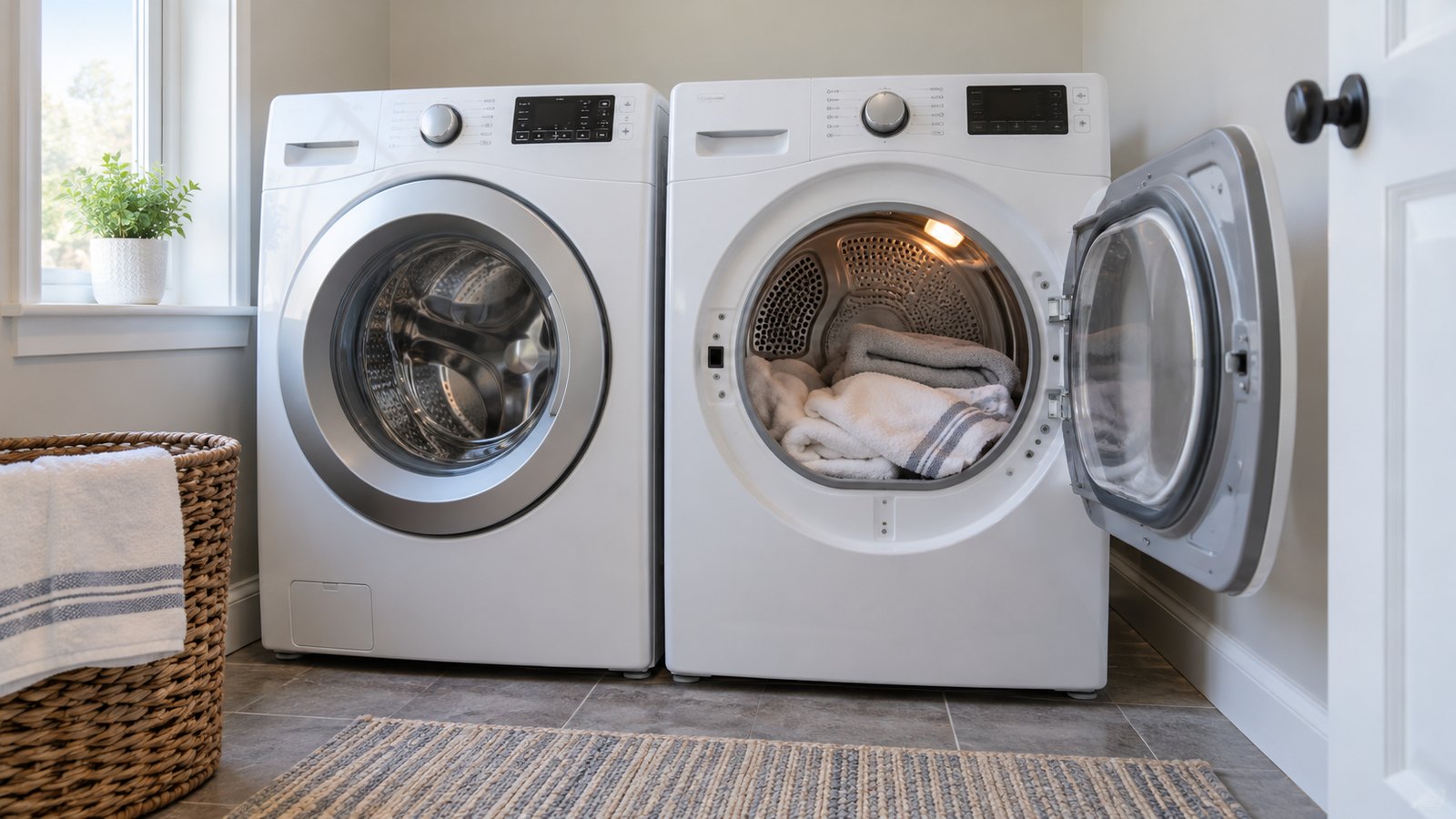
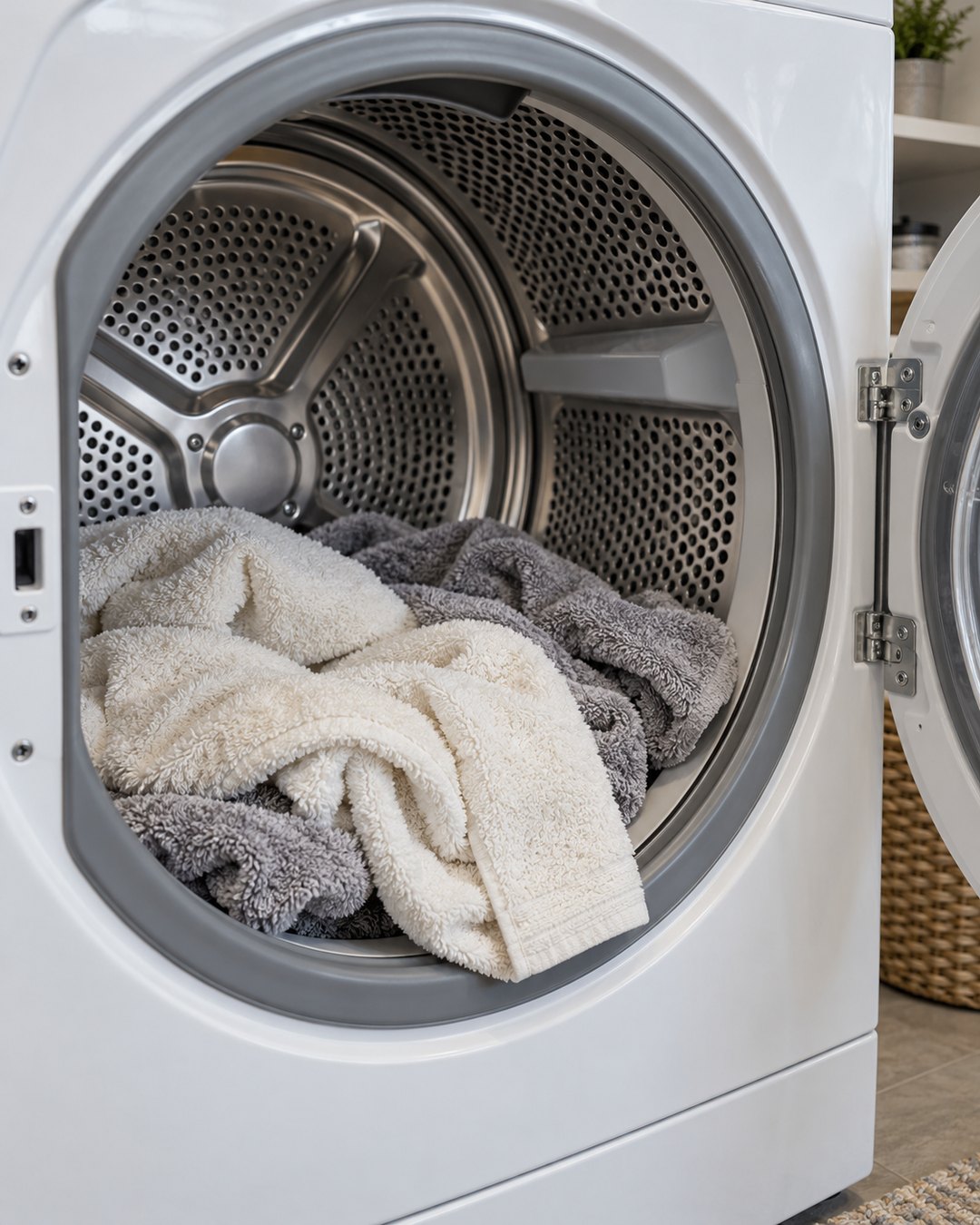
The towels used to dry in one cycle. Now they need extra time, and you are wondering whether the dryer is wearing out.
Before assuming the appliance needs replacing, consider its exhaust path. A vented dryer needs a clear route for moist air to leave the house. Lint buildup or another restriction can interfere with that airflow—but similar symptoms can also come from loading, settings, or a mechanical fault.
Quick answer: Longer drying times, weak outdoor exhaust, visible lint at the outlet, unusual heat, new moisture, a vent warning, or burning smells deserve attention. These are clues to investigate, not proof that cleaning alone will fix the dryer.
This guide is for dryers that exhaust outdoors. Ventless condenser and heat-pump models have different maintenance requirements; follow their manuals.
Before checking anything: Do not run a dryer that smells burnt, overheats, produces smoke, or has damaged wiring. If there is smoke, fire, a carbon monoxide alarm, or suspected gas leakage, leave the building and call 911 from outside. For suspected gas, do not operate switches, plugs, appliances, or a phone indoors. Gas-emergency guidance.
1. A familiar load takes noticeably longer to dry
Think about a load you wash regularly: the same towels, similar load size, and the same appropriate cycle. Has its drying time changed?
The CPSC identifies clothes remaining damp or needing longer than usual as possible signs of a blocked lint screen or exhaust duct. That is a reason to check airflow, rather than simply adding more heat. CPSC dryer safety alert.
One unusually bulky load is not enough to diagnose a vent problem. An overloaded drum, a different cycle, or laundry coming out wetter from the washer can also change the result.
What to do: With the dryer off and cool, clean the lint screen as instructed. If ordinary loads still take longer, arrange an exhaust-system inspection or appliance service. Do not keep rerunning loads to work around a persistent change.
2. The outdoor vent flap barely opens during normal operation
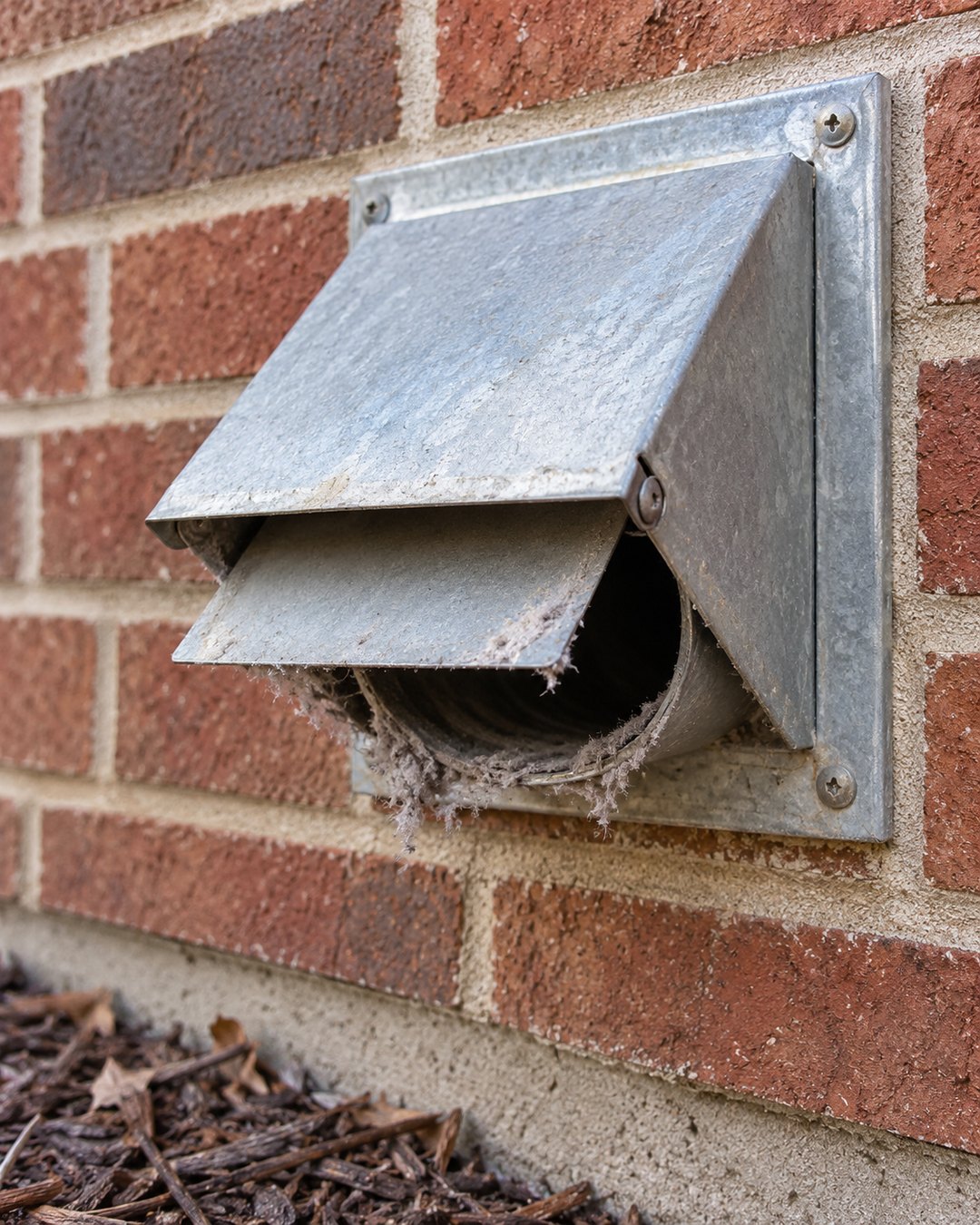
The outside exhaust hood is easy to overlook, especially if it is behind landscaping or on a side wall you rarely use.
If the dryer is already operating normally with no warning signs, an adult can observe an accessible outdoor outlet from a safe position. The USFA recommends checking that its covering opens during operation. A flap that stays closed can indicate a restriction or a stuck mechanism. USFA dryer safety tips.
Do not start a suspect dryer solely to carry out this check, reach into an operating outlet, or climb to a roof vent. Airflow judged by sight alone does not prove that the entire duct is clear.
What to do: If the flap is not opening or exhaust seems absent, stop using the dryer and have the exhaust path checked. Leave high, inaccessible, or shared-building outlets to a professional.
3. Lint is collecting at the outside outlet
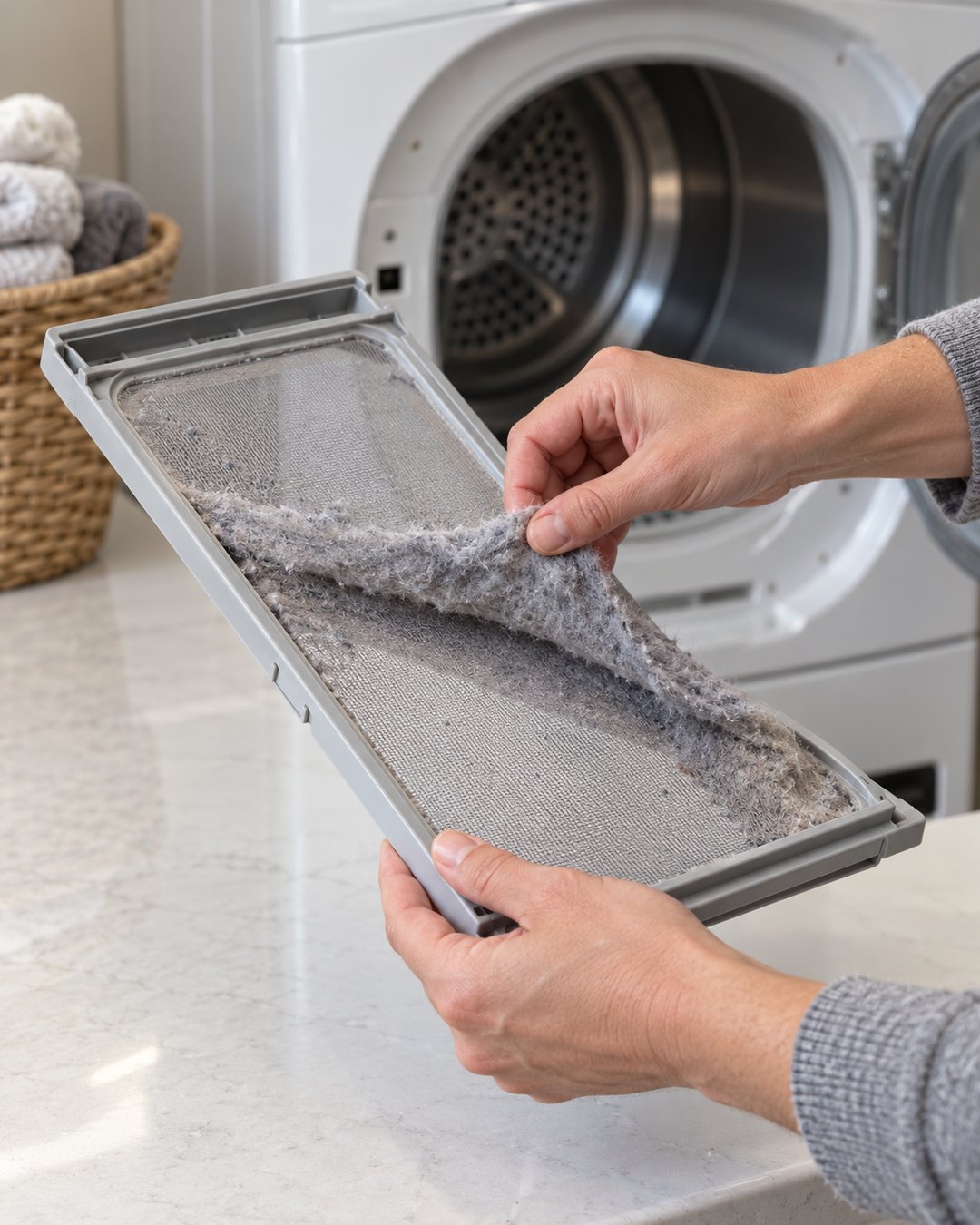
A little lint on the removable screen after a load is expected. A mat of lint collecting around the outside hood deserves a closer look.
Health Canada advises checking the outdoor exhaust for lint and keeping the opening clear of obstructions such as foliage and snow. Health Canada’s moisture guide.
Visible debris at the end of the system does not tell you how much is inside it. Cleaning just the hood cannot confirm that a long duct is clear. Conversely, an outlet that looks tidy does not rule out a restriction farther back.
What to do: With the dryer off and cool, follow its instructions for accessible exterior maintenance. Do not add mesh or improvise a cover, and do not push a blockage deeper into the duct. Arrange service for an inaccessible outlet or recurring accumulation.
4. The dryer seems unusually hot
Some warmth during a heated cycle is expected. A noticeable change from the dryer’s usual behavior, scorching, or heat-related shutdowns should not be dismissed as normal aging.
Restricted airflow can allow excessive heat to build up. Lint is only one possible cause: a crushed duct, installation problem, or appliance fault may need attention too. The CPSC explains why exhaust restrictions matter in its dryer safety alert.
Do not use your hand as a temperature test on a hot cabinet, exhaust pipe, plug, or outlet. There is no universal “safe-to-touch” test for homeowners to diagnose this problem.
What to do: Stop using the dryer and arrange qualified service before restarting. Do not repeatedly reset a tripped breaker or bypass a thermal safety device. If smoke or fire is present, leave and call 911.
5. New condensation or dampness appears during drying
Notice when the moisture appears. Is there new condensation around the dryer or on its controls during a cycle? Does the room become noticeably more humid than it used to?
Poor venting can contribute to condensation because moist air is not escaping properly. Whirlpool describes this connection in its condensation troubleshooting guidance.
This is a reason to check the exhaust system, not a definitive diagnosis. Plumbing leaks, indoor laundry drying, and other moisture sources can also be involved. A detached exhaust connection needs repair; cleaning alone will not reconnect it.
What to do: Stop using a dryer that is visibly exhausting indoors. Ask a qualified technician to check the connections and route. Do not improvise an indoor lint bucket or redirect a vented dryer into the room.
6. A “Check Vent” or airflow warning keeps returning
Some dryers can flag restricted airflow. The wording and meaning depend on the model, so look up the exact message in your manual.
For example, Whirlpool explains that certain “AF” or “Check Vent” messages can relate to lint blockage, crushed or kinked ducting, or an unsuitable vent layout. Clearing the display does not remove the underlying problem. Whirlpool airflow-warning guidance.
Do not assume every error means the duct is dirty. Photograph the message and note your model number before arranging help.
What to do: Follow the manual’s troubleshooting steps. If the warning returns, have the exhaust system inspected instead of repeatedly dismissing it. Absence of a warning light does not certify that the vent is clear.
7. There is a burning smell or scorching
This is a stop-and-investigate signal, not a reminder to finish one more load. A burning smell can have several causes, including an appliance or electrical fault. Do not assume lint cleaning will make it safe.
If there is no smoke, fire, or suspected gas leakage and the controls are safely accessible, stop the dryer. Keep it out of use until a qualified technician has identified the cause.
For smoke, fire, or a carbon monoxide alarm, leave and call 911. For a rotten-egg or sulfur-like gas smell, leave immediately without operating the dryer, switches, plugs, or electronics. Call 911 or your gas utility from a safe outdoor location and stay out until cleared to return. National Grid emergency guidance.
What to do: Treat the symptom according to its urgency. Do not start another cycle to see whether the smell goes away.
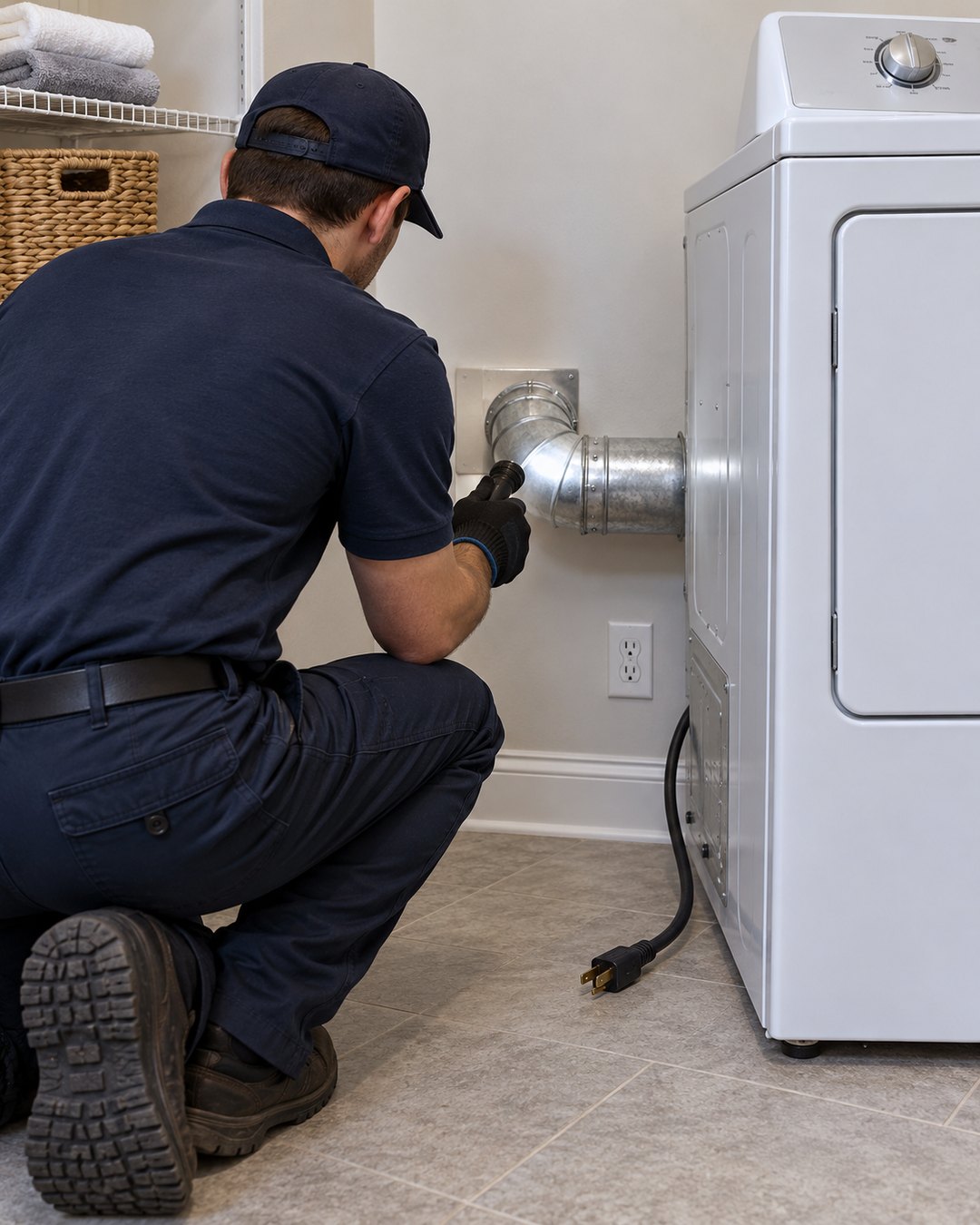
What to check—and what to leave to a professional
For routine maintenance, follow your model’s instructions, clean its lint screen after each load, and keep the surrounding area clear. The City of Toronto also advises turning the dryer off before leaving home or going to bed. Toronto dryer safety guidance.
For duct cleaning or disconnection, the dryer should be off, cool, and isolated from electrical power according to its instructions. This is routine-maintenance advice only: if you suspect a gas leak, leave without touching plugs or switches.
Leave gas connections, internal dryer cleaning, inaccessible or long duct runs, roof outlets, and unresolved overheating to qualified professionals. Renters should contact the landlord or building manager, especially for shared systems.
Ask the technician to check the whole route and confirm correct reconnection and airflow before use. Cleaning may need to be accompanied by repair if the duct is damaged or badly routed.
How often does a dryer vent need cleaning?
Use your appliance instructions and the condition of the installation to set a schedule. There is no single interval that suits every household.
Whirlpool’s general guidance mentions one to two years, or sooner when performance decreases, with frequency affected by use and the items dried. Your own model’s requirements take priority. Do not wait for a calendar date when warning signs appear. Whirlpool venting guidance.
Keeping a short service note can help: record the date, what was cleaned or repaired, and any technician recommendations. That gives you a useful starting point next time drying performance changes.
Common questions
Is cleaning the lint screen enough?
No. The screen and the exhaust duct are different parts of the system. A clean screen does not establish that the route outdoors is clear.
Does slow drying always mean a clogged vent?
No. Load size, cycle settings, excess water left by the washer, and appliance faults can also affect drying. Persistent changes deserve diagnosis.
Can I use the dryer with its exhaust duct disconnected?
Do not operate a vented dryer with its exhaust disconnected or venting indoors. Have the system correctly reconnected and checked before use. This is especially important for gas dryers, which must exhaust combustion products outdoors.
Should I buy a new dryer first?
A service diagnosis is a more useful first step than guessing. A replacement appliance will not resolve a problem in the home’s existing exhaust route.
If your regular load has changed, make a note of what you see and stop working around it with extra cycles. The next useful step is finding the cause—not assuming a new machine or a quick cleaning will solve everything.
General information, not a diagnosis. Follow your dryer manual; use qualified service.