
Give suitable-to-rewear clothes one small, separate place: a hook, a short rail or a shallow basket. Keep it visible and limited. If the whole bedroom becomes a waiting area, the system is too large or too hard to reset.
First decide whether the garment should be worn again at all. Storage cannot make dirty clothing clean, and airing is not a substitute for laundering when laundering is needed.
Make the laundry decision before the storage decision
Inspect for moisture, stains, dirt and odor, and consider the activity you wore it for. Follow the garment’s care label. The American Cleaning Institute recommends washing underwear, socks and T-shirts after each wear; some outer layers can be worn again depending on conditions.
Do not use smell alone as your test. A shirt worn briefly over another layer and a shirt worn through a sweaty workout are different cases. Clothes needing washing go to the laundry route, not the rewear zone.
Never put damp garments into a closed pile or drawer. Let them dry appropriately before storage or handle them according to the care label. Leave contaminated work clothing out of this everyday organization system.
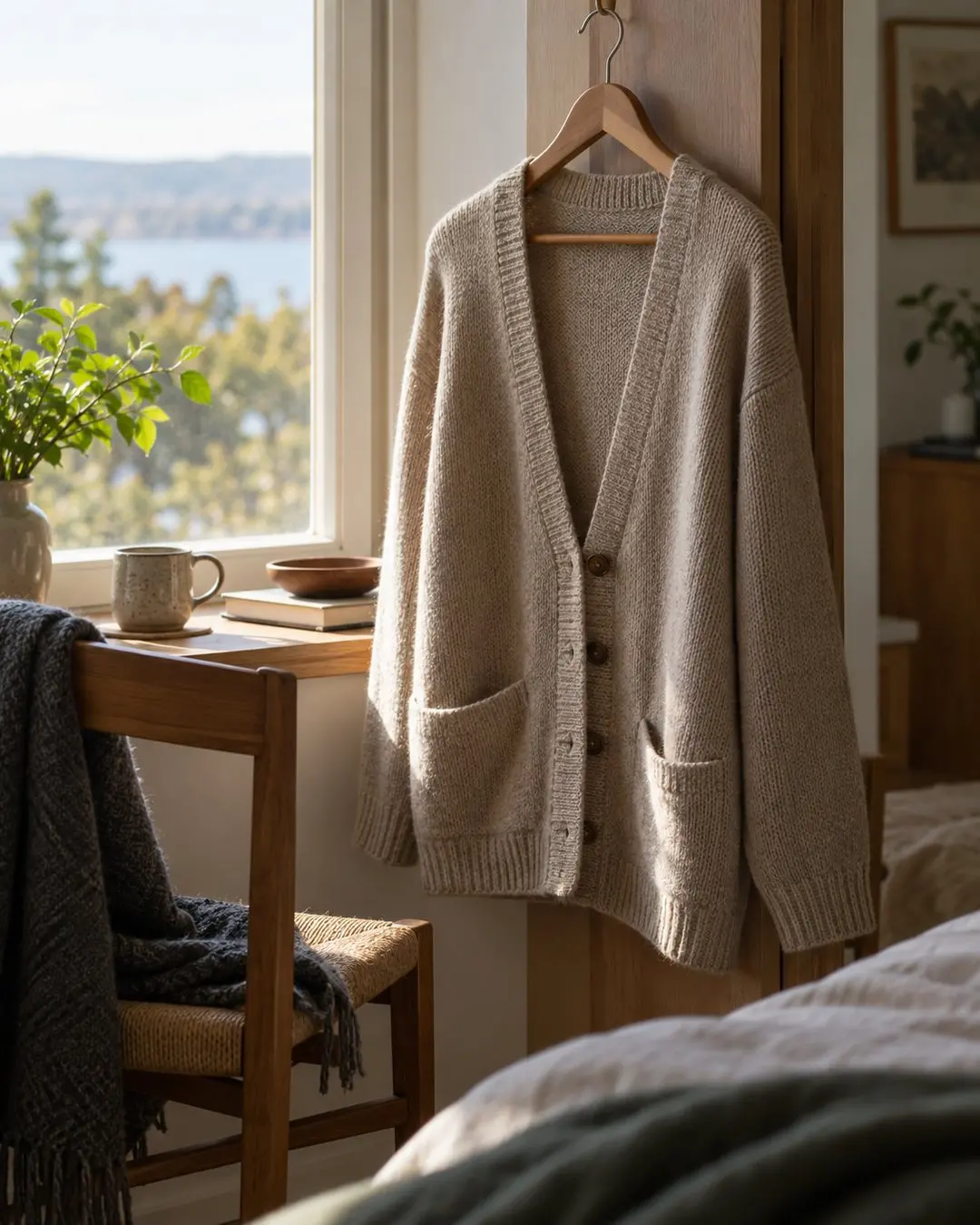
Option 1: A hook for a few structured pieces
A hook is useful when you usually have one jacket or overshirt in circulation. Put it close to where you change clothes so returning an item takes one easy movement.
Check that the hook is securely fitted and suitable for the garment’s weight. Use an appropriate hanger for items that distort when hung from one point. Do not stack several garments over one another until the bottom one disappears.
Simple rule: one visible garment per hook. If that feels too restrictive, a short rail may suit your routine better.

Option 2: A short open rail
A small section of rail gives jackets and shirts their own hangers. Keep it clearly separate from freshly laundered clothing, using one end of a rail or a small dedicated area.
Leave enough room to see and retrieve each piece. There is no universal spacing measurement; the practical test is whether you can remove a garment without pulling off its neighbor.
Choose this when: you rotate several outer layers during a week. Avoid filling the rail with clothing you have stopped choosing. That is deferred sorting, not convenient rewear storage.
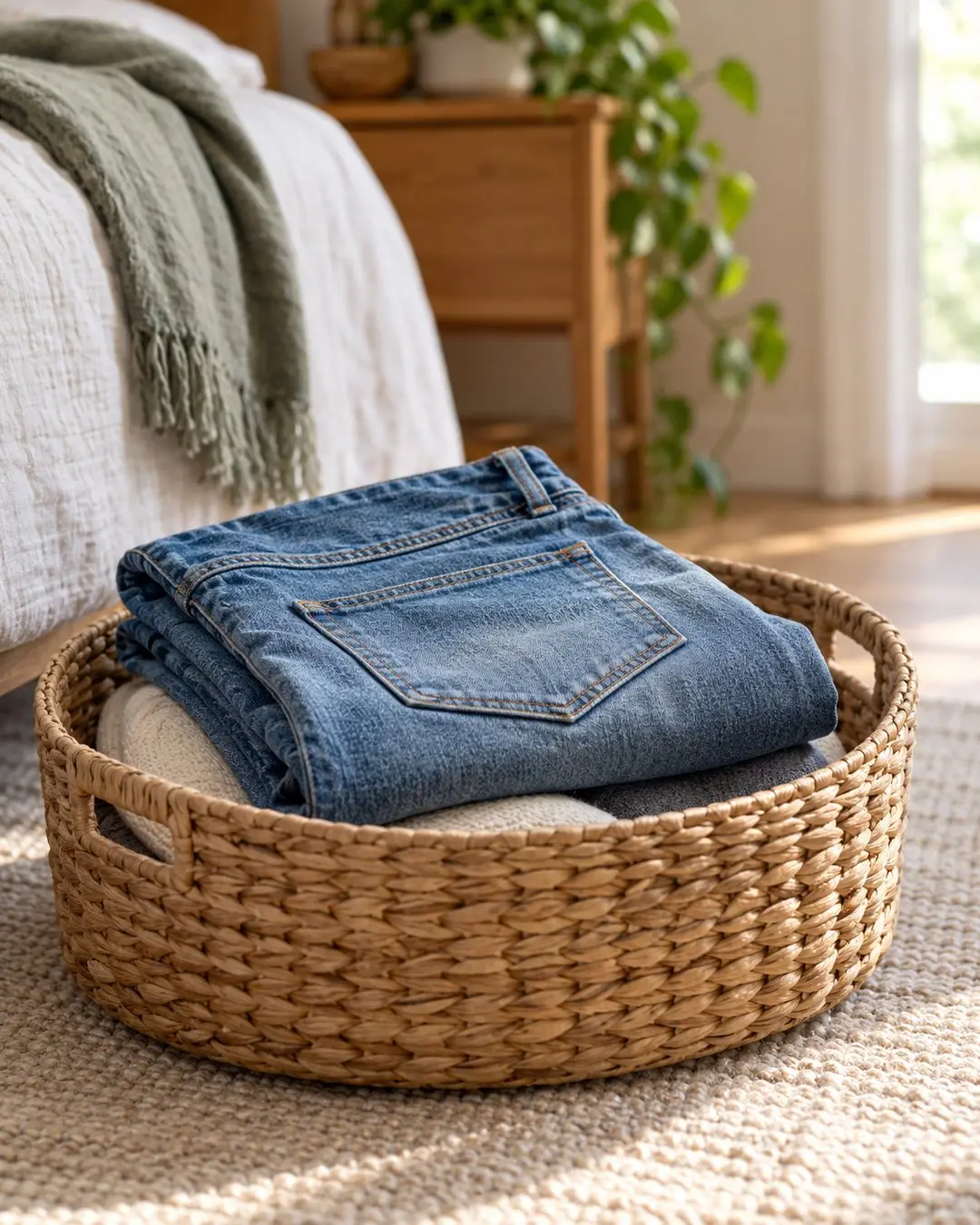
Option 3: A shallow open basket
A shallow basket can hold dry jeans or another garment that tolerates folding. Fold loosely so the contents remain visible. Deep bins make it easier to forget what is underneath.
Keep this basket separate from the dirty-laundry hamper. If you need to inspect every item to remember whether it is clean, simplify the arrangement. A distinct location is often enough; you do not need to buy matching containers.
Do not use a lidded container as a place to hide damp or questionable clothing. Send those pieces through the appropriate laundry process.
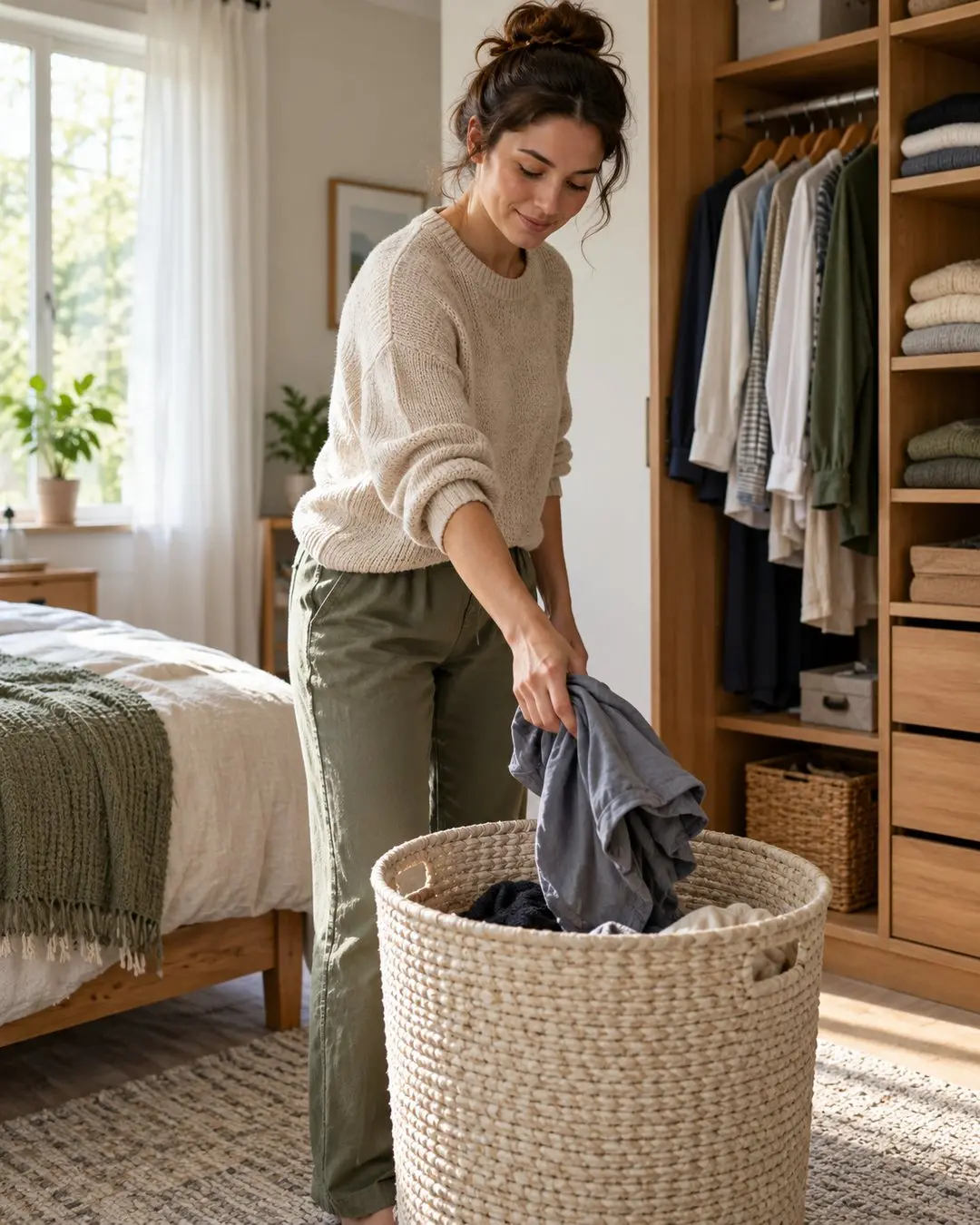
A worked setup for a small bedroom
This is an illustrative arrangement, not a measured trial. Suppose your usual rotation is one overshirt and one pair of jeans. Try one hanger for the overshirt and one shallow basket for the jeans, beside—but separate from—the hamper.
Choose a capacity you can see at a glance. For this example, two garments are enough. If a third arrives, decide what to wear next or what needs washing instead of expanding onto the chair.
For one week, note where items actually land. If they always land on the chair, move the rewear zone closer to that changing spot or make returning an item easier.
A quick reset you can repeat
- Inspect each item before returning it.
- Put only suitable, dry garments in the rewear zone.
- Choose tomorrow’s clothes from that zone first if appropriate.
- At your regular laundry sort, reassess everything still waiting.
- If the area overflows, reduce contents before adding storage.
The goal is a clear decision path: clean storage, rewear zone or laundry. For fitting a basket into a real space, use our measure-before-buying guide.
Source: American Cleaning Institute laundry guidance, checked October 28, 2026. The storage options and capacity rule above are practical suggestions, not universal hygiene limits.
Images are AI-generated illustrations, not screenshots, documented tests or photographs from your personal library.