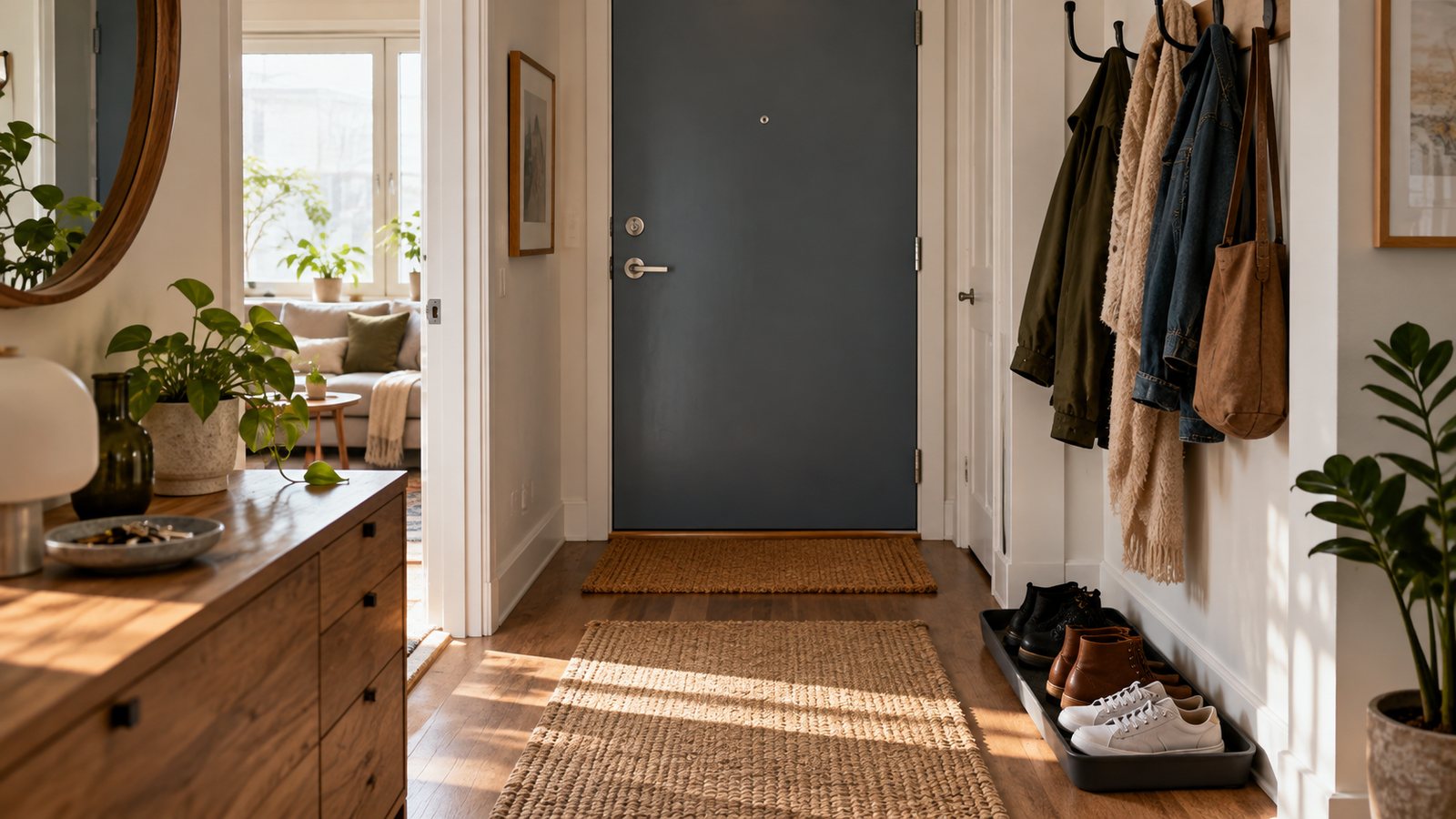
Start with a clear door and walking route, then add one place each for shoes, keys and bags. A small entryway works better when it holds today’s essentials rather than every pair of shoes and every bag you own.
Before buying furniture, spend one evening noticing what you put down when you arrive. That tells you where a landing place is needed and which items actually belong near the door.
1. Mark the space you cannot use
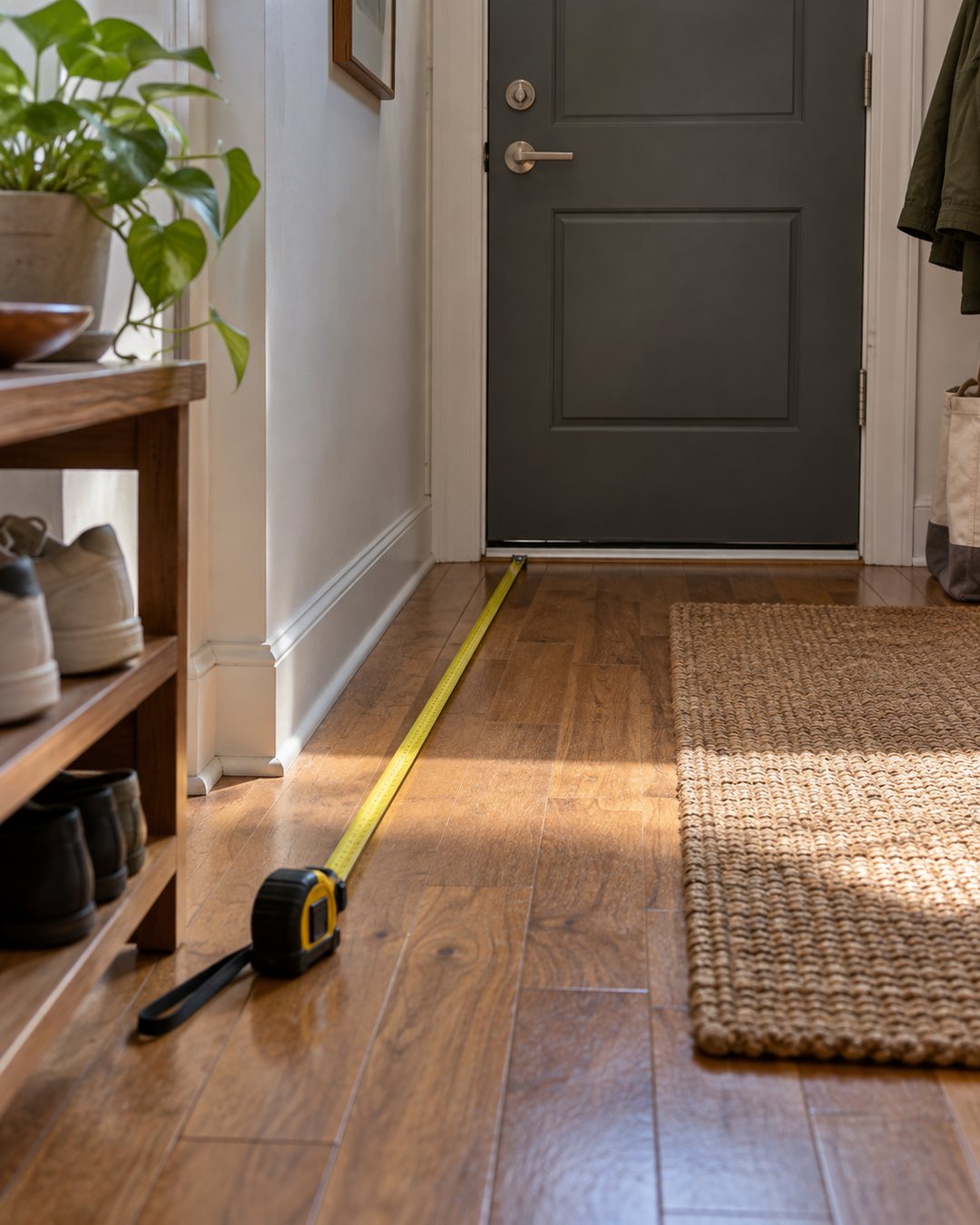
Open the entry door fully and watch its swing, including the handle. Check nearby closet doors, drawers and any door closer. Keep storage out of those moving areas.
Walk through carrying a normal shopping bag. If someone uses a stroller, walker or wheelchair, test the route with that equipment too. Do not treat the remaining gap as adequate merely because you can squeeze through sideways.
Keep exits, required access and building equipment unobstructed. This guide gives organization examples, not building-code clearance requirements. For a shared hall or an accessibility question, check the rules that apply to your building and household.
2. Give daily shoes a defined footprint
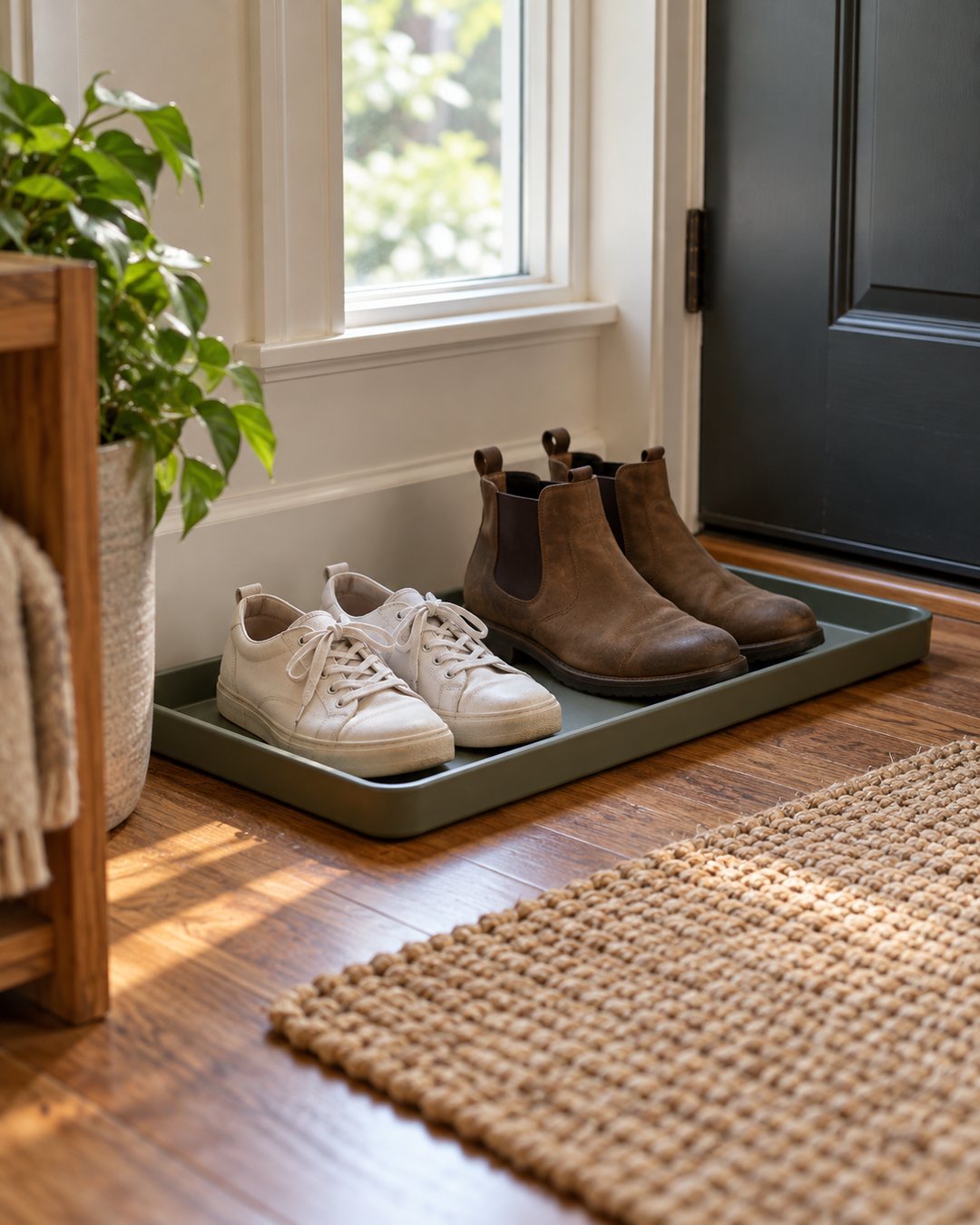
Choose a shallow tray or low open shelf that sits entirely outside the needed route. Measure with the largest everyday shoes actually inside it; boots and shoes with projecting heels may need more space than the empty tray suggests.
Set a practical capacity, such as one active pair per person, and move occasional shoes to another storage area. The capacity is a household choice, not a rule everyone needs to follow.
Keep wet shoes contained where they can dry appropriately, and clean the tray as needed. Check that a mat or tray does not slide, curl up, or catch the door. A bench is optional; add one only if there is room to use it without blocking movement.
3. Put keys where you actually release them
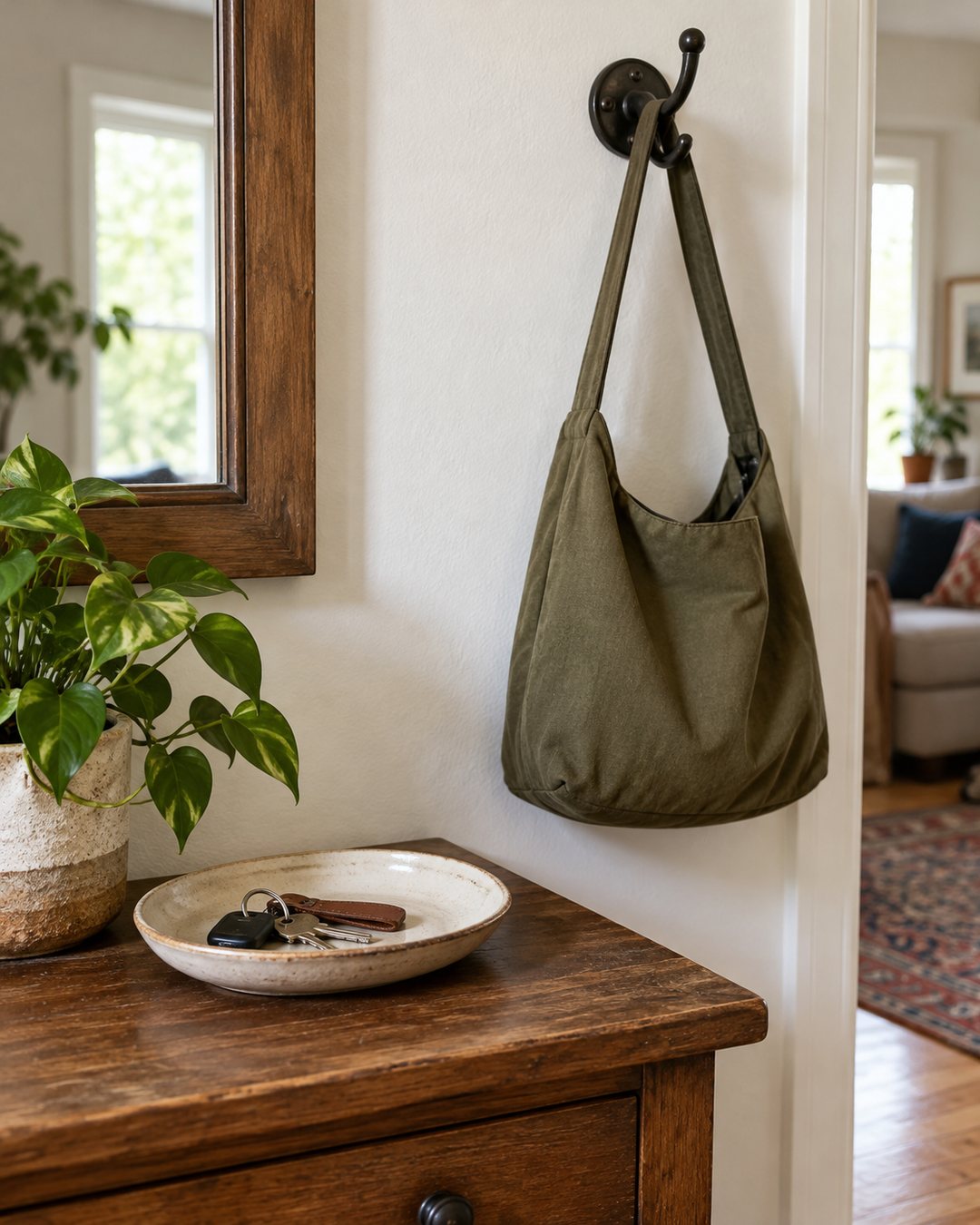
A small dish on a stable surface can work better than a complicated organizer. If you prefer hooks, locate them where household members can reach without stretching over shoes or bags.
Try the location with your usual key ring before committing. Some people need a visible dish; others prefer a closed location. Keep keys out of easy reach from an open doorway or mail slot, and avoid displaying identifying personal information beside them.
Do not load a narrow shelf with unrelated mail and chargers. Its job is to make the keys easy to find, not to become another general-purpose pile.
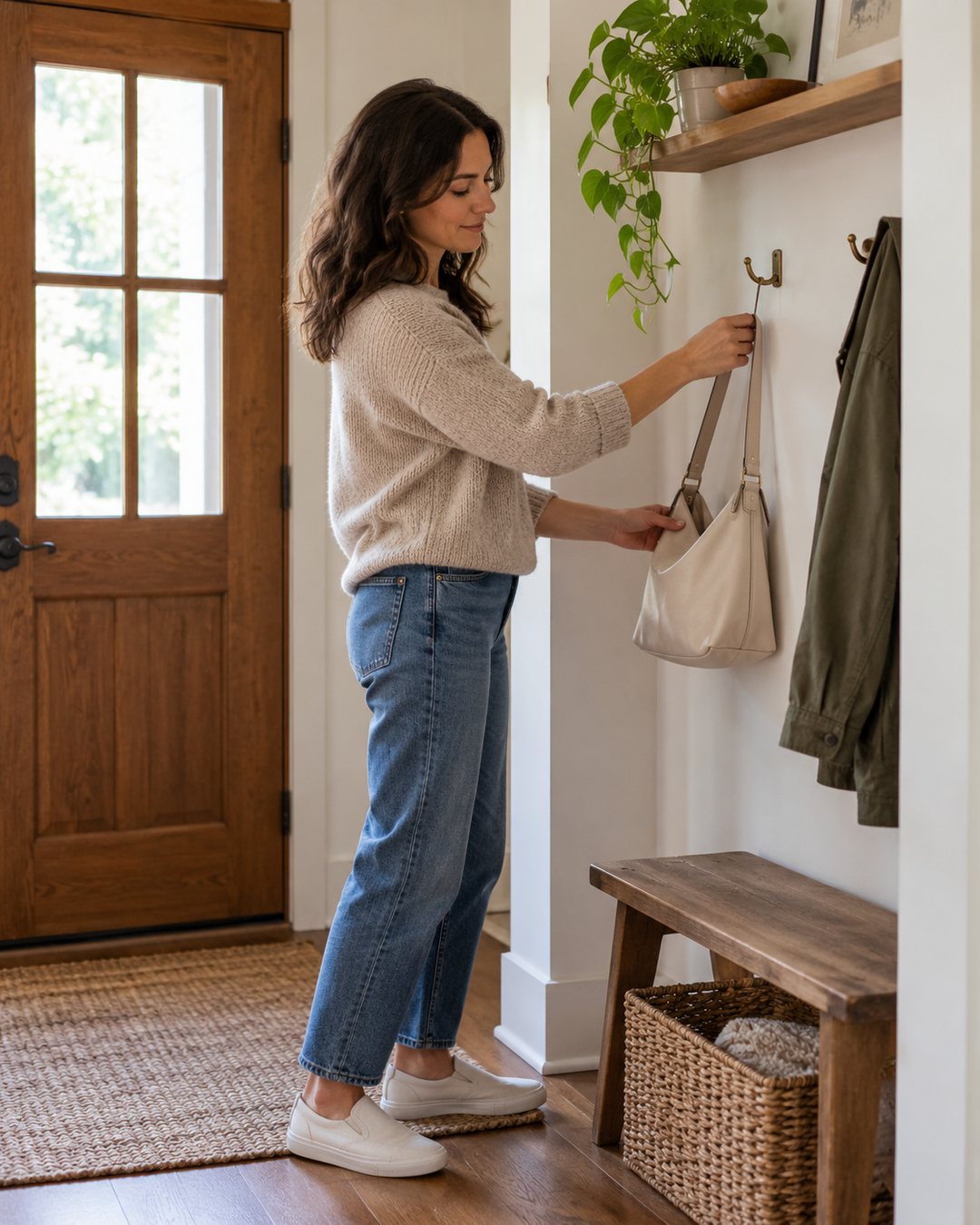
4. Hang only the bag you use
Use hooks and fixings appropriate for the wall and expected weight, following their instructions. An adhesive hook’s rating depends on its specified surface and installation conditions; do not assume it can support a heavy backpack.
Keep straps from trailing into the path. If children use the area, consider reach and what they may pull on. Furniture that can tip should be secured according to its manufacturer’s instructions; CPSC’s Anchor It guidance explains why this matters.
A worked alcove layout
Suppose there is an alcove outside the door swing measuring 20 inches wide by 12 inches deep. A proposed shoe unit with an outside footprint of 18 by 10 inches leaves 2 inches in each direction inside that alcove. That arithmetic says only that the footprints fit; it does not establish enough clearance for the whole entryway.
Check the unit with shoes in place, any doors open and bags hanging above it. A shoe toe or bag can project beyond the furniture. Put a key dish on a secure nearby surface only if it remains stable and easy to reach.
Run a three-day arrival test
- Can the door open normally with shoes and bags in place?
- Can everyone pass through with their everyday loads or mobility equipment?
- Do keys land in the intended spot?
- Do shoes or straps spread outside the footprint?
- Which item needs a different home rather than another container?
Use an existing tray or a temporary footprint marker to plan the space, removing anything that creates a trip hazard. Adjust before buying. For more measurement checks, see our organizer fit guide.
The alcove dimensions and test are original illustrative examples. Safety reference, checked October 29, 2026: CPSC Anchor It.
Images are AI-generated illustrations, not screenshots, documented tests or photographs of a tested recipe or home installation.