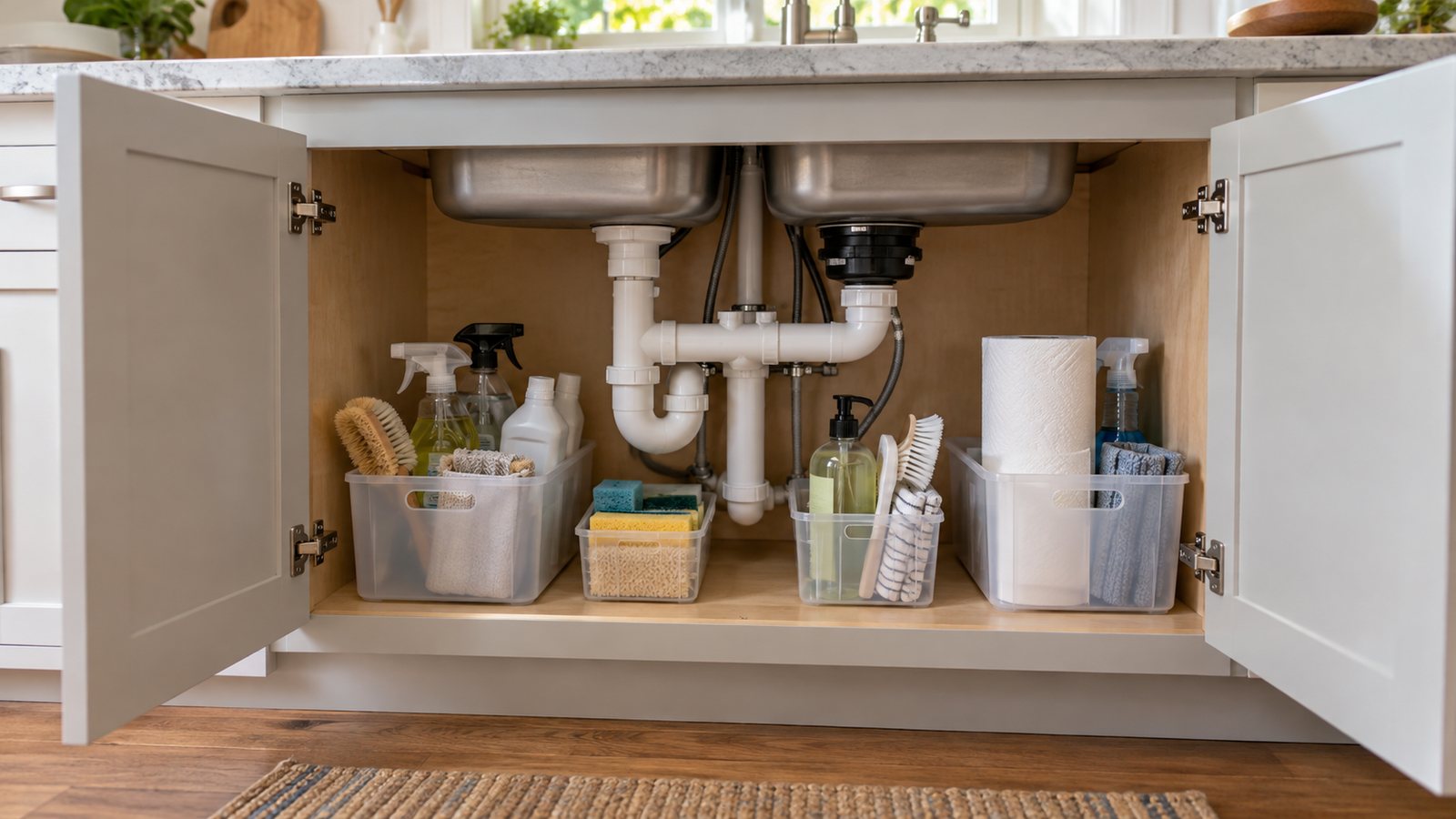
Keep the pipes accessible and organize the remaining space into removable zones. A small caddy that comes out easily is usually more practical than a packed arrangement you must dismantle whenever you inspect the plumbing.
Before organizing, check for moisture, staining, a musty smell or an active leak. Stop and address the cause if something is wrong. A liner or bin should not become a way to hide water damage.
1. Empty and inspect without disturbing the plumbing
Remove stored items and inspect the cabinet floor and visible pipe joints. Do not loosen pipes, pull electrical cables or move a disposal unit to make room for an organizer.
Locate the shutoff valves and anything else that needs access. Keep these areas reachable and follow equipment instructions for required clearances. This is a storage guide, not plumbing or electrical repair advice.
Set aside damaged, leaking or unwanted products for appropriate handling. Read their labels before deciding where they can be stored; an under-sink cabinet is not suitable for every household chemical.
2. Measure separate usable zones
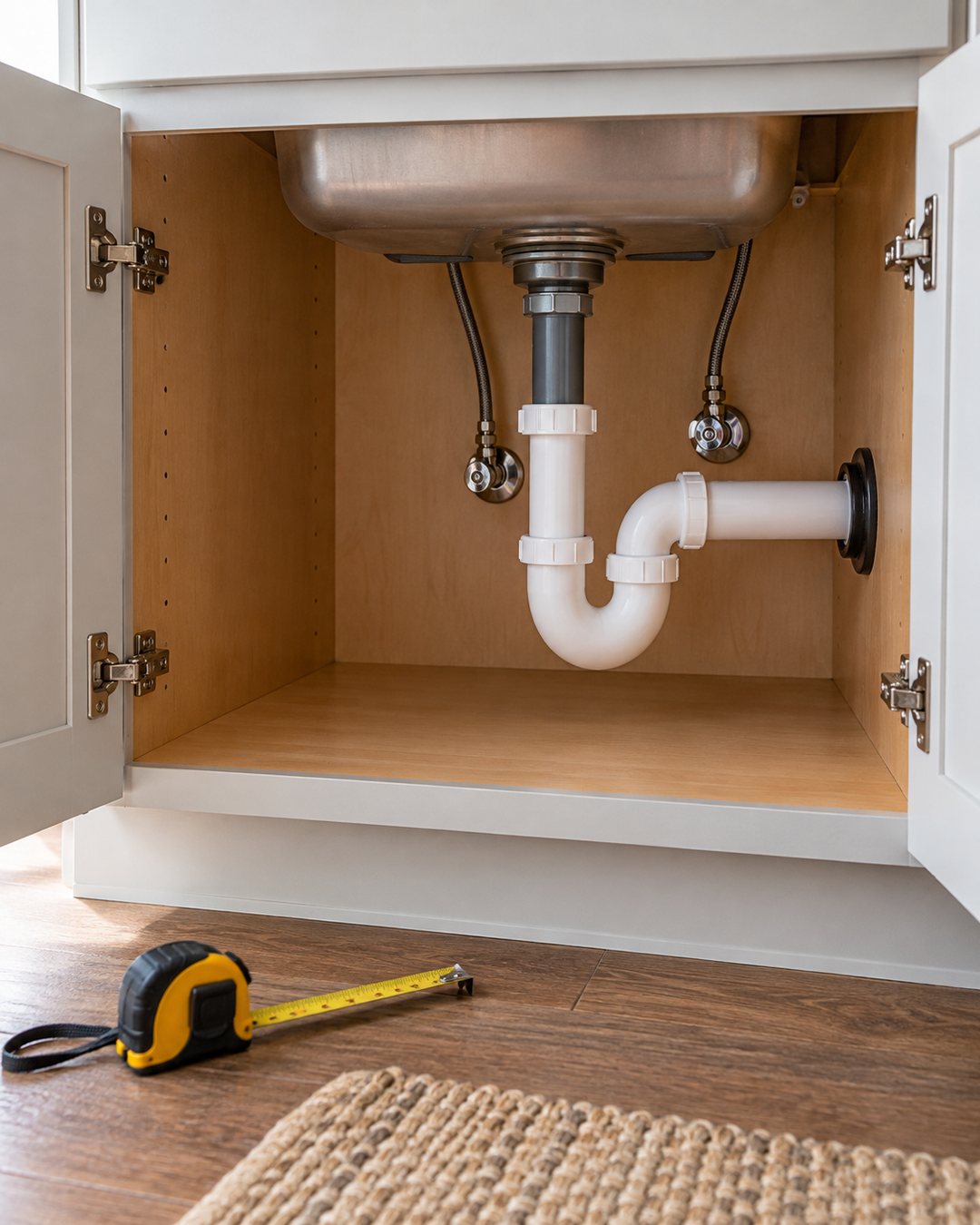
Measure interior width, depth, door opening and height at several points. Record the drain trap, hoses, hinges and projecting hardware. The cabinet may have plenty of total volume but very little usable space in one particular corner.
Think in zones: a low area in front, a taller area beside the pipes and an access area that stays clear. Test whether a proposed bin can pass through the door opening and be lifted out with its contents inside.
For a pull-out organizer, include its fully extended position and the clearance needed to operate it. Do not drill or attach anything near hidden pipes or wires without knowing what is behind the surface.
3. Store cleaning products according to their labels
Keep products upright in their original containers with labels intact. Do not decant them into matching drink bottles or unmarked containers. EPA guidance emphasizes following storage instructions and keeping hazardous products out of food containers.
Keep cleaning products inaccessible to children and pets; use appropriate secured storage where necessary. A low open caddy is an organization tool, not childproof storage.
Do not mix cleaning products. Check labels for separation, temperature and ventilation requirements. If a product cannot be stored safely in this cabinet, give it another suitable location instead of forcing it into the layout.
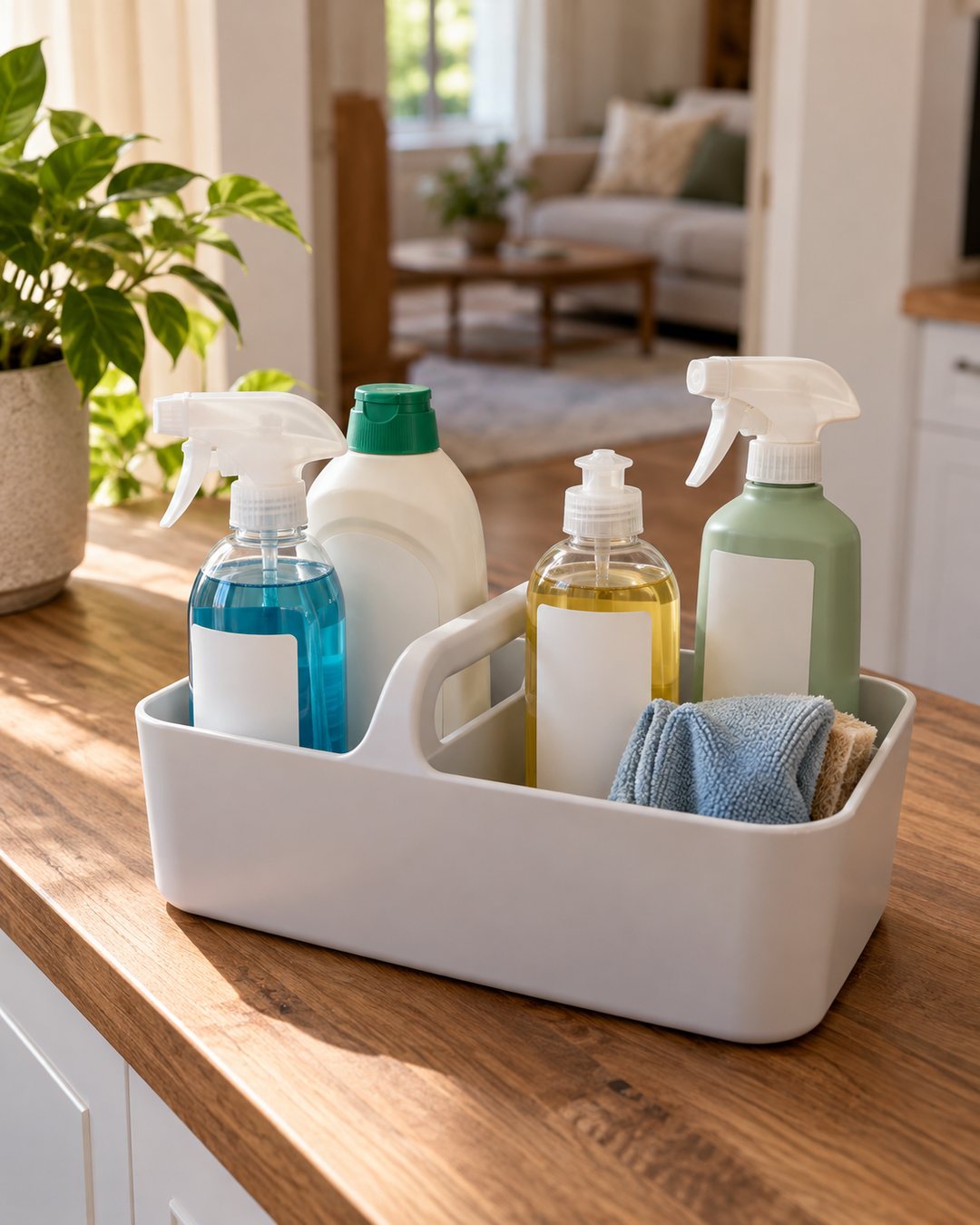
A shallow caddy can help you remove a few compatible supplies together. It does not make leaking or incompatible products safe to store side by side.
A worked layout around a central trap
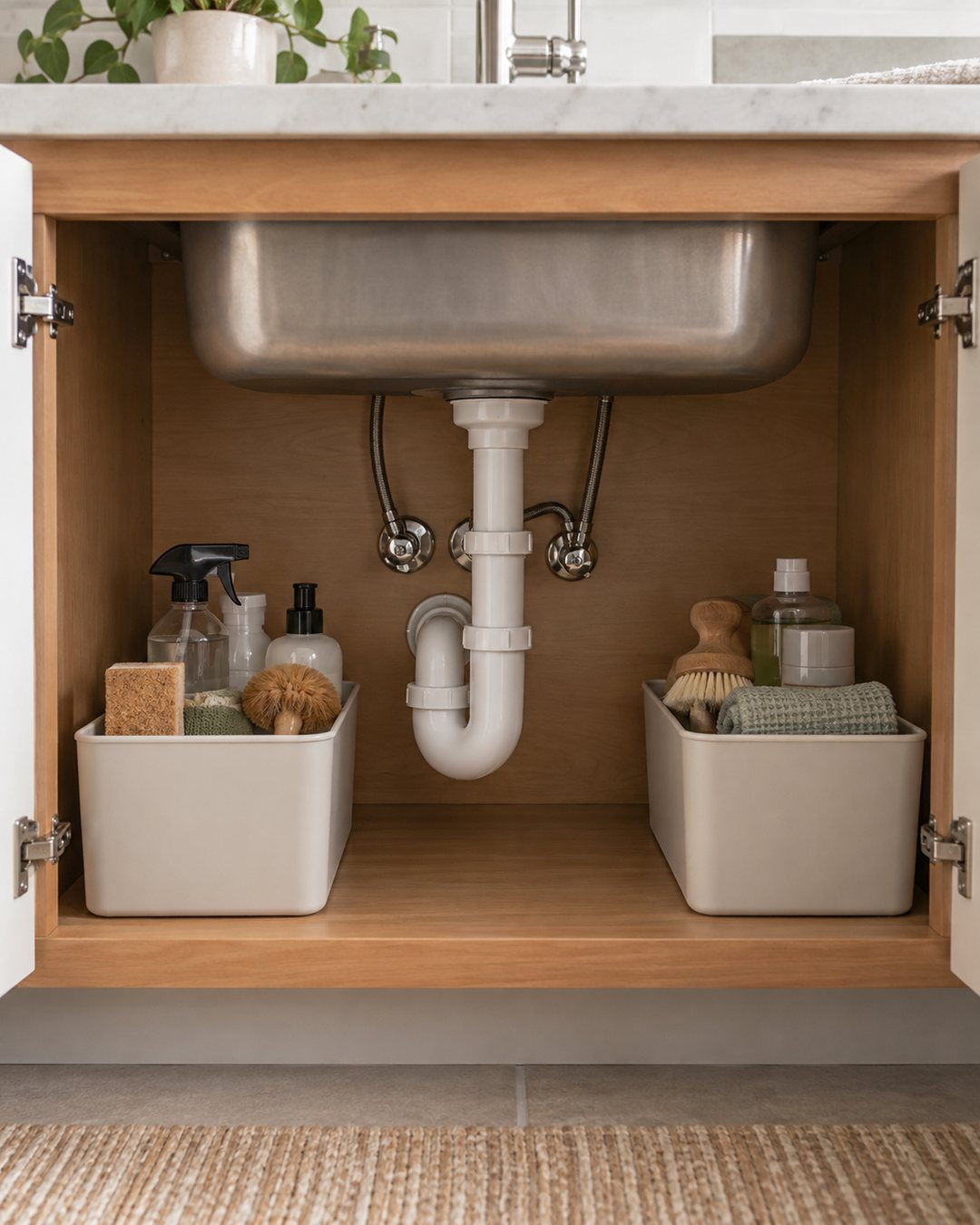
Suppose a cabinet has 28 inches of interior width and 20 inches of depth, with a drain trap occupying the center rear area. Instead of buying one large drawer, identify two side zones and leave the plumbing accessible.
If a clear side zone measures 9 inches wide by 16 inches deep, a caddy with an outside footprint of 8 by 14 inches leaves some room within that zone. Check its height with bottles inside and verify that the handle does not hit a pipe when you lift it.
These are illustrative dimensions, not a universal layout or recommended plumbing clearance. The right fit depends on your actual fixtures, door opening and manufacturer requirements.
Place daily items where you can retrieve them without reaching around pipes. Keep backups limited so they do not gradually fill the access area. Bulky or heavy stock may belong somewhere else.
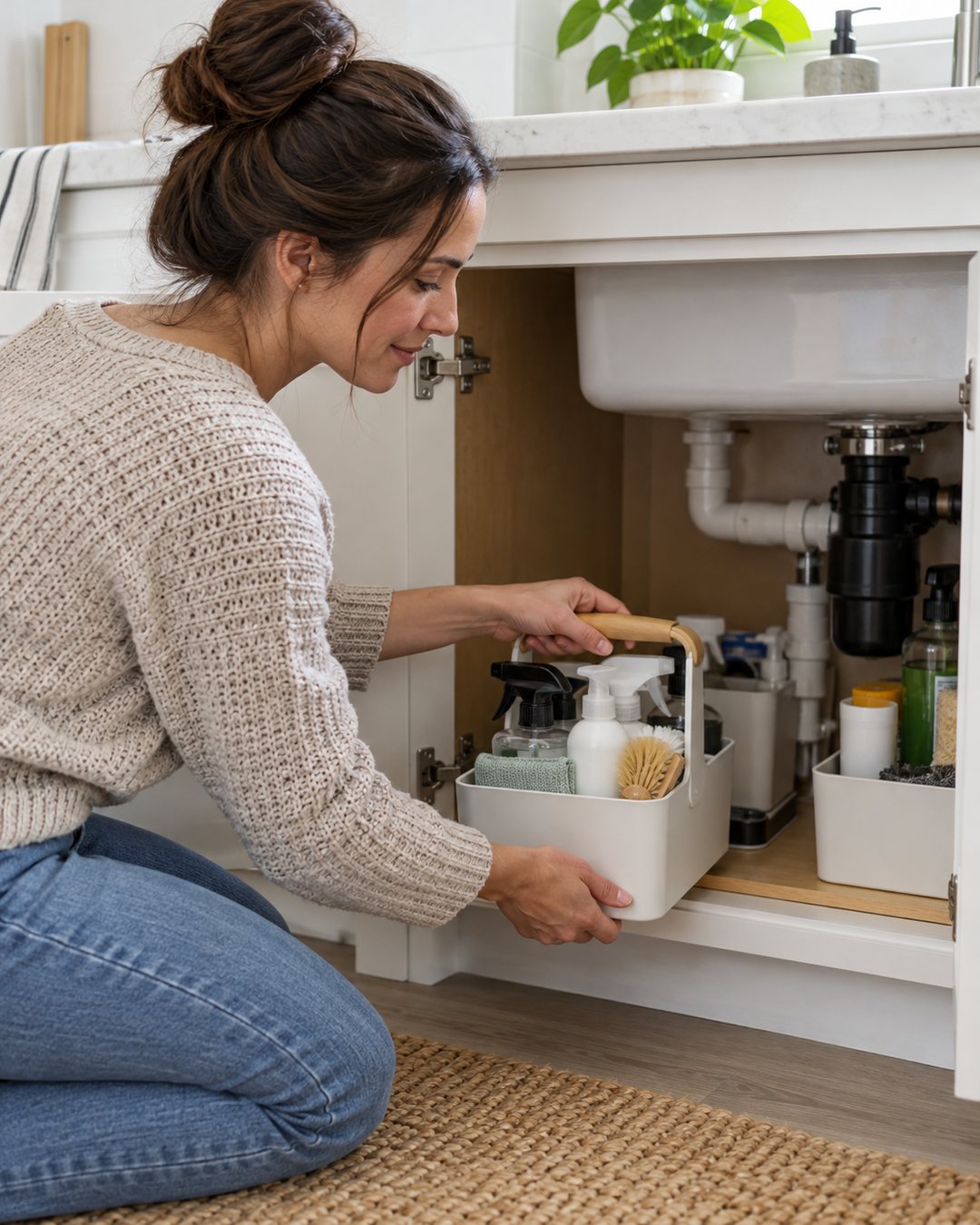
4. Test the layout before calling it finished
- Close and reopen both cabinet doors.
- Remove each caddy with its normal contents inside.
- Check that bottles stay upright and labels remain readable.
- Confirm that nothing presses on pipes, hoses, cables or equipment.
- Check that shutoff valves and inspection areas remain accessible.
- Look at the cabinet floor again during your regular cleaning routine.
If you use a removable liner, choose one that lets you notice and inspect moisture rather than concealing it under permanent layers. Do not cover equipment vents or required access points.
For more checks on outside dimensions, rims and door openings, see measure an organizer before buying it.
Source: EPA: household hazardous products and safe handling, checked October 31, 2026. The layout and fit test above are original planning examples.
Images are AI-generated illustrations, not screenshots, measured product tests or photographs of an actual installation or data-extraction result.