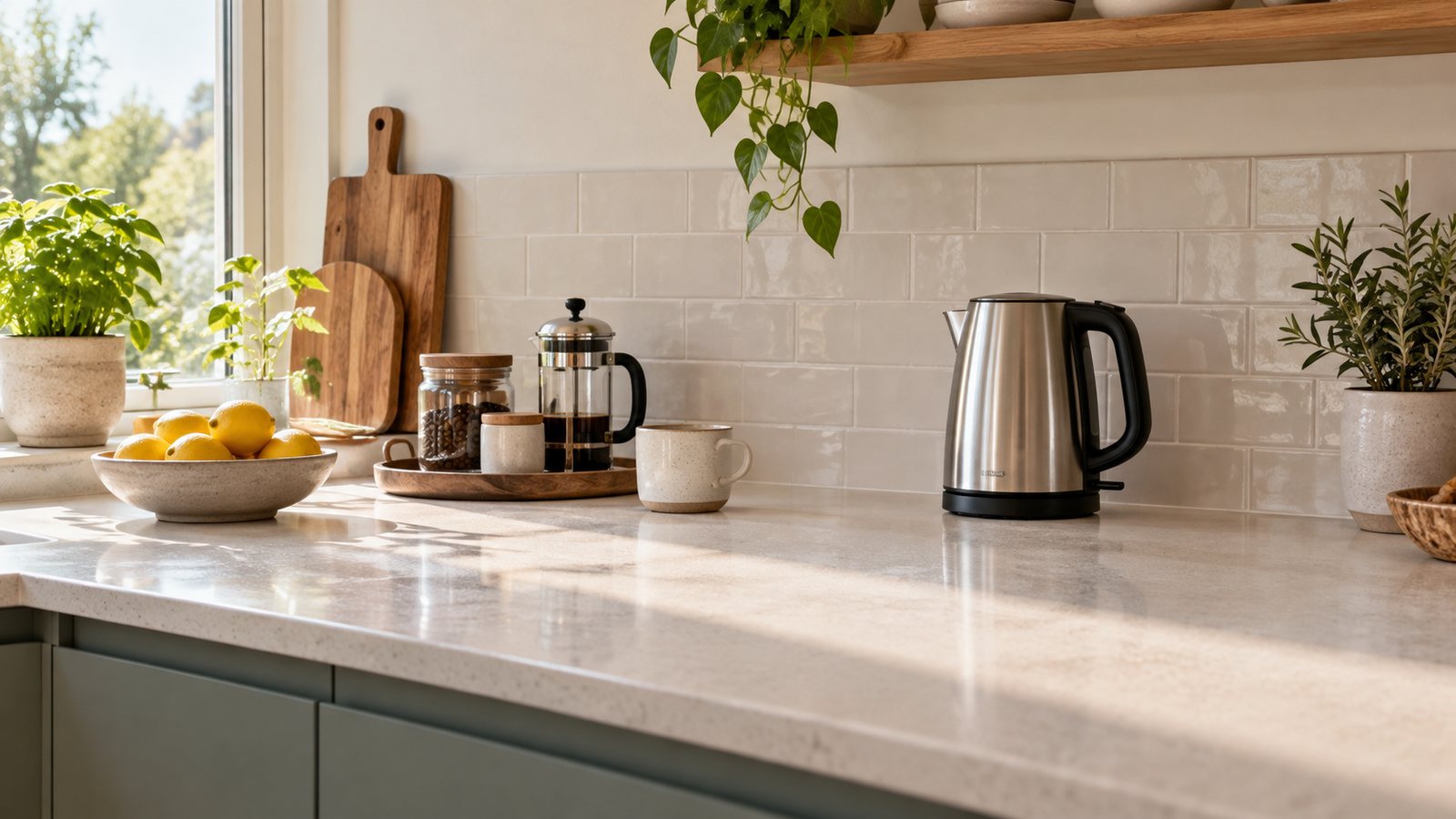
Keep the items that support a task you do often, and protect enough clear surface to do that task. A counter can look organized yet still be awkward if every chopping board must balance between appliances.
Before buying another tray or rack, test a layout using what you already own. The aim is easier cooking, cleanup and access—not a kitchen that looks unused.
1. Reserve a working patch first
Clear one practical preparation area. Put your usual cutting board and a mixing bowl there, then pretend to prepare a normal meal. Can you reach ingredients, set a plate down and wipe spills without relocating three objects?
There is no single ideal size for every kitchen. Use your actual board and tasks to identify the space you need. Keep this patch available instead of treating it as leftover space after appliances have taken their places.
Keep appliance cords out of walkways and away from heat and water. Follow each appliance’s own placement, clearance and outlet instructions. An attractive arrangement is not a substitute for those requirements.
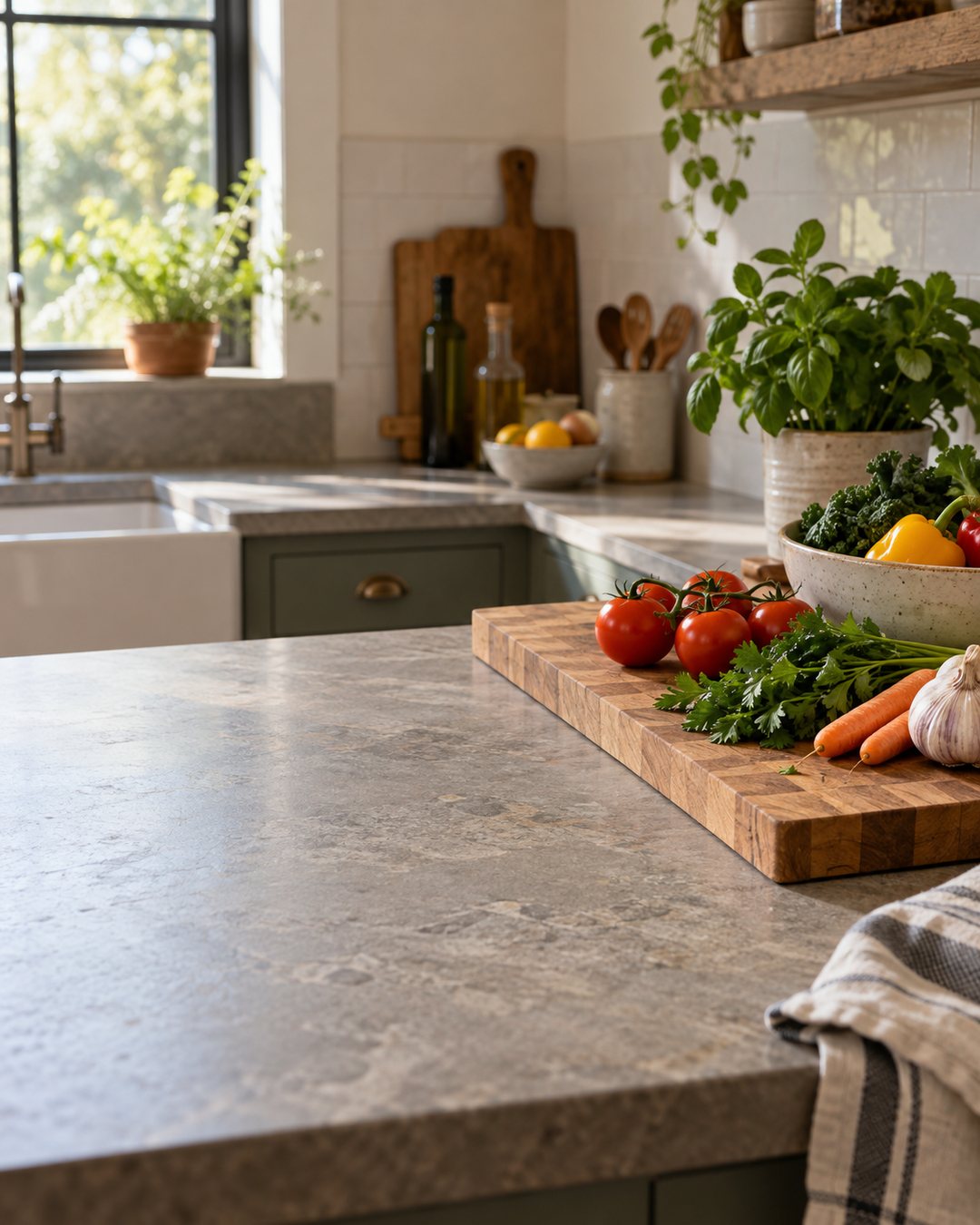
2. Sort objects by use and effort
Make three temporary groups:
- Used most days: consider an accessible spot if the object serves a real routine.
- Used sometimes: try a nearby drawer or cabinet that you can reach easily.
- Rarely used: move to suitable storage outside the main work area, or reconsider whether you need it.
Frequency is only one factor. A heavy mixer used weekly may deserve a more accessible location than a light gadget used daily. Do not create a lifting problem just to clear the counter. Choose storage you can use comfortably.
Separate “used often” from “has always been here.” A stack of unopened mail does not become a kitchen tool because it sits beside the kettle.
3. Group a routine without filling every gap
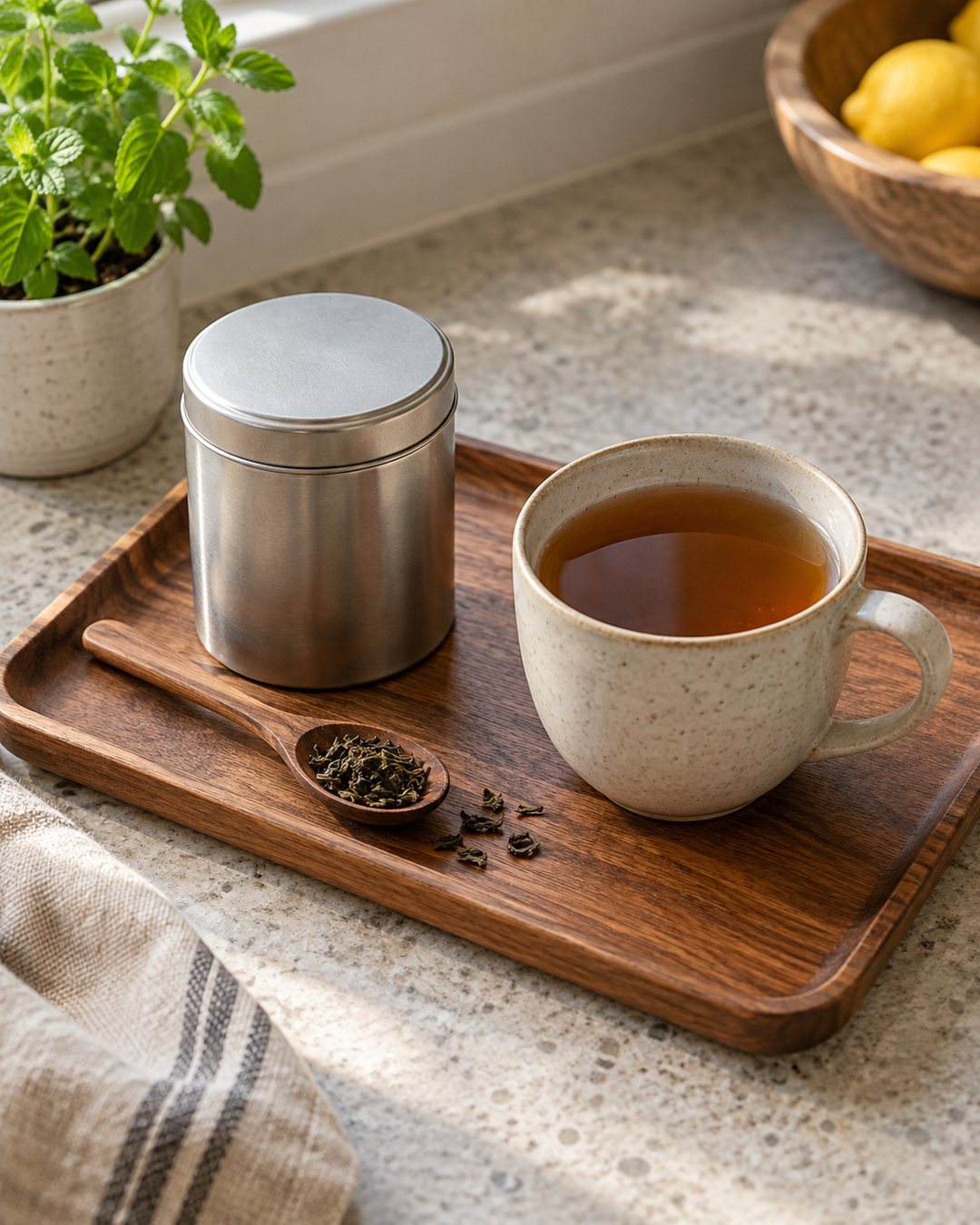
A small tea or coffee tray can keep a few related items together. Test the footprint with a plate or existing tray first. Include space to pick up a cup and clean underneath.
Give cooking utensils a location that suits the way you cook, but keep combustible items away from heat sources and follow appliance instructions. Store knives in a way appropriate to your household rather than leaving loose blades in a decorative container.
Do not squeeze a heat-producing appliance under a shelf simply because it fits. For example, the KitchenAid KCO211 countertop-oven manual specifies clearance around that model. That requirement is model-specific; check your own manual, including overhead space, instead of borrowing another appliance’s numbers.
A worked small-kitchen layout
Imagine one 48-inch stretch of counter between a sink and a tall cabinet. The household makes tea daily, prepares vegetables most evenings and uses a blender twice a month.
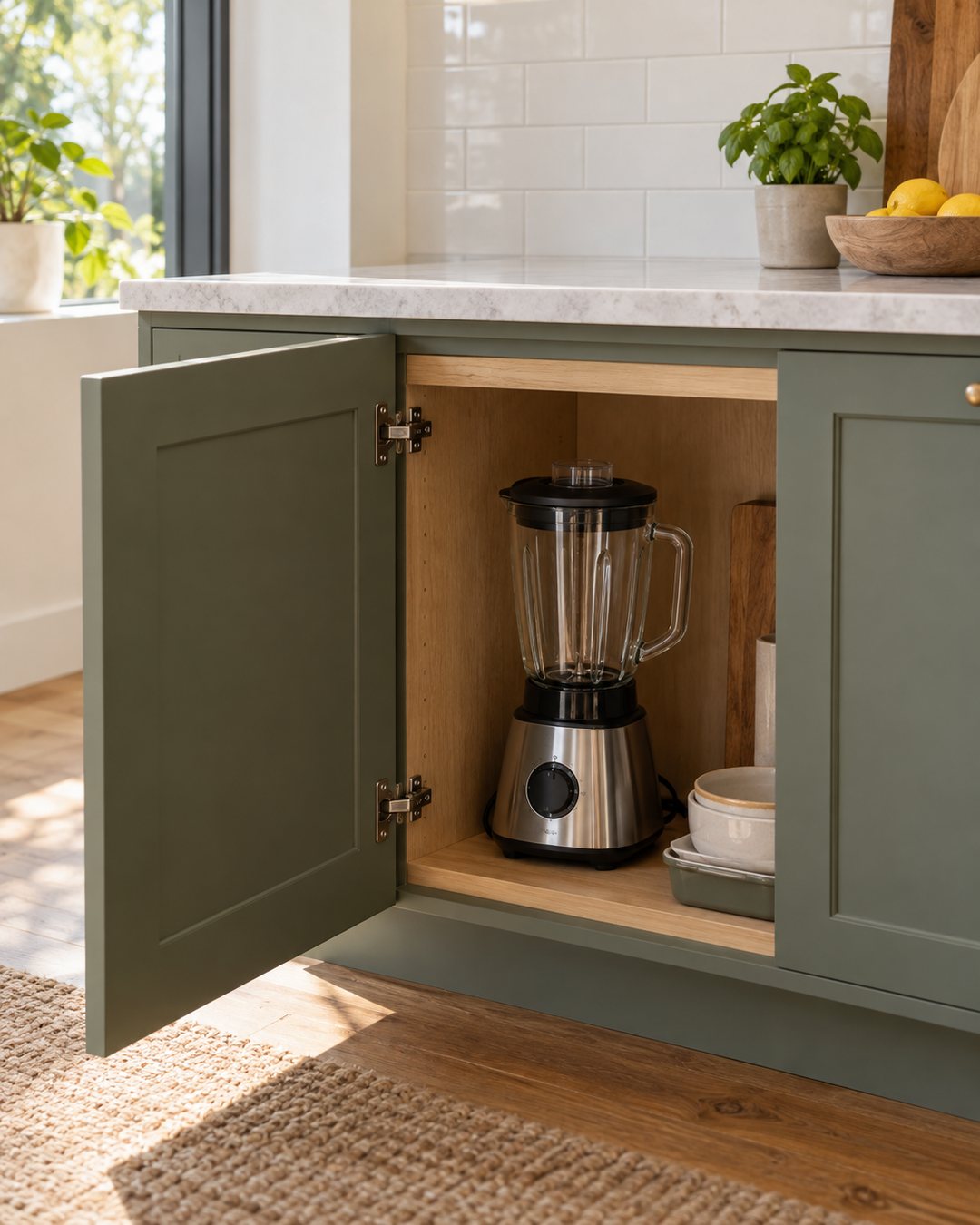
In this illustrative plan, the blender moves to an easy-to-reach cabinet. A compact tea group stays at one end in a location that meets the kettle’s instructions. The largest uninterrupted patch stays available for the household’s board and bowl.
Before keeping that layout, open the cabinet doors, fill and empty the kettle, and carry a plate through the routine. If the kettle’s cord crosses the preparation area or the steam conflicts with overhead storage, choose a different safe position. The 48-inch example is a planning scenario, not a tested installation.
Measure the actual usable surface, including corners and outlets, before buying a rack. Our organizer fit checklist explains why outside dimensions and access matter.
4. Run a seven-day friction check
Keep a note with four fields: task / item moved / obstacle / change to try. For instance: “Dinner prep / toaster moved each evening / board does not fit / try suitable nearby storage after the toaster cools.” This is a hypothetical observation to show how the log works.
At the end of the week, ask:
- Which items did you repeatedly retrieve?
- Which objects never moved except during cleaning?
- Could you prepare a meal without clearing the counter first?
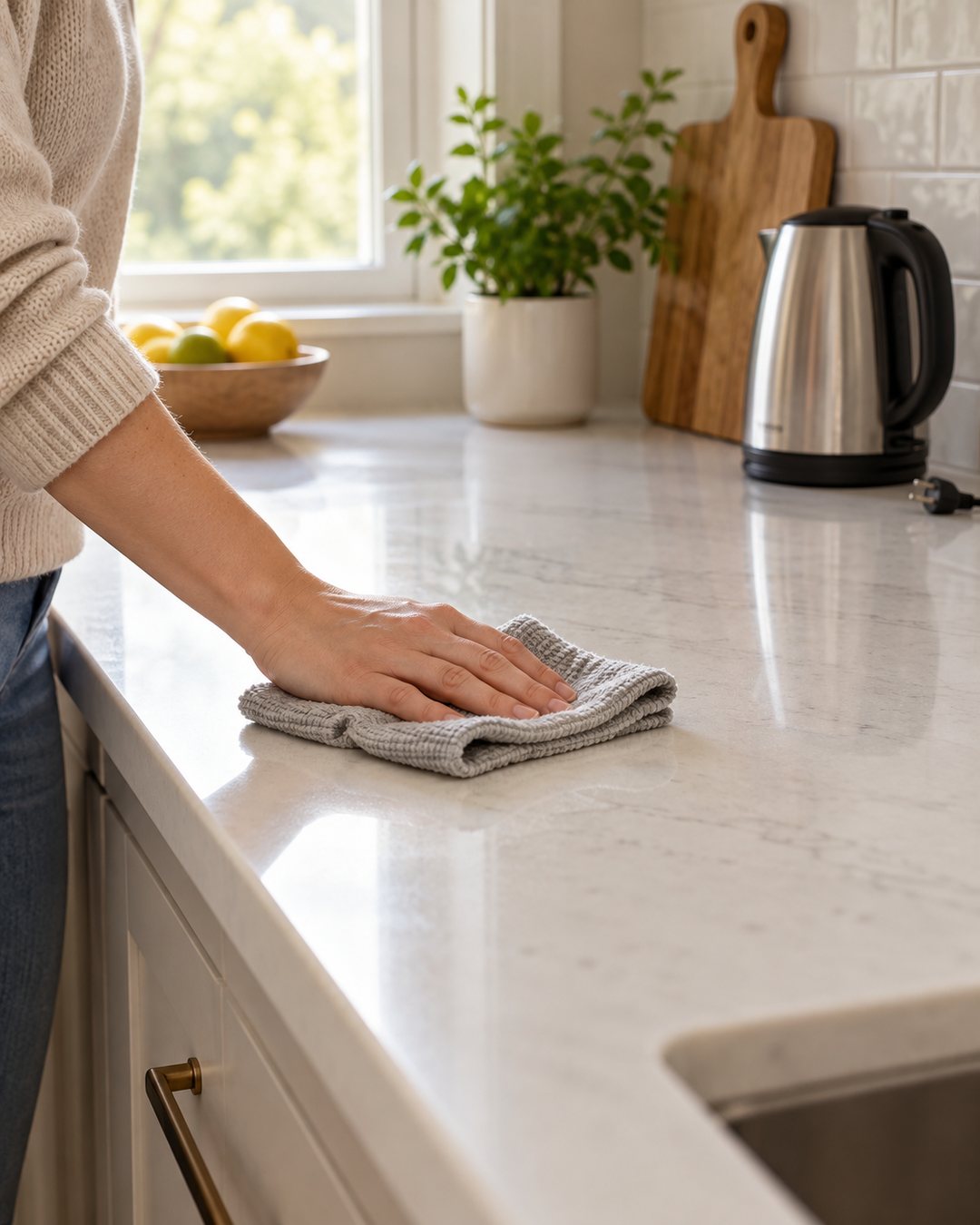
- Could you wipe the surface without dismantling the arrangement?
- Did every appliance retain its required operating space?
Adjust one troublesome area before buying organizers. A useful final layout leaves room for the next task and puts frequently needed objects where you can actually use them.
Reference: KitchenAid KCO211 use-and-care manual, checked November 1, 2026. The sorting method, layout scenario and seven-day log are original planning tools.
Images are AI-generated illustrations, not screenshots, product tests or photographs of a verified real-world setup.