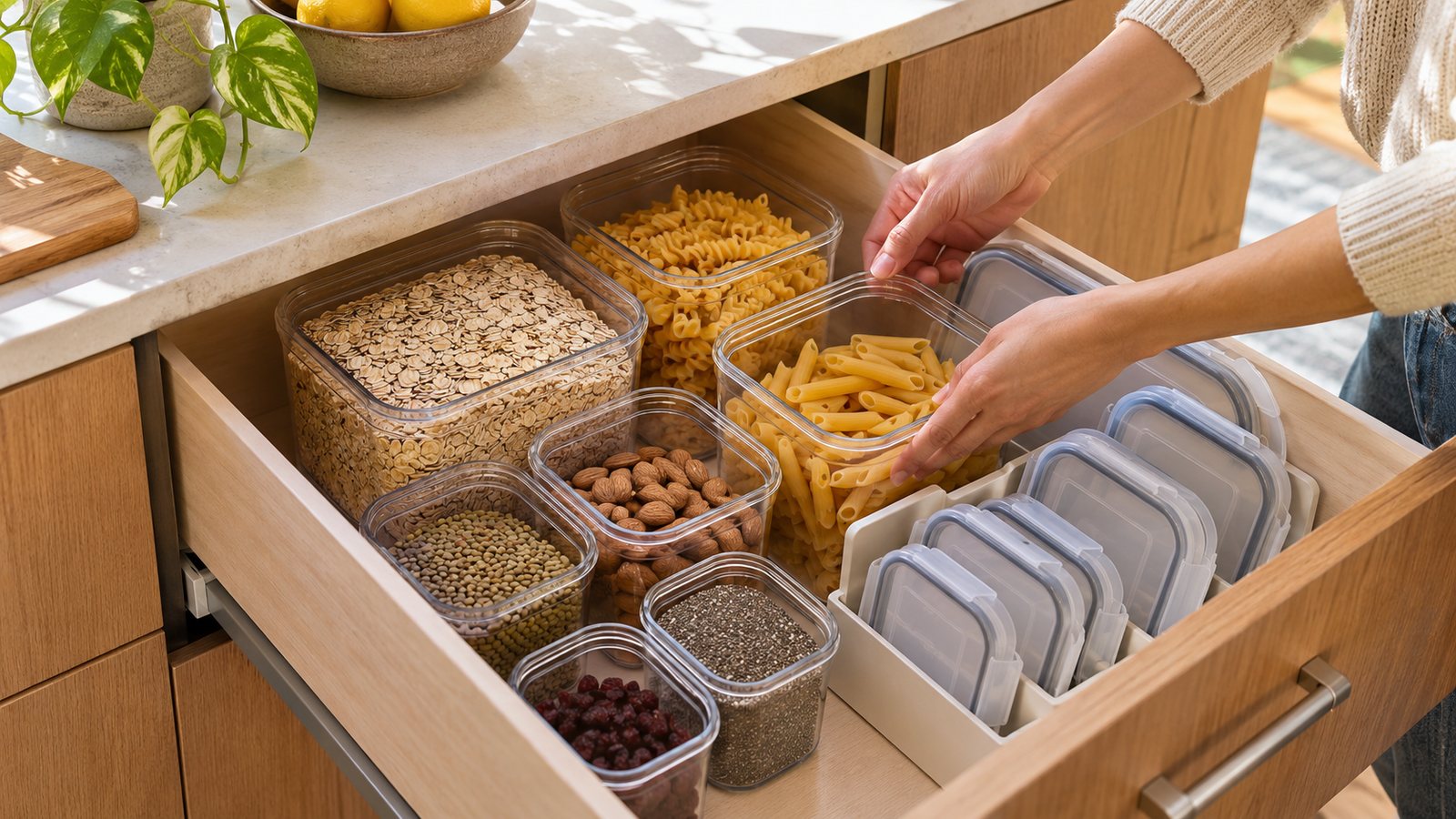
Match the lids before organizing the containers. A tidy stack still wastes time if half its lids fit a different range or an almost-identical size.
Empty one shelf or drawer onto a clear surface. Wash and fully dry items as appropriate before returning them. Set damaged or unsuitable pieces aside and follow the manufacturer’s care instructions; this guide concerns storage, not whether a container is safe for a particular food, appliance or temperature.
1. Build matched families
Pair each lid with its container and check the closure. Do not assume two rectangular lids with similar dimensions are interchangeable.
Group containers that actually share a lid design. Keep unmatched pieces in one temporary spot while you check the dishwasher and other cupboards. If no match turns up, decide whether the piece has another useful purpose rather than permanently returning it to the lunch-box area.
Count useful complete sets, not the total number of loose pieces. The right quantity depends on your household’s meals and washing routine; there is no universal number everyone needs.
2. Choose one of three layouts
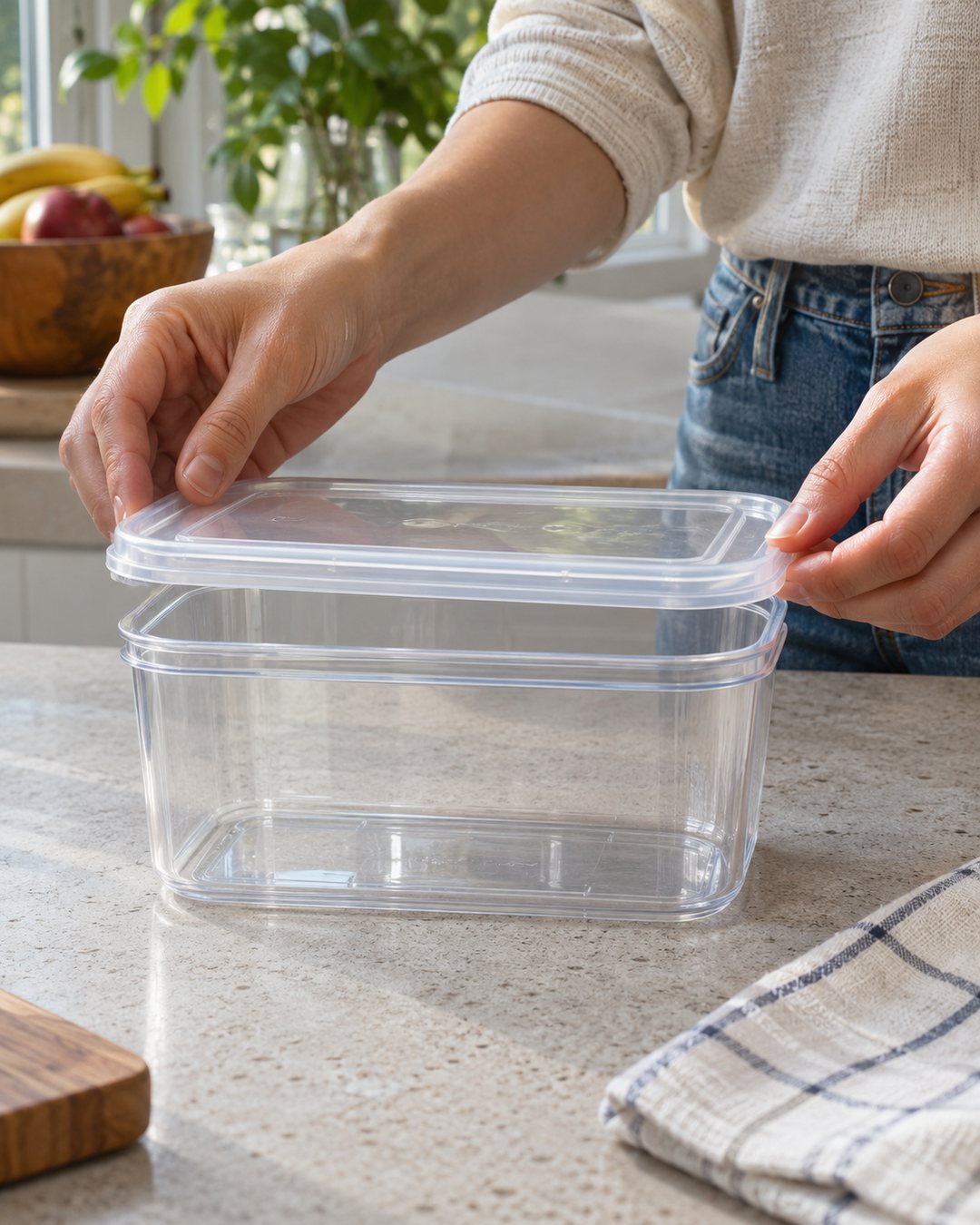
- Complete sets: keep a lid beside its container, or fitted loosely if the care instructions allow. Retrieval is simple, but this takes more space.
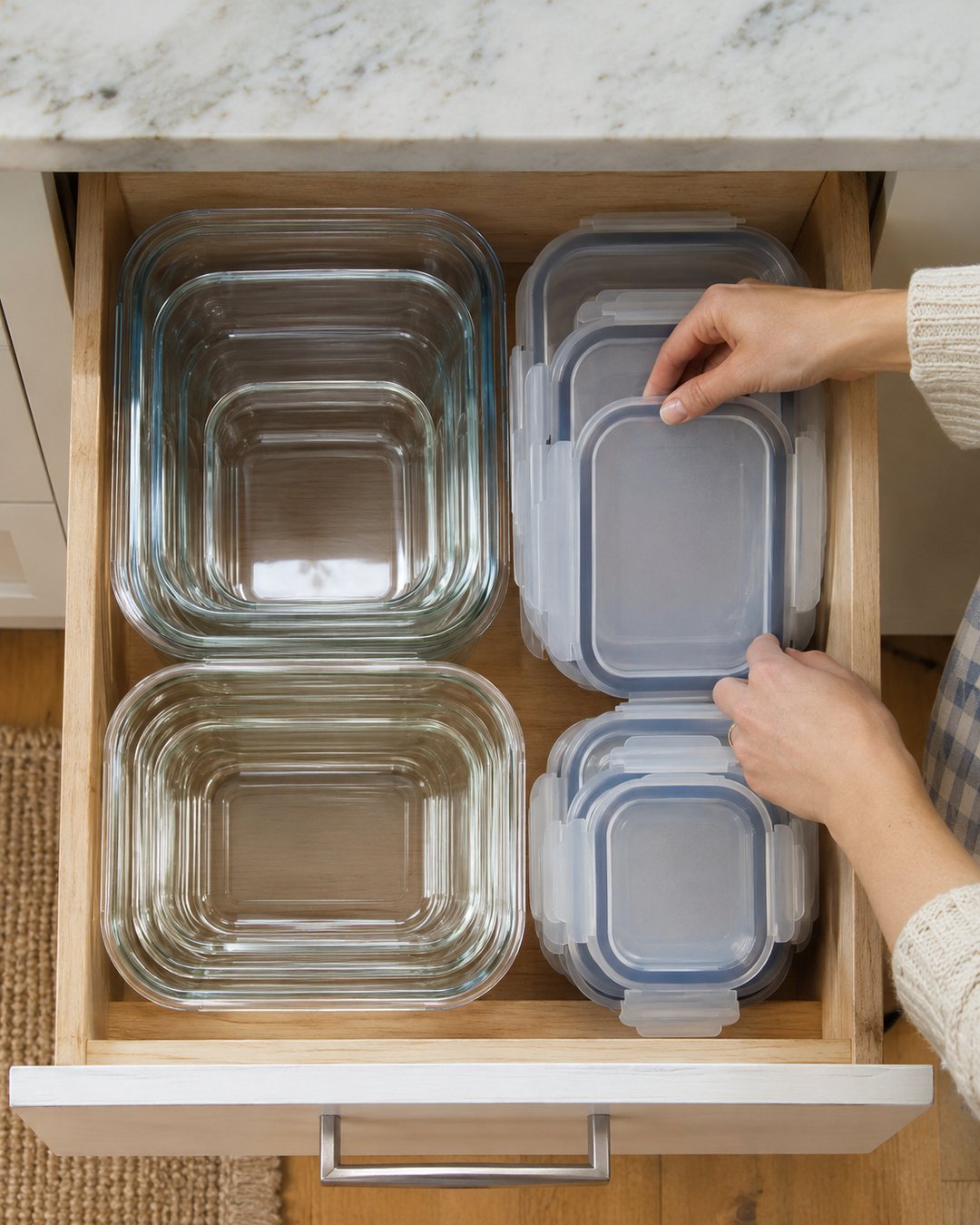
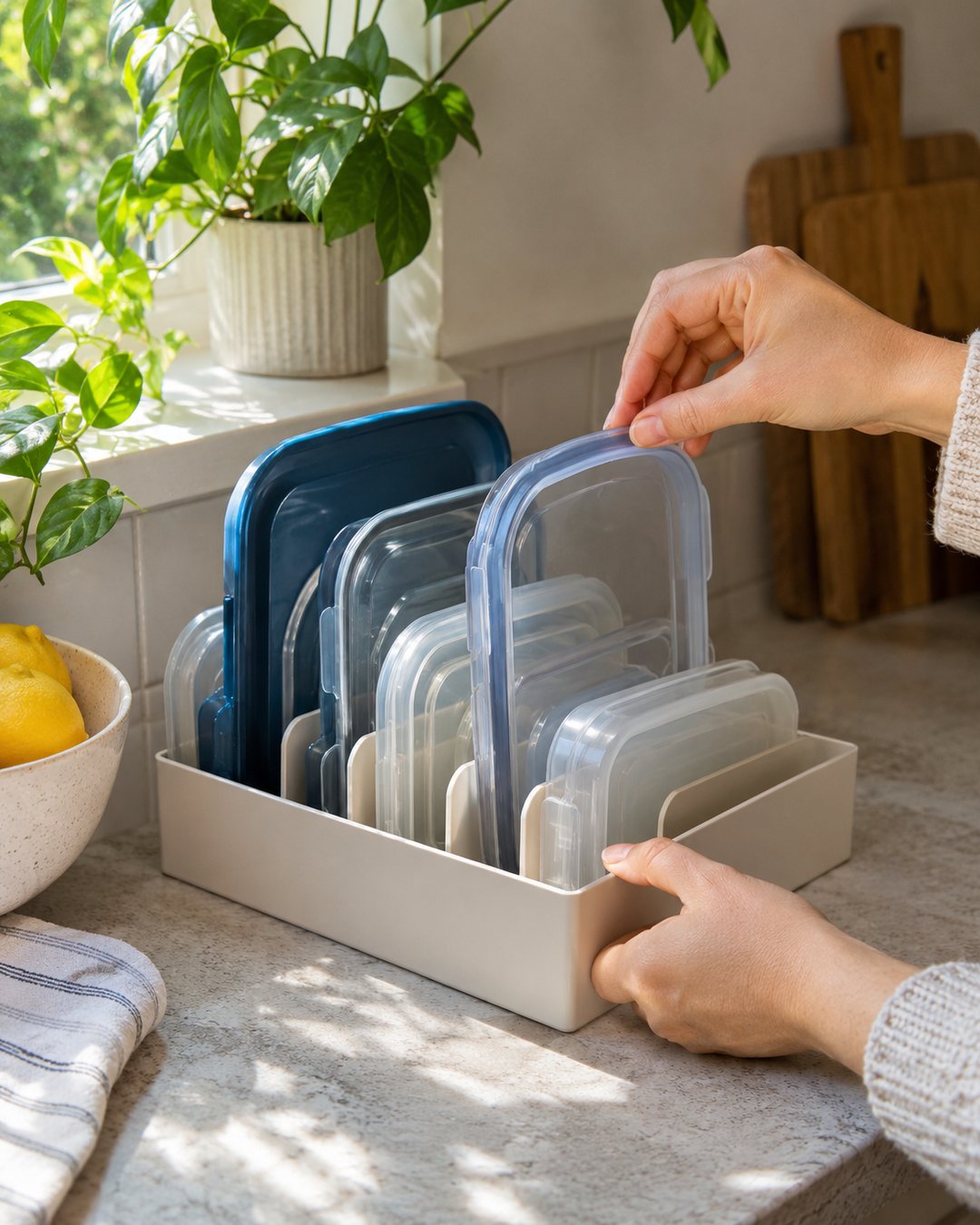
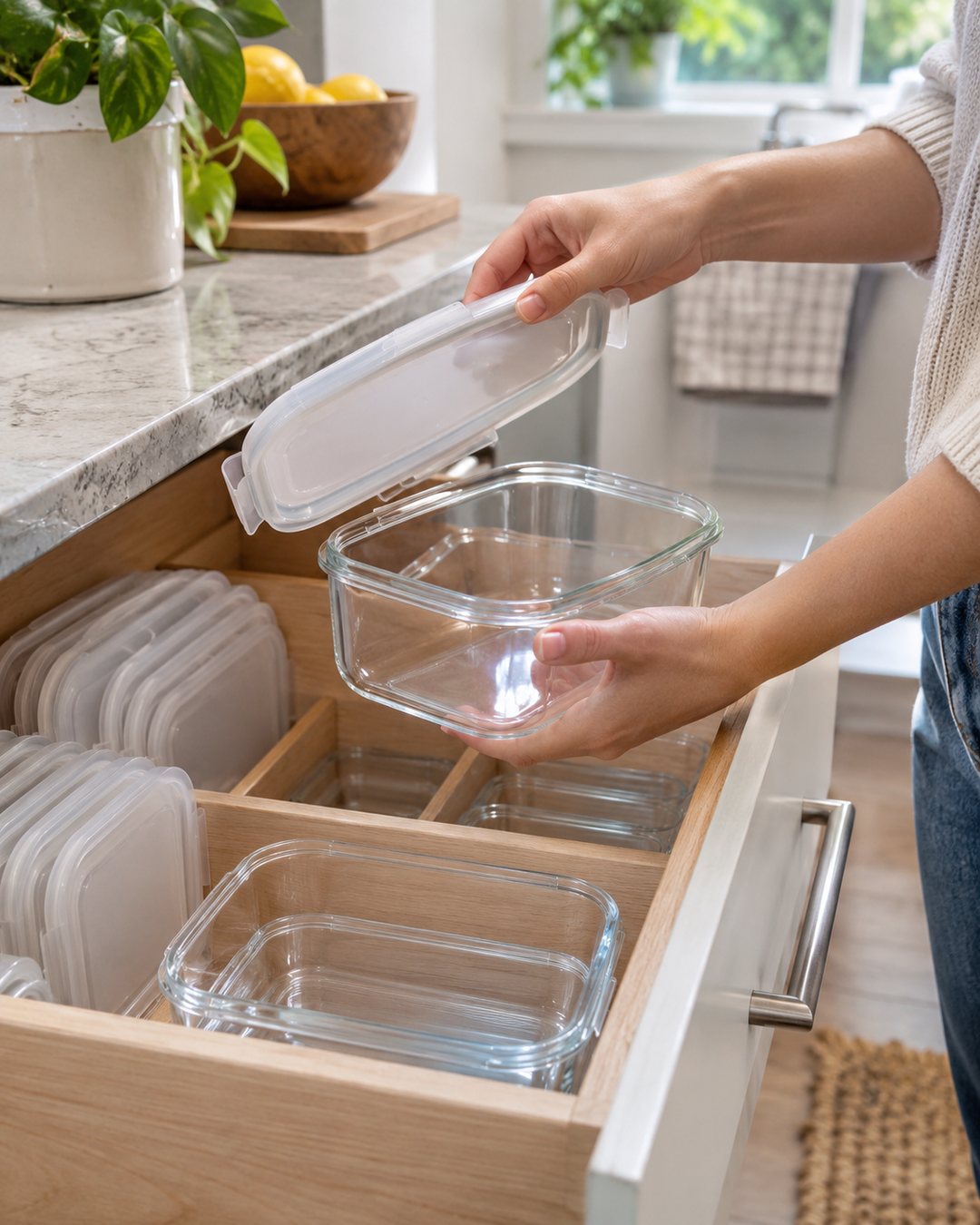
- Nested containers, upright lids: nest compatible shapes and stand their lids in a shallow divider. This saves room but requires everyone to return lids to the same family.
- Daily sets plus a reserve: keep frequently used lunch containers together near the front and less-used shapes in a separate section.
Do not force glass pieces tightly together or build an unstable stack. Use the product’s stacking guidance and choose a height you can retrieve comfortably.
A spare shallow box can test an upright-lid layout before you buy an organizer. It should contain the lids without making them difficult to grip.
3. Size the compartment around the lids
Measure the inside of the drawer, including the space below anything above it. A lid can fit while the drawer is open and catch on the frame when you close it.
Test the tallest lid standing upright and the largest container with your hand around its rim. Check the divider’s outside dimensions, not just the advertised space inside it.
For an illustrative drawer 18 inches wide and 16 inches deep, you might try a narrow lid section along one side and nested containers beside it. Those dimensions are a planning example, not a recommendation that a particular divider will fit.
Put the daily lunch set at the front. Reserve the rear for shapes you use less often, provided you can still reach them without dismantling the whole drawer.
A two-minute retrieval test
- Choose the container you would use for tomorrow’s lunch.
- Retrieve its lid without removing unrelated stacks.
- Repeat with the smallest and largest sets.
- Return everything one-handed if that reflects your usual routine.
- Close and reopen the drawer without lids tipping into another section.
Record layout / set retrieved / extra pieces moved / return problem / adjustment. For example: “Upright lids / large rectangle / two lids moved / divider too deep to grip / try a shallower box.” This is a hypothetical observation illustrating the log, not a measured result.
4. Make the reset easy for everyone
Show other household members where each family belongs. A divider cannot maintain a system nobody understands.
After a normal wash cycle, return dry containers and lids to their sections. If lids repeatedly end up loose on top, simplify the layout or keep fewer sets in that drawer.
Review the arrangement after a week of packing and unpacking food. Keep the layout that reduces searching in your kitchen, even if it uses more space than a tightly nested display.
For measuring rims, handles and access space, see our organizer fit checklist. The three-layout comparison and retrieval log above are original planning tools.
Images are AI-generated illustrations, not screenshots or evidence of tested products or a real household’s records.