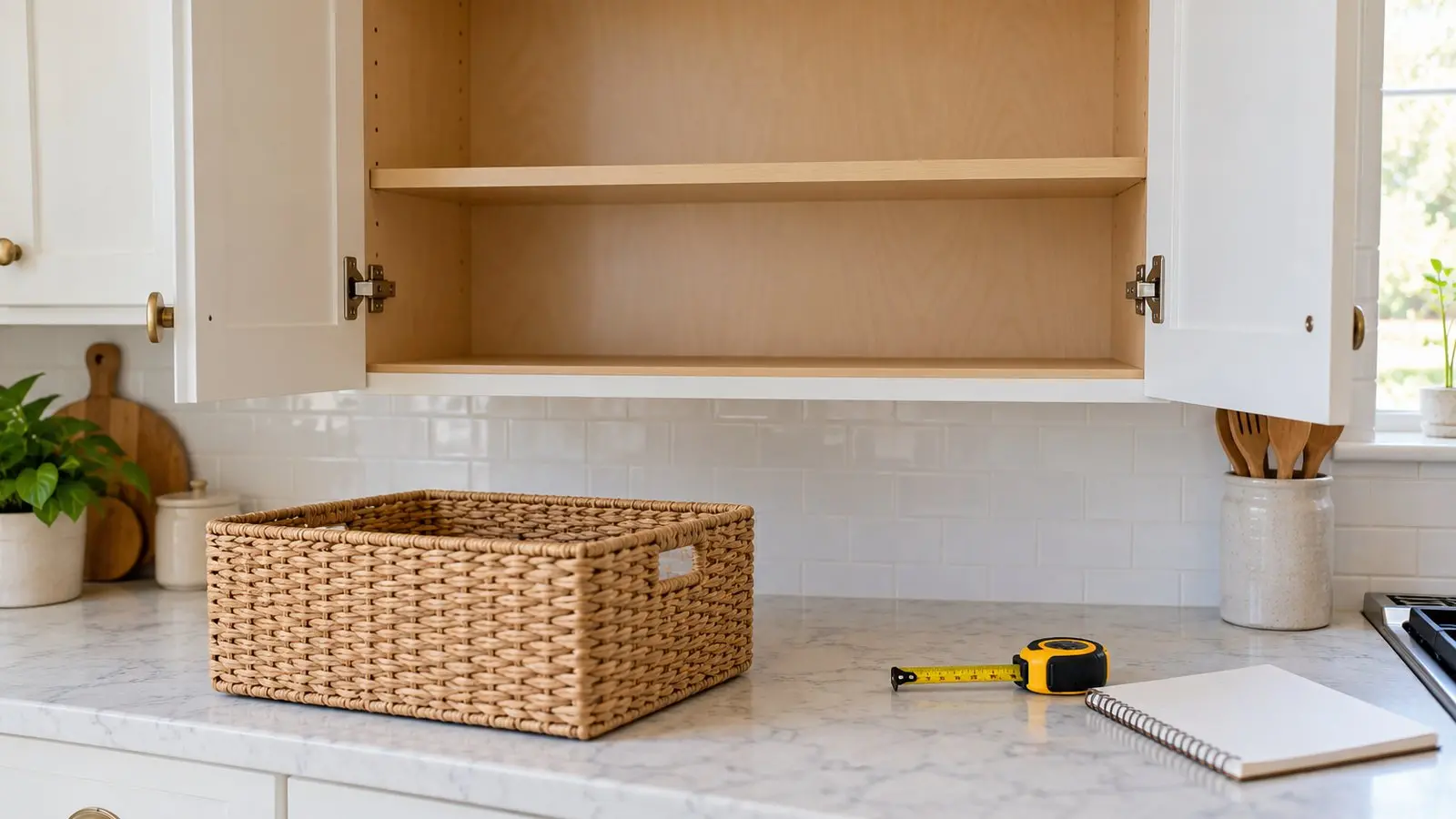
The basket fits on the shelf. The cabinet door will not close. Or the drawer closes perfectly, but you cannot lift anything out of the organizer.
Quick answer: Measure the opening, the usable interior, and the space needed to use the organizer. Then compare those measurements with the product’s maximum exterior dimensions—including handles, feet, and a wider rim. A cardboard mockup can reveal problems before you order.
This guide is for freestanding baskets, bins, and drawer organizers. Installed pullouts, heavy shelving, and wall-mounted storage need their manufacturer’s installation and load requirements. The numerical example below is a worked planning exercise, not a real product test.
1. Measure the narrowest opening
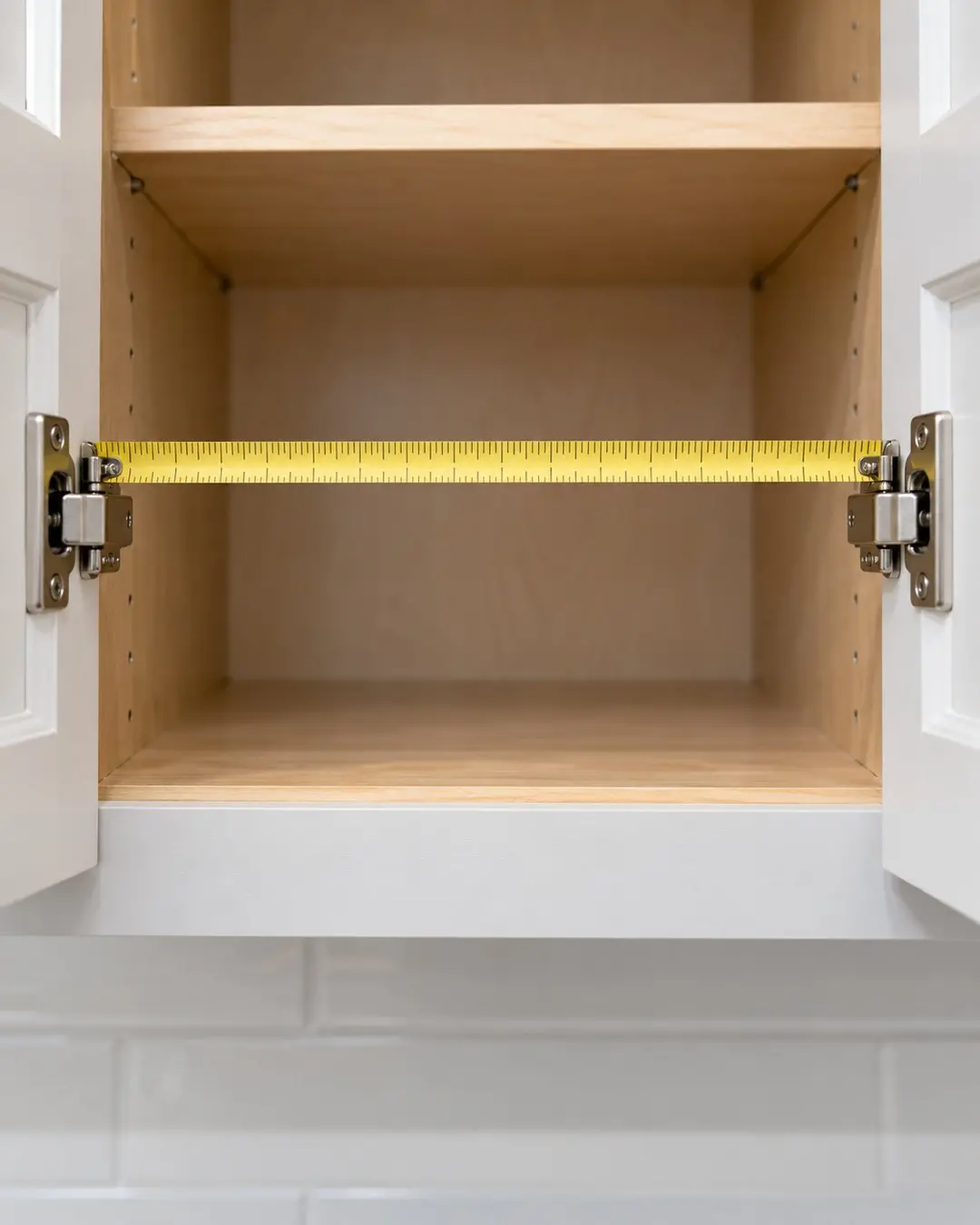
Open the cabinet or drawer as you normally would. Measure the clear width through which the organizer must pass. A shelf can be wider than its doorway because hinges, a face frame, or the open door occupy part of the entrance.
Measure at the front, middle, and back where accessible. For a drawer, check the clear space above its sides as well as the floor. Record the smallest relevant measurement rather than the most generous one.
Try this: Move an empty cardboard box through the opening without tilting it. If tilting is necessary, ask whether that maneuver would still be practical with the intended contents inside.
2. Record the usable width, depth, and height
For depth, measure from the back toward the position of the closed door or drawer front. Notice hinges, handles, pipes, latches, and other projections. Do not count a space that a moving part needs.
For height, measure to the lowest obstruction above the organizer. A shelf support, lip, rail, or counter underside can be lower than the rest of the opening.
For width, consider the whole journey. A bin that fits at the back but catches on the hinge when you pull it out is inconvenient even if it technically fits inside.
Use the same unit throughout your notes. If converting, one inch equals 2.54 centimeters. Avoid rounding a tight fit upward.
3. Read exterior dimensions carefully
Retail listings may emphasize capacity, interior dimensions, package size, or the dimensions of one item in a set. Confirm which numbers describe the actual organizer.
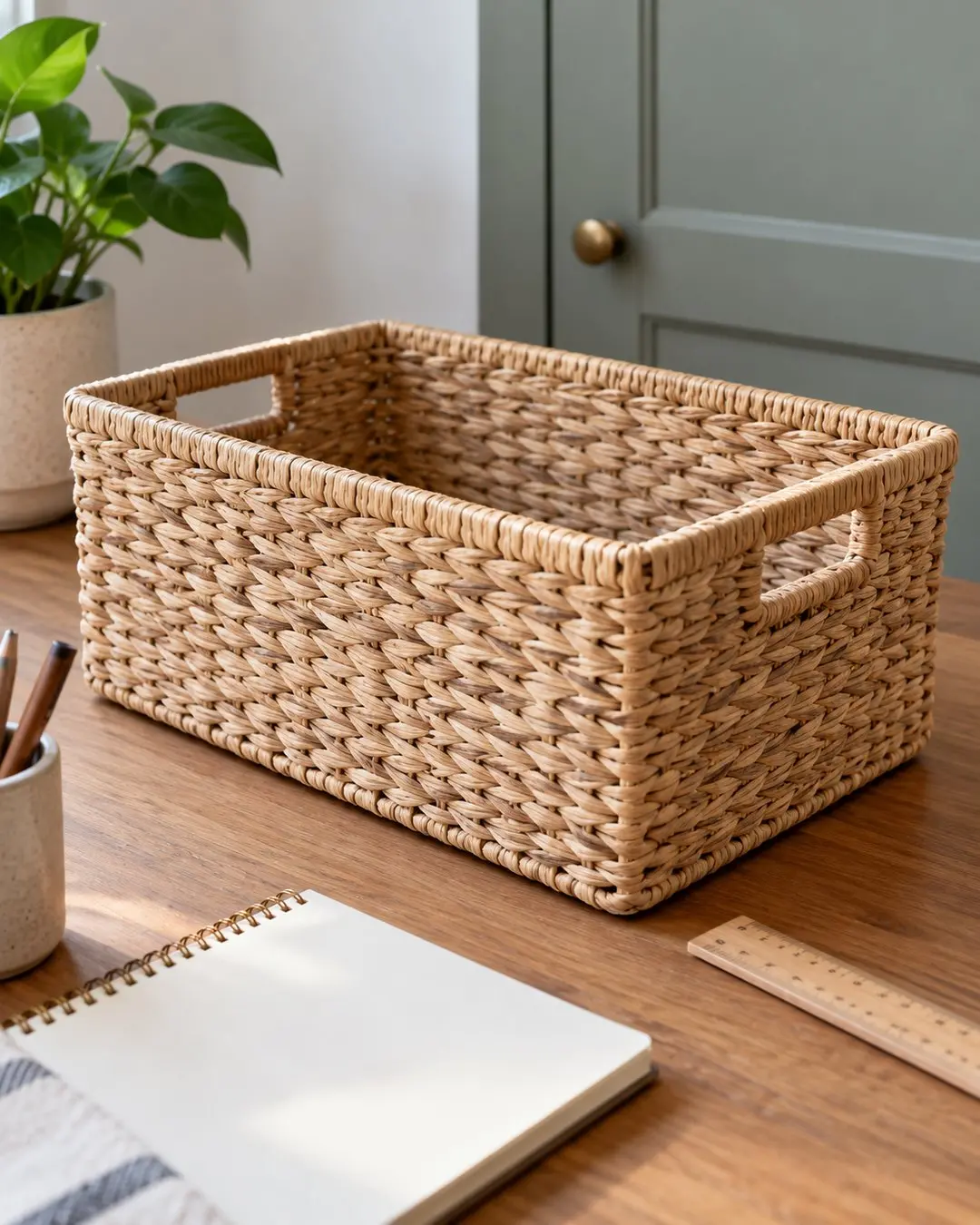
- Maximum width: include handles and the widest part of a tapered rim.
- Maximum depth: include projecting handles or tabs.
- Maximum height: include feet and the lid in the position you will use.
- Interior space: confirm your belongings fit, not only the container.
If a listing does not explain whether the handles are included, ask the seller or consult the manufacturer’s drawing. Guessing from a styled photo is less useful than getting the missing measurement.
4. Leave room to use it
Storage has at least two shapes: the shape when everything is closed and the shape when you reach, lift, slide, or open it.
A lidded bin needs room for the lid or a plan to remove the entire bin first. A handled basket needs room for your hand. A dispenser may need vertical clearance above its pump. Stackable containers may require unstacking before you can reach the item you use most.
There is no single clearance that suits every organizer. Instead, rehearse the action with the largest item and with the lid open. Any suggested allowance in this guide is a planning choice, not a building or product standard.
5. Make a cardboard footprint before buying
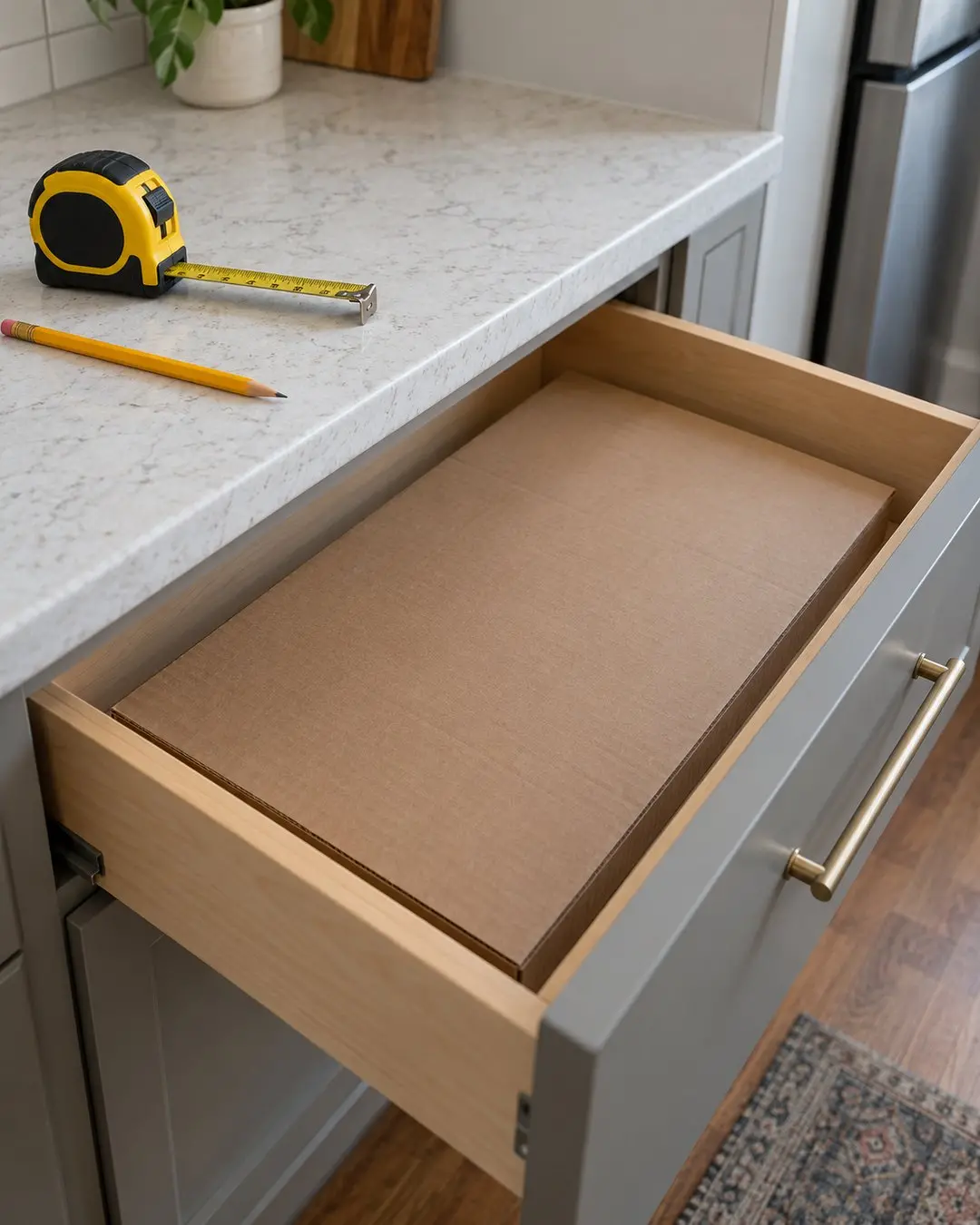
- Draw the product’s maximum exterior width and depth on cardboard.
- Cut the footprint and place it where the organizer will sit.
- Use another piece to represent its full height.
- Check the door or drawer movement gently; stop if anything catches.
- Rehearse taking the mockup out and replacing it.
The mockup checks shape, not strength. It does not demonstrate that a shelf can carry a load, that a material can tolerate moisture, or that a mounted system is safe.
A worked example: two baskets on one shelf
Imagine a cabinet with a clear usable width of 22 inches, depth of 13 inches, and height of 11 inches. Its narrowest opening is 21 inches wide. You are considering two baskets, each listed as 10 inches wide, 12 inches deep, and 9 inches high, including handles.
Two basket widths total 20 inches. That leaves 2 inches across the shelf, 1 inch front-to-back, and 2 inches above. Those numbers are positive, but they do not finish the decision.
- Can each basket pass the hinge when the other basket is in place?
- Can you grip the handle with the shelf above it?
- Can the door close without touching the rim?
- Will the largest intended item fit inside the narrower interior?
A single 20-inch-wide basket would leave the same nominal shelf space, but could be harder to remove through the 21-inch opening. The cardboard check makes that difference visible without pretending the measurements alone guarantee a good result.
Copy this measurement checklist
- Location and intended contents: ______
- Narrowest clear opening: ______
- Usable interior width × depth × height: ______
- Obstructions and moving parts: ______
- Product maximum exterior dimensions: ______
- Product interior dimensions: ______
- Space for gripping, opening, sliding, or lifting: ______
- Loaded weight and shelf/product limits checked: ______
- Cardboard check completed: ______
Take a photo of these notes and of the opening before shopping. Include the product drawing if it is available, so you can compare the same dimensions later.
Choose one working area before organizing a whole room
Buy or reuse one organizer first. Try it with the actual contents for several ordinary days before repeating it across every shelf. Notice whether you return things easily or keep leaving them beside the bin.
Keep frequently used items easy to reach. Do not block appliance ventilation, access to plumbing shutoffs, electrical equipment, or required clearances. Follow the storage and surface load limits, and keep hazardous products away from children and pets.
If you are organizing cleaning supplies, our guide to easy-to-miss cleaning areas can help you make space for the tools you actually use.
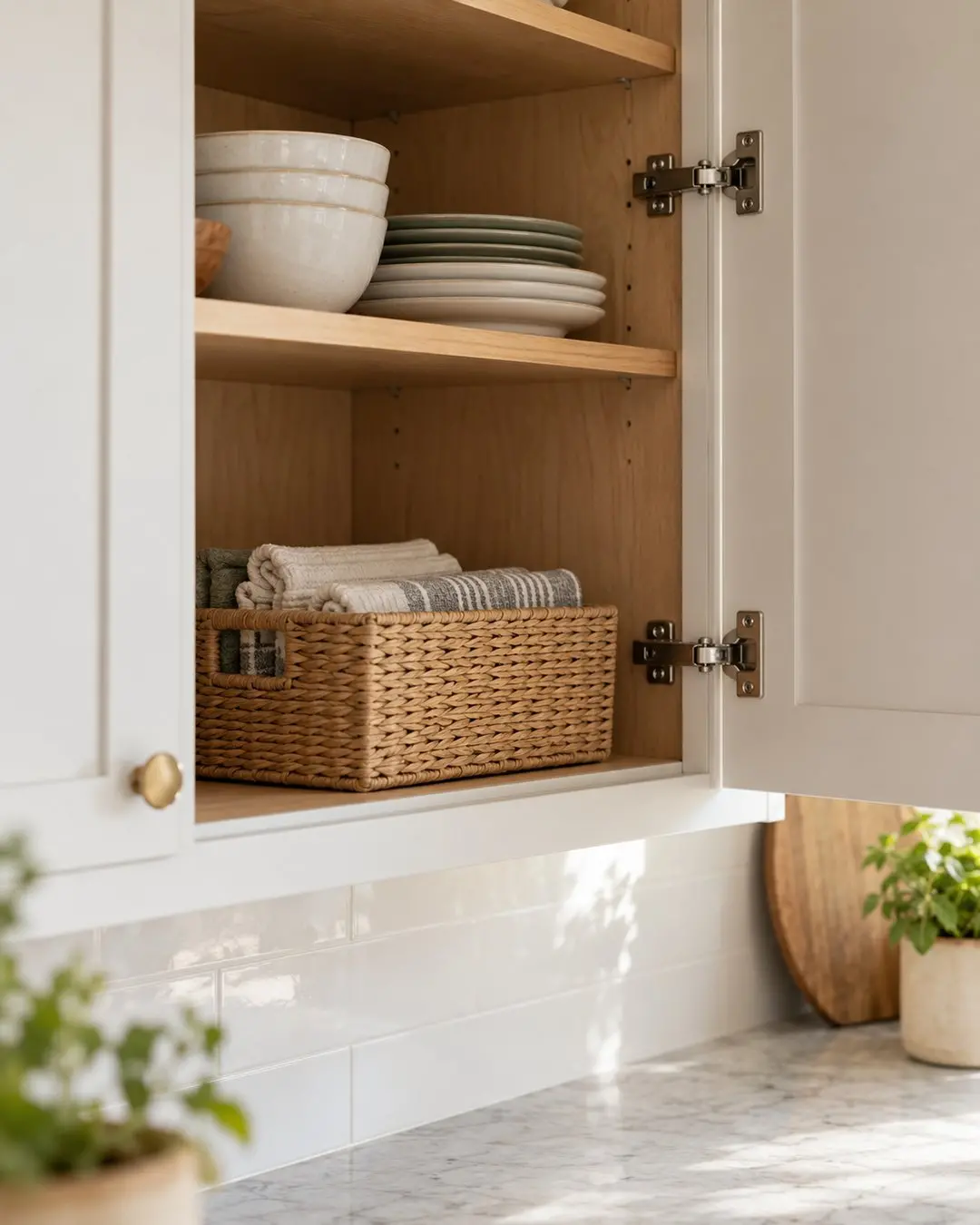
AI-generated editorial illustrations show the planning steps; they are not evidence of a measured installation.
1 thought on “Measure Before You Buy: Will a Storage Organizer Actually Fit?”
Comments are closed.